

 Phoenix 24

BUENOS AIRES, ARGENTINA — November 2, 2026. Argentina’s contemporary art market has received an encouraging signal following the fourth edition of AFFAIR, which concluded on November 1 with approximately 200 artworks sold, four institutional acquisitions and participation from 34 galleries representing four South American countries. Held at Galerías Larreta in Buenos Aires, the event attracted established collectors, museum professionals and visitors exploring the art market for the first time. Its organizers reported that more than 85% of participating galleries completed sales to a diverse audience extending beyond traditional collecting circles, highlighting the potential of alternative exhibition formats to expand cultural participation.
Founded in 2023 as a nonprofit association, AFFAIR has developed a collaborative model designed to make contemporary art more accessible while strengthening relationships among galleries, artists and collectors. This year’s edition brought together participants from Argentina, Uruguay, Chile and Brazil, combining established galleries with emerging artistic projects. Unlike conventional fairs that emphasize independent exhibition booths, AFFAIR encourages galleries to share spaces and establish partnerships. The arrangement reduces barriers to participation while creating opportunities for artistic exchange, professional networking and new commercial relationships.
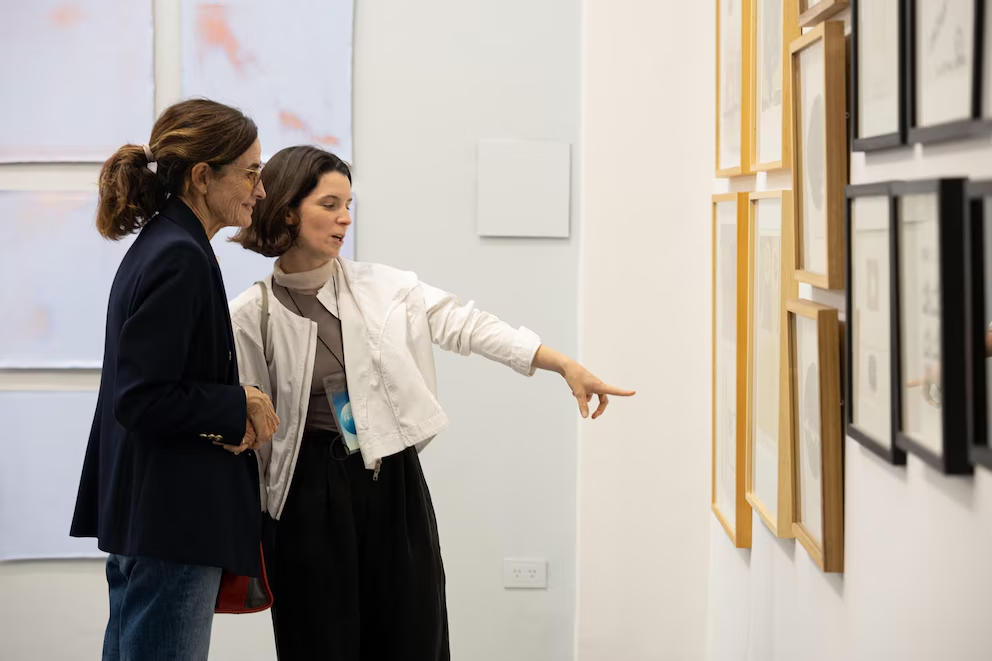
The commercial results were particularly significant. According to figures reported by Infobae and Clarín, approximately 200 artworks changed hands, with prices ranging from $300 to $5,000 in U.S. dollars. AFFAIR president Oli Martínez emphasized that the diversity of buyers was as important as the volume of transactions, noting that participating galleries reached audiences outside the established collector community. Although the organizers did not publish a detailed breakdown identifying how many purchasers were collecting for the first time, the reported sales suggest that the event succeeded in attracting buyers beyond its usual market.
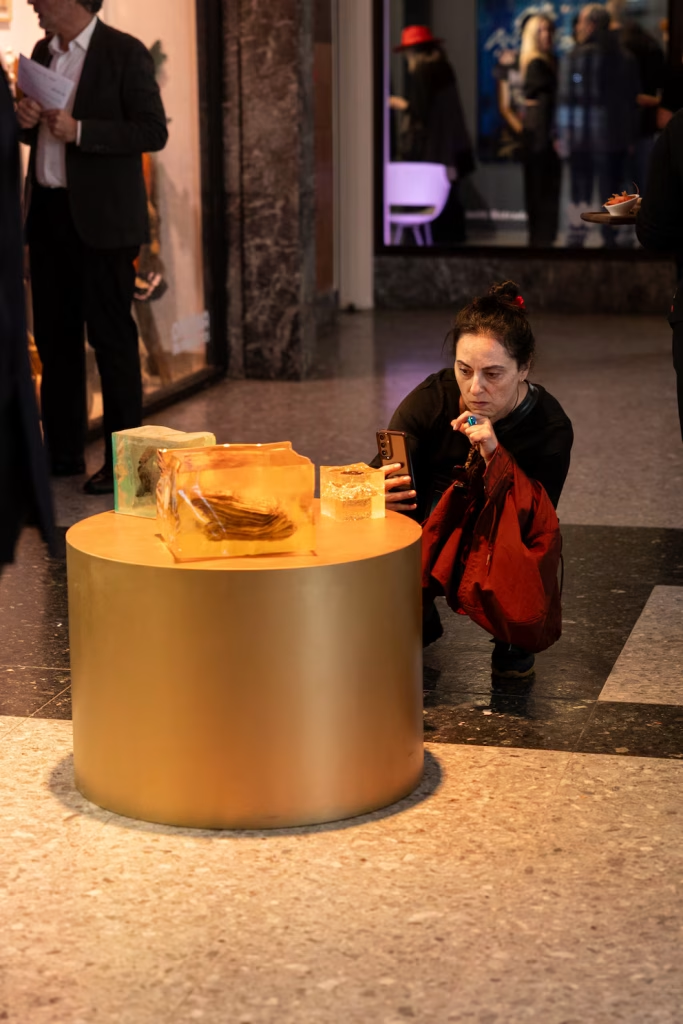
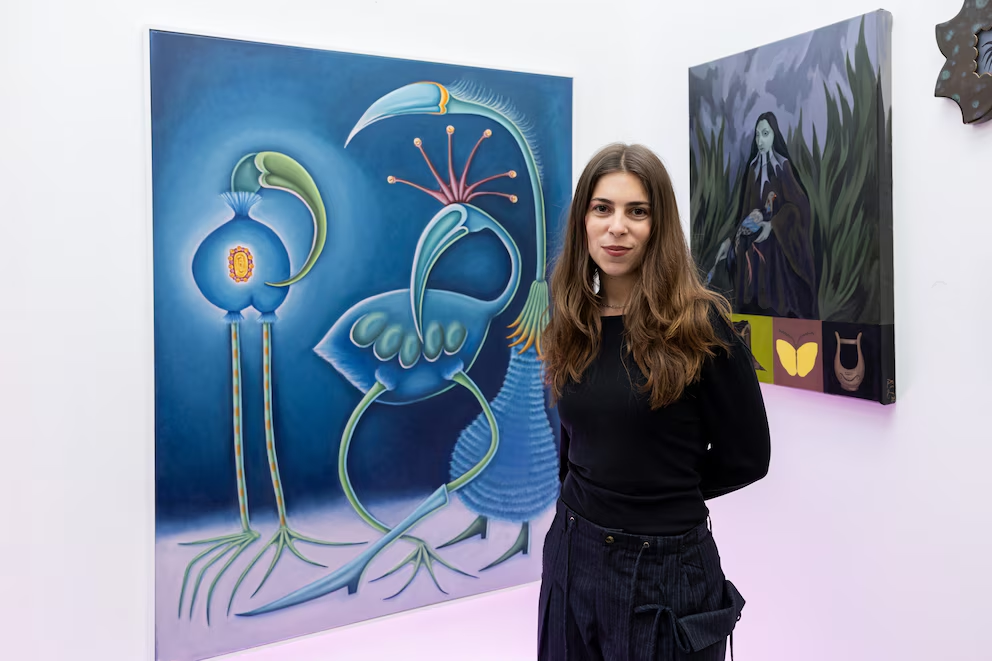
Institutional acquisitions represented another important milestone. For the first time in the fair’s history, artworks entered the collections of a museum and a university through purchases made during the event. The Museo de Arte Contemporáneo de Buenos Aires (MACBA) acquired Aves del Paraíso (2026), a work by Sofía Goldemberg presented by Acéfala Galería. The acquisition will become part of the museum’s Expanded Collection, while Goldemberg is scheduled to present a solo exhibition at MACBA Kabinet in 2027. Such institutional recognition can strengthen an artist’s visibility and contribute to the preservation and public accessibility of contemporary artistic production.
Universidad Siglo 21 expanded its collection through three additional acquisitions: Gobelino I (2025), by Daniel Romano; El nacimiento de Venus (2026), by Ramiro Smith Estrada; and Transmutación (2022), by María Torcello. The works were presented by Wunsch Gallery, Aura Gallery and ODA, respectively. Their incorporation into an academic collection illustrates how universities can participate in the contemporary art ecosystem beyond teaching and research. Institutional collecting can also support cultural education, artistic documentation and connections between emerging creators and broader audiences.
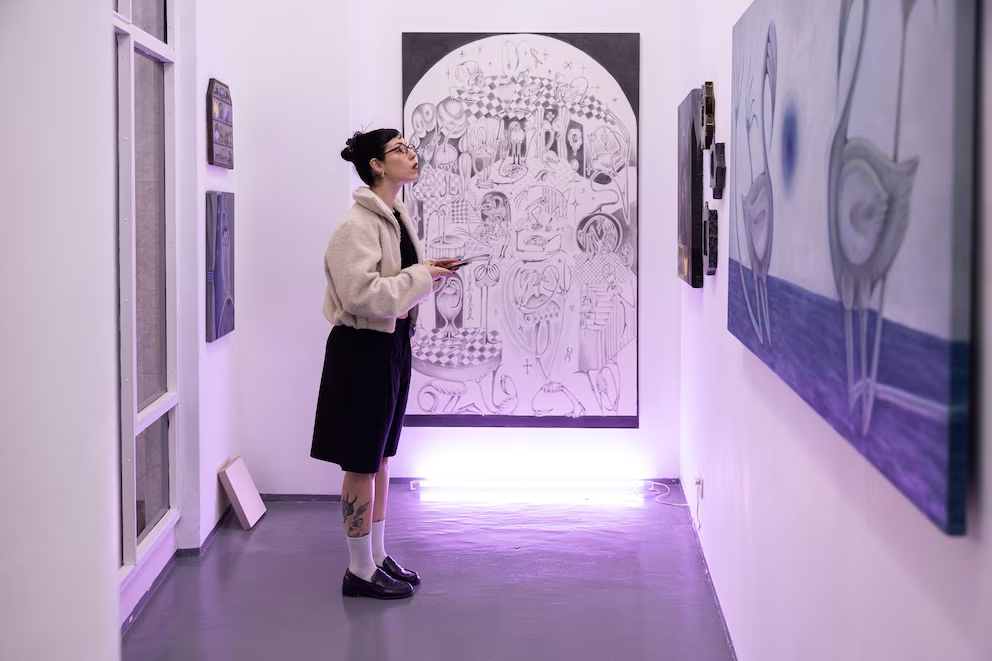
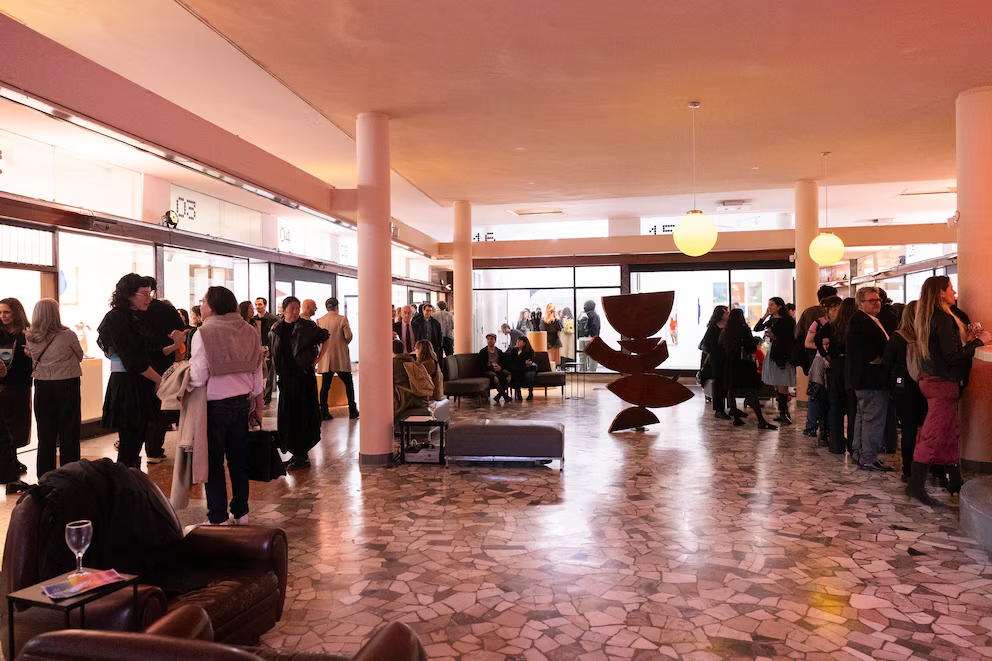
AFFAIR’s appeal extended beyond its commercial program. The exhibition design, developed by visual artist Ailín Chen, incorporated lighting, informal gathering areas and architectural features intended to encourage visitors to explore the venue at their own pace. Its daily programming combined exhibitions with guided tours, conversations, performances and evening music sessions. Curator Marcelo Dansey emphasized the importance of creating an atmosphere in which visitors felt comfortable spending time, exchanging ideas and engaging directly with galleries. This approach positioned the fair as both a marketplace and a cultural meeting place.
The event also addressed one of the principal challenges facing contemporary art markets: encouraging participation among people who have never purchased an original artwork. Through its Mi Primer AFFAIR program, visitors received guidance on acquiring their first piece, with selected works priced between 300,000 and 1.5 million Argentine pesos. Financing alternatives were also available through partnerships with Trasa and Pago24. By combining accessible price ranges with professional advice, the initiative sought to reduce the uncertainty that often discourages newcomers from entering the art market.
International participation further strengthened the fair’s cultural reach. Visiting galleries included Galería del Paseo and Black Gallery from Uruguay, Espaço Escada from Brazil and the Chilean-Argentine project AArchi. The event also welcomed curators and museum professionals connected to institutions in Colombia, Chile, Brazil and the United States. Among the attendees was Andrés Duprat, director of Argentina’s Museo Nacional de Bellas Artes, whose observations highlighted the fair’s energy and the diversity of its audience. These exchanges can generate future opportunities for exhibitions, acquisitions and artistic collaboration across national borders.
Beyond immediate sales, AFFAIR’s results illustrate the economic significance of cultural entrepreneurship. Smaller galleries frequently confront high participation costs, limited marketing resources and difficulties reaching potential collectors. Collaborative exhibition spaces provide an alternative model in which participants can share infrastructure while retaining their artistic identities. Nevertheless, the long-term sustainability of this approach will depend on recurring attendance, continued institutional involvement and the ability to convert occasional purchases into durable relationships between artists, galleries and collectors.
The fourth edition also demonstrated that artistic value cannot be assessed exclusively through commercial transactions. Public conversations examined working conditions, cultural visibility, collecting practices and the relationship between art and economic value. Meanwhile, the invited solidarity initiative Fondo Fluido, led by artist Marina De Caro, dedicated a proportion of its earnings to Biblioteca Popular Caraguatá. These activities broadened the event’s scope, connecting commercial exchange with education, community initiatives and reflection on the conditions under which contemporary art is produced.
As Buenos Aires continues developing its position within Latin America’s contemporary art landscape, AFFAIR offers an example of how cooperation can diversify participation without abandoning commercial objectives. Its approximately 200 sales and four institutional acquisitions provide measurable evidence of activity, while the presence of new audiences suggests opportunities for longer-term growth. The challenge will be sustaining that momentum beyond a single successful edition. Ultimately, the fair’s significance lies in demonstrating that a more inclusive art market can create opportunities not only for established collectors, but also for emerging artists, cultural institutions and people discovering contemporary art for the first time.
Phoenix24: Beyond the exhibition, the cultural transformation. / Más allá de la exposición, la transformación cultural.