

 Phoenix 24
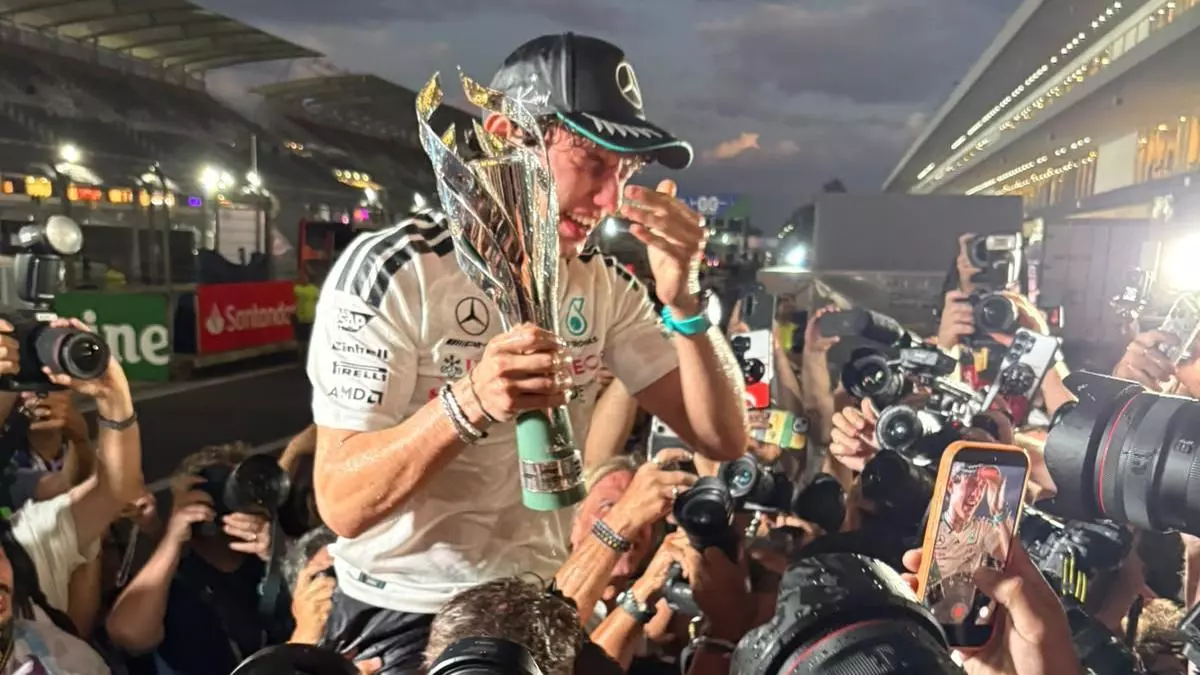
MEXICO CITY, MEXICO — November 2, 2026. Andrea Kimi Antonelli has achieved more than becoming the youngest world champion in Formula 1 history. According to Mercedes team principal Toto Wolff, the 20-year-old Italian has also transformed the atmosphere inside one of motorsport’s most successful organizations, introducing a spontaneous and affectionate personality that has changed how its predominantly British workforce interacts. Following Antonelli’s championship triumph at the Mexican Grand Prix, Wolff revealed previously little-known details about the driver’s development, the internal doubts surrounding his promotion and the personal qualities that have earned him admiration beyond his extraordinary performances on the track.
Antonelli secured the 2026 Formula 1 World Championship on November 1 after finishing third at the Autódromo Hermanos Rodríguez, behind race winner Max Verstappen and Lewis Hamilton. At 20 years and 68 days old, he surpassed Sebastian Vettel’s previous record as the youngest world champion, established in 2010. His achievement also ended Italy’s 73-year wait for a drivers’ championship, dating back to Alberto Ascari’s second title in 1953. With nine Grand Prix victories during his second Formula 1 season, Antonelli has established himself as a leading figure in a new generation of international motorsport talent.
Yet the most revealing observations following his victory concerned his personality rather than his racing statistics. Speaking to Sky Sports F1, Wolff described how Antonelli’s enthusiasm and natural affection had influenced the working environment at Mercedes’ headquarters in Brackley, England. The Austrian executive joked that the team had traditionally included reserved British personnel who were less inclined toward emotional demonstrations. Antonelli, however, began greeting colleagues with hugs, gradually encouraging others to become more expressive. Wolff remarked that even British team members had started embracing one another, a change he regarded with amusement and affection.
Behind that seemingly minor cultural transformation lies a broader relationship between leadership, trust and professional performance. Formula 1 teams operate in exceptionally demanding environments, where hundreds of engineers, mechanics, analysts and operational specialists must coordinate their decisions under intense competitive pressure. Although Antonelli’s personality cannot independently explain Mercedes’ technical achievements, Wolff’s comments illustrate how interpersonal relationships can influence organizational cohesion. His observations suggest that the young driver’s contribution extends beyond mechanical feedback and racing results to the everyday relationships sustaining the team.
Antonelli’s arrival at Mercedes was far from universally welcomed. When Hamilton announced his departure for Ferrari ahead of the 2025 season, Wolff decided to promote the Italian teenager directly into one of Formula 1’s most prestigious seats. The decision attracted criticism because Antonelli had completed only a limited number of seasons in junior single-seater championships. Wolff has now revealed that two sponsors withdrew their support because they questioned the appointment of such an inexperienced driver. Nevertheless, Mercedes maintained its confidence in the youngster, whose development program had been supported by the organization since he was approximately 11 years old.
The skepticism intensified during Antonelli’s difficult debut season. He experienced a prolonged sequence of races without scoring championship points and endured particularly emotional setbacks, including a frustrating weekend at Spa-Francorchamps. Critics questioned whether Mercedes had accelerated his promotion too aggressively, arguing that additional experience with a smaller team might have been beneficial. Wolff, however, described the appointment as a calculated decision grounded in the driver’s earlier achievements and the organization’s assessment of his potential. The subsequent championship has strengthened the executive’s confidence in that long-term development strategy.
Another revealing anecdote illustrates the contrast between Antonelli’s professional maturity and his ordinary interests outside competition. Wolff recalled attempting to contact the driver around his birthday, only to discover that he was spending the occasion at a water park with friends. The story amused the Mercedes principal, who sees no contradiction between Antonelli’s ability to manage demanding technical discussions and his enthusiasm for experiences typical of someone his age. For Wolff, preserving that personal spontaneity is part of what makes the newly crowned champion distinctive.
Antonelli’s sporting development also reflects the influence of his family. His father, Marco Antonelli, was involved in professional motorsport and introduced his son to racing at an early age. Despite recognizing his talent, Marco initially expressed reservations about exposing him to the financial and emotional difficulties associated with competitive racing. Mercedes subsequently provided the technical resources and developmental support that helped the young Italian progress through karting, Formula 4, Formula Regional and Formula 2. His achievement in Mexico represents the culmination of that extensive collaboration among family members, coaches, engineers and racing specialists.
The championship has also brought renewed attention to Mercedes’ internal sporting dynamics. Antonelli’s teammate George Russell entered the season with substantial expectations but ultimately faced a difficult campaign as the Italian accumulated victories and established a commanding championship advantage. Wolff has acknowledged the disappointment surrounding Russell’s results while emphasizing the team’s responsibility to provide both drivers with competitive equipment and support. The contrast demonstrates the challenges facing organizations that must celebrate individual achievements without neglecting the development and motivation of other team members.
For Mercedes, Antonelli’s championship carries significance beyond replacing a seven-time world champion. It validates a long-term investment in young talent and illustrates the potential benefits of identifying exceptional ability before it becomes widely recognized. The driver’s combination of technical adaptability, emotional openness and competitive determination has reinforced Wolff’s conviction that successful athletes can contribute to organizational culture without sacrificing performance.
As Formula 1 prepares for the remaining races of the 2026 season, Antonelli faces the challenge of managing new expectations while preserving the qualities that have defined his emergence. His record-breaking championship guarantees a place in motorsport history, but Wolff’s account reveals a more personal dimension of his success. Behind the race victories and engineering sophistication stands a young Italian whose enthusiasm has influenced colleagues across an international organization. His story offers a reminder that excellence in elite sport involves not only technical ability and individual achievement, but also the relationships that develop between the people working toward a shared objective.
Phoenix24: Beyond the race, the human story. / Más allá de la carrera, la historia humana.