

 Phoenix 24
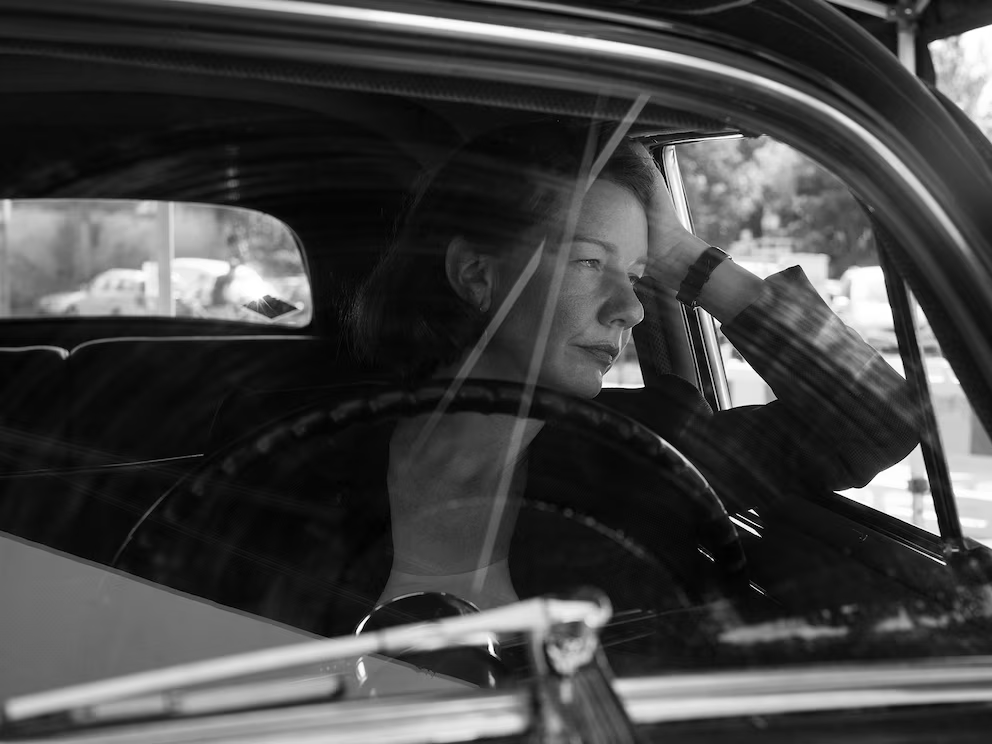
BERLIN, GERMANY — October 31, 2026. German actress Sandra Hüller has called for a sustained confrontation with fascism, drawing on her country’s historical experience and her latest film, Fatherland, directed by Polish filmmaker Paweł Pawlikowski. In an interview with journalist Patricia Kolesnicov, published by Infobae on October 25, the acclaimed performer reflected on Germany’s postwar divisions, the responsibilities inherited by subsequent generations and the relevance of historical memory amid the contemporary rise of far-right political movements. Her remarks connect the unresolved consequences of World War II with questions about democratic responsibility, national identity and the role of cinema in examining difficult historical legacies.
Hüller, internationally recognized for her performances in Anatomy of a Fall and The Zone of Interest, portrays Erika Mann, daughter of Nobel Prize-winning author Thomas Mann, in Pawlikowski’s historical drama. Set in 1949, the film follows the writer’s return to Germany after years in exile, when the country remained physically devastated and politically divided following the collapse of the Nazi regime. Thomas Mann, portrayed by Hanns Zischler, travels to Frankfurt and Weimar to receive recognition associated with the Goethe Prize, attempting to address a nation whose future has become entangled in the emerging confrontation between Western powers and the Soviet Union.
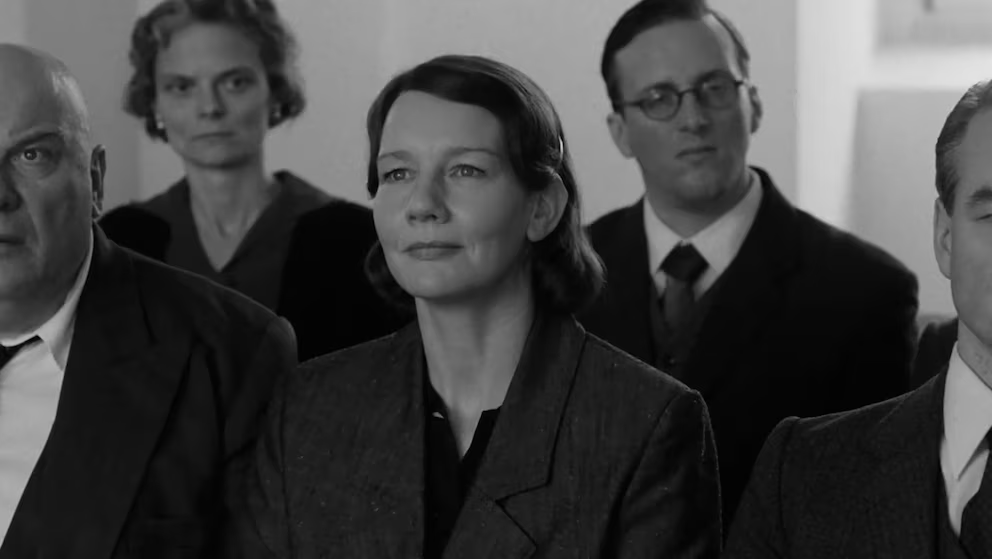
The historical circumstances provide the film with considerable political and emotional complexity. Mann had left Germany in 1933 and became an outspoken opponent of Nazism, but his return confronted him with the destruction left by the war and the division of the country into competing political systems. His decision to visit cities on both sides of the emerging East-West divide reflected a desire to preserve a sense of German cultural identity beyond the geopolitical boundaries taking shape. The film explores that aspiration while examining whether national reconciliation was possible so soon after a catastrophe whose consequences remained visible throughout society.
For Hüller, who grew up in East Germany, the historical setting carries an additional personal dimension. She has expressed appreciation for Pawlikowski’s willingness to portray the early socialist aspirations associated with the creation of East Germany, distinguishing those initial ideas from the political system that subsequently developed. Her reflections do not present the postwar period as a simple confrontation between opposing ideological blocs; instead, they recognize the competing expectations, uncertainties and historical experiences that shaped people’s understanding of Germany’s future.
The conversation becomes more explicitly contemporary when Hüller addresses the political environment in her country. Asked about the rise of the far right and Germany’s historical responsibility, she argues that opposing fascism requires an unmistakable, persistent commitment maintained until it is defeated. Her statement reflects her personal political and historical interpretation rather than a characterization automatically applicable to every present-day party or movement. Nevertheless, it underscores the continuing significance of Germany’s Nazi past in public debates about extremism, democratic institutions and the responsibilities of citizens.
The actress also emphasizes that the effects of war do not necessarily end when military hostilities cease. In her assessment, the devastation of World War II and the arrangements that followed continue influencing contemporary international relations, social identities and political conflicts. This perspective helps explain her interest in Fatherland, which concentrates less on the familiar military events of the conflict than on the emotional and institutional difficulties that emerged afterward. The film approaches history through relationships, personal choices and the challenge of confronting collective trauma.
That approach becomes especially evident through Erika Mann, whose responsibilities extend beyond accompanying her father on his journey. An accomplished writer, journalist and political activist in her own right, Erika supports Thomas Mann while simultaneously confronting the death of her brother Klaus, portrayed by August Diehl. Klaus Mann died by suicide in May 1949, shortly before the events depicted in the film. The family’s grief complicates the political journey, placing private suffering alongside questions about national reconstruction and the obligations of prominent intellectuals.
Hüller describes Erika as a woman forced to balance profound personal loss with the demands of supporting her father during a historically significant moment. Rather than presenting the character primarily as an intermediary between Thomas Mann and the surrounding political world, her performance emphasizes the emotional restraint required to manage conflicting responsibilities. This tension also provides a counterpoint to The Zone of Interest, in which Hüller portrayed Hedwig Höss, the wife of Auschwitz commandant Rudolf Höss. While that earlier film examined the normalization of atrocity within the Nazi system, Fatherland explores the aftermath of the regime’s destruction and the possibility of confronting its legacy.
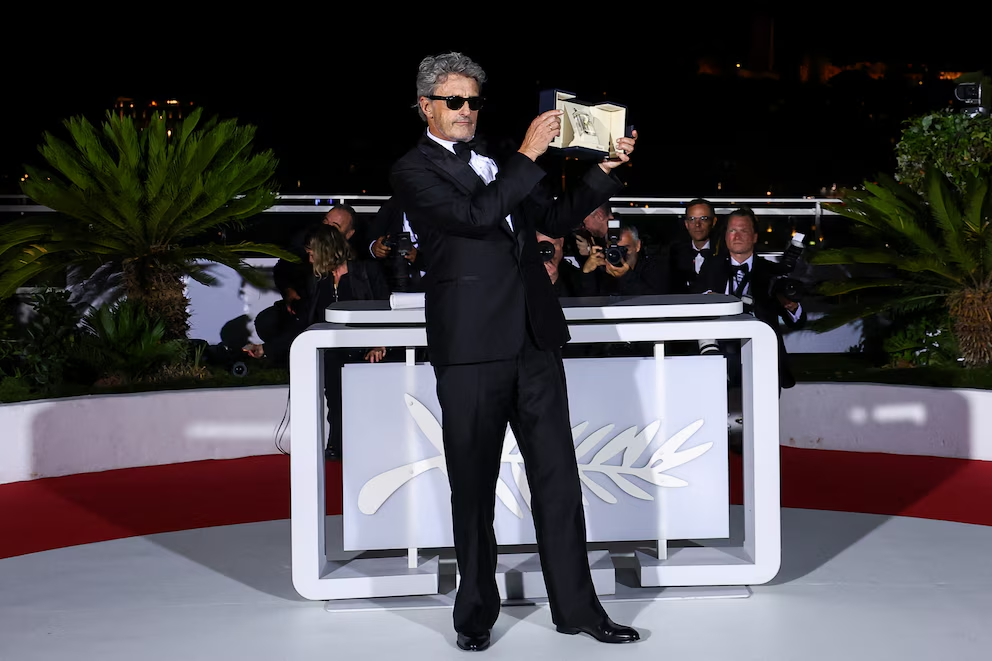
Pawlikowski’s filmmaking reinforces the emphasis on personal relationships and historical atmosphere. The director, previously celebrated for Ida and Cold War, received the Best Director award at the 2026 Cannes Film Festival for Fatherland. Hüller has praised his collaborative approach, particularly his willingness to trust actors without excessive explanation or rigidly prescribing every emotional detail. The resulting performance draws on restrained dialogue, visual composition and the tension between historical responsibility and intimate family experience.
The film also raises a broader question about the place of artists and intellectuals in periods of political division. Thomas Mann’s return to a fragmented Germany illustrates the difficulties of appealing to shared cultural traditions when communities are separated by competing political systems and recent historical trauma. His journey does not offer an uncomplicated vision of reconciliation, but it reveals the importance of language, memory and public engagement in societies attempting to understand their past. Erika’s role introduces another dimension: the personal consequences borne by those who participate in public life while carrying their own unresolved grief.
Hüller’s reflections are particularly relevant to the continuing debate over how societies should remember authoritarian rule and mass violence. Historical education, public commemoration and cultural production offer different ways to examine the mechanisms through which democratic institutions can be undermined. Yet interpreting historical parallels requires precision: the political circumstances of contemporary Europe differ substantially from those of the 1930s and 1940s. The value of examining those periods lies not in treating the present as an exact repetition of the past, but in understanding the institutional failures, ideological developments and human decisions that made historical catastrophes possible.
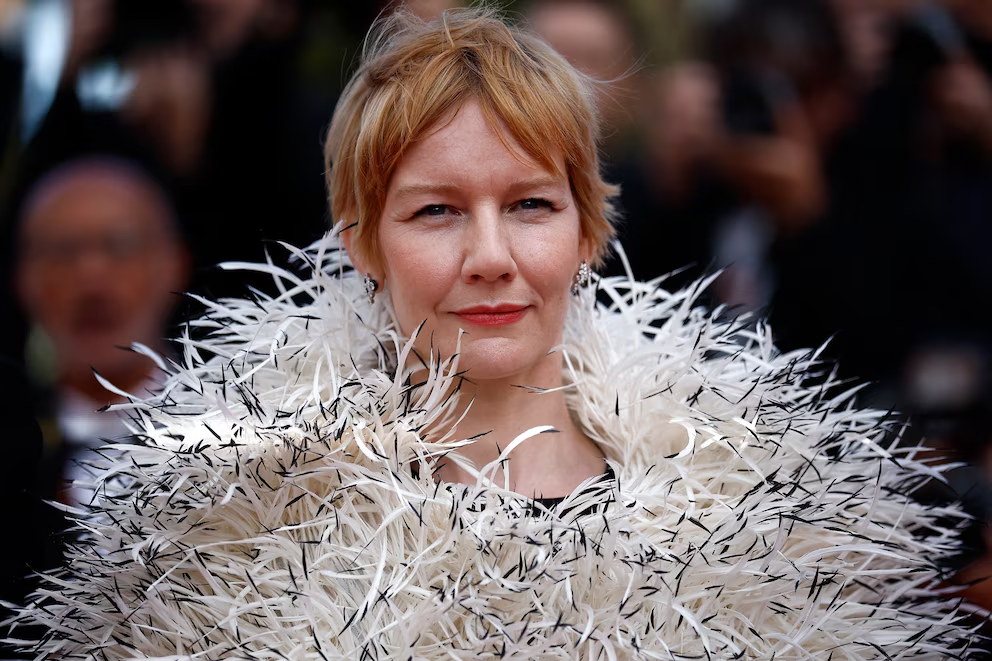
At the center of Hüller’s interpretation is the relationship between responsibility and individual agency. She suggests that people should not be defined exclusively by the countries or historical circumstances into which they were born, but by how they respond to the responsibilities of their own time. This perspective gives Fatherland a significance extending beyond its period setting, positioning the film as an examination of how personal conduct, collective memory and political conscience intersect. It also reflects the actress’s broader interest in characters whose apparent composure conceals difficult moral and emotional conflicts.
With Fatherland, Pawlikowski and Hüller return audiences to a moment when Germany’s future remained uncertain and the consequences of Nazism were impossible to separate from everyday life. The film’s exploration of exile, grief and national division offers a historical framework for considering contemporary debates without reducing them to straightforward political analogies. Hüller’s intervention adds a personal dimension to that conversation, emphasizing that remembrance acquires meaning through the choices societies make in the present. The enduring question is how historical knowledge can inform democratic responsibility while preserving the distinctions necessary to understand both the past and the world that followed it.
Phoenix24: Beyond the screen, the historical memory. / Más allá de la pantalla, la memoria histórica.