

 Phoenix 24
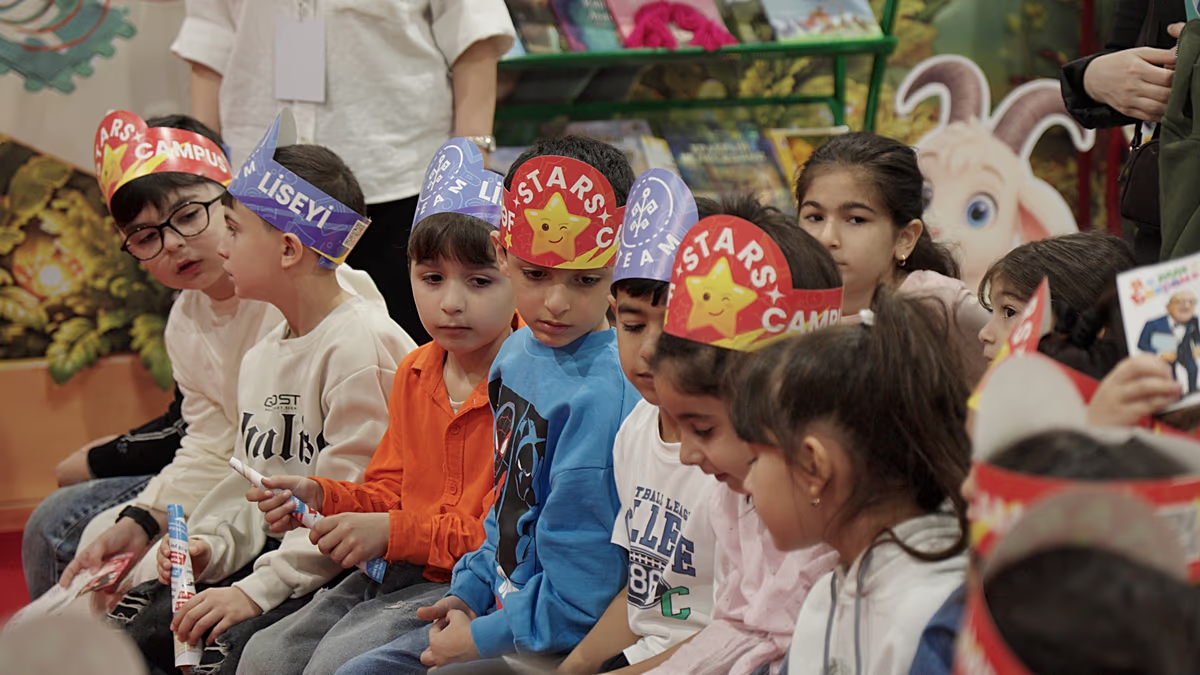
BAKU, AZERBAIJAN — October 31, 2026. The 12th Baku International Book Fair has brought together writers, publishers and readers from 32 countries, transforming Azerbaijan’s capital into a meeting point for literary traditions, cultural identities and contemporary storytelling. From internationally recognized novelists to children’s fiction authors, the event highlights literature’s ability to connect societies across geographical, linguistic and generational boundaries at a time when digital technologies are reshaping how people create, distribute and experience books.
The gathering reflects Baku’s historical position at the intersection of Europe and Asia, where centuries of cultural exchange have influenced the development of literature, philosophy and artistic expression. Its program combines Azerbaijan’s literary heritage with contemporary international voices, encouraging discussions about identity, imagination, education and the enduring relevance of written narratives.
Azerbaijan’s literary traditions extend back many centuries, with the twelfth-century poet Nizami Ganjavi occupying a distinguished position in the cultural history of the region. Born in the territory of present-day Azerbaijan, Nizami became one of the most influential figures in Persian-language literature, producing works that explored ethical questions, human relationships and the complexities of society.
His literary legacy illustrates the historical circulation of ideas across cultural boundaries. Long before modern publishing networks and digital communication, poetry and storytelling traveled through translation, intellectual exchange and the movement of scholars, merchants and travelers.
Later figures, including Muhammad Fuzuli, contributed to the region’s literary development through works shaped by multiple linguistic and cultural traditions. These historical influences provide an important foundation for understanding Baku’s contemporary role as an international meeting place for writers.
Among the participants attracting attention is Iranian novelist Parinoush Saniee, whose internationally acclaimed novel The Book of Fate examines the life of an Iranian woman navigating personal relationships, family expectations, education and political change.
The novel’s international reception demonstrates how narratives rooted in specific cultural circumstances can resonate with audiences who have never experienced those environments directly. Saniee initially expected the story to appeal primarily to readers familiar with Iranian society, but translations introduced the novel to audiences across Europe and other regions.
Its reception in Italy and Norway surprised the author, who discovered that readers identified with the emotional struggles and social expectations portrayed in her work. The experience reinforced her belief that human suffering, resilience and the search for personal autonomy can transcend national and cultural differences.
Saniee’s literary perspective also highlights the role of fiction in examining women’s experiences. Through individual characters, novels can explore institutional restrictions, family relationships and the tension between personal aspirations and established social expectations.
Unlike political declarations or academic research, fictional narratives invite readers to encounter these issues through the experiences and emotional development of imagined individuals. This approach can create opportunities for understanding circumstances that may otherwise remain distant or unfamiliar.
British children’s author Darren Simpson approached the discussion from a different perspective, emphasizing the importance of imagination and emotional connection in literature for younger audiences.
Known for novels including Scavengers and The Memory Thieves, Simpson creates fictional worlds that explore friendship, belonging, identity and the challenges associated with growing up. Although his stories often unfold in unusual or fantastical environments, their emotional foundations remain recognizable to children from different countries.
During the Baku event, Simpson observed that young readers frequently respond to similar emotional themes regardless of their cultural backgrounds. Their interest in friendship, acceptance and personal discovery suggests that storytelling can provide common reference points even when readers grow up in substantially different societies.
His observations are particularly relevant as children increasingly encounter entertainment through digital devices, interactive media and online platforms. Books now compete for attention within a complex environment in which visual content, games and rapidly changing digital experiences occupy substantial portions of leisure time.
Nevertheless, Simpson highlighted the enthusiasm of young Azerbaijani readers, suggesting that traditional literary engagement continues to offer meaningful experiences despite the expansion of digital entertainment.
The challenge for contemporary children’s literature is not necessarily to compete with technology by imitating its characteristics. Instead, authors can develop compelling narratives that encourage imagination, emotional identification and sustained engagement with fictional worlds.
Azerbaijani science fiction writer Reyhan Yusifgizi contributed another perspective by emphasizing the relationship between literary creativity, modern communication and family influence.
With an academic background in computer science, Yusifgizi combines scientific imagination with storytelling for younger readers. Her work demonstrates how literature can engage with technology while encouraging children to explore possibilities extending beyond their immediate surroundings.
She argued that promoting reading requires both engaging writing and active participation from parents. Authors must communicate through accessible language and narratives that capture children’s interests, but families also influence whether reading becomes a regular part of everyday life.
Her observations place particular importance on parental example. Children who observe adults reading may encounter books as ordinary sources of enjoyment, knowledge and reflection rather than activities associated exclusively with school assignments.
This perspective introduces a broader educational question. Literacy development depends not only on the formal teaching of reading skills but also on the cultural environments in which those skills are practiced and reinforced.
Families, schools, libraries and publishing institutions can contribute to creating opportunities for children to discover literature. Their effectiveness depends on access to appropriate materials, encouragement and the availability of stories that reflect different interests and experiences.
Another prominent participant, Azerbaijani writer and publicist Elmira Akhundova, emphasized the cultural and emotional significance of physical books in an increasingly digital information environment.
For Akhundova, literature offers experiences that differ from the rapid circulation of online news and social media content. Books can provide sustained opportunities for reflection, allowing readers to engage with complex moral questions and examine human experiences beyond immediate events.
She also connected literature with humanism, tolerance and cultural understanding. In her view, storytelling can encourage readers to recognize the experiences of others and reflect on the values that influence relationships among individuals and communities.
Her perspective is particularly relevant in an international environment characterized by geopolitical tensions, social fragmentation and competing cultural narratives. Literature cannot independently resolve political conflicts, but it can create intellectual spaces in which different experiences and interpretations become accessible.
The book fair illustrates this potential through the coexistence of writers whose works address distinct subjects and audiences. Saniee’s exploration of women’s experiences, Simpson’s imaginative children’s fiction and Yusifgizi’s science fiction represent different literary approaches, yet all place human experience at the center of their narratives.
The international character of the event also highlights the role of translation in cultural exchange. Without translators, editors and publishing partnerships, literary works frequently remain confined to readers who understand the language in which they were originally written.
Translation allows stories to circulate internationally, although it also introduces interpretive challenges involving cultural references, linguistic nuances and the preservation of an author’s distinctive voice.
The success of translated literature demonstrates that cultural specificity and international accessibility are not necessarily contradictory. A story may become more meaningful precisely because it offers readers an opportunity to understand a society different from their own.
Beyond its cultural significance, international publishing also represents an economic and institutional ecosystem. Authors, literary agents, publishers, booksellers and distributors participate in networks that determine how manuscripts become commercially available and reach different markets.
Book fairs provide opportunities for professional relationships, translation agreements and the exchange of publishing expertise. These activities can help smaller literary markets gain visibility and introduce local authors to international audiences.
For Azerbaijan, such events contribute to cultural diplomacy by presenting the country’s literary heritage and contemporary creative production within an international setting. Cultural diplomacy differs from formal political negotiation because its influence often develops through education, artistic exchange and long-term relationships among institutions and individuals.
Baku’s geographical and historical position makes it a particularly meaningful setting for these interactions. Situated along routes connecting different regions of Eurasia, the city provides a symbolic meeting point between literary traditions that have developed through centuries of exchange.
The transformation of publishing technology introduces another important dimension. E-books, audiobooks and digital distribution platforms allow readers to obtain literary works without relying exclusively on physical bookstores or conventional distribution systems.
These technologies can improve accessibility and expand the international reach of authors, particularly when digital editions overcome geographical barriers. However, they also introduce questions concerning copyright, publishing economics, platform dependence and the long-term sustainability of independent literary production.
The rise of artificial intelligence adds further complexity to the contemporary publishing environment. Automated translation, writing assistance and digital recommendation systems may influence how literature is produced and discovered, while raising questions about authorship, intellectual property and the preservation of creative originality.
The technological transformation does not necessarily imply the disappearance of printed books. Physical and digital formats can coexist, serving different preferences and reading circumstances. The continuing interest in international literary festivals suggests that personal interaction between authors and readers remains valuable even when books can be distributed electronically.
Such gatherings provide opportunities that digital platforms do not fully reproduce. Readers can discuss the motivations behind literary works, authors can encounter audiences outside their usual cultural environments, and publishers can establish relationships based on direct professional exchange.
For younger generations, these interactions can strengthen the perception that literature is a living creative activity rather than a collection of texts associated exclusively with formal education.
The Baku International Book Fair also raises questions about the future of cultural identity in an increasingly interconnected world. Global distribution can expose readers to unfamiliar traditions, but it may also create pressures favoring commercially dominant languages and publishing markets.
Preserving linguistic diversity therefore remains an important challenge. Supporting local authors, translation programs and independent publishing can help maintain cultural traditions while allowing them to participate in international literary conversations.
The event’s broader significance lies in demonstrating that literature operates simultaneously as artistic expression, educational resource, cultural memory and a means of communication among societies.
Its value cannot be measured exclusively through book sales or attendance figures. Literature also contributes to how individuals interpret their experiences, understand historical developments and encounter perspectives different from their own.
The participation of writers from 32 countries illustrates the continued relevance of these functions, even as technological change transforms the mechanisms through which stories reach audiences.
At a time when information travels almost instantaneously but meaningful understanding can remain difficult, the gathering in Baku offers a reminder that communication and comprehension are not identical. Stories require readers to engage with experiences, motivations and ambiguities that cannot always be reduced to simple conclusions.
The challenge facing literature is therefore not merely to survive the digital age but to maintain its capacity for intellectual depth, imagination and human connection within a rapidly evolving cultural environment.
As the international literary community continues exploring new forms of storytelling, Baku’s celebration of the written word demonstrates that technological innovation and cultural heritage need not exist in opposition. Both can contribute to expanding access to literature while preserving the distinctive experiences through which societies express their identities.
Beyond the books displayed and the authors participating, the enduring significance of the event rests on a fundamental observation: stories may emerge from specific languages, histories and communities, yet their capacity to communicate human experience extends far beyond the borders in which they originate.
Phoenix24: Beyond the headline, the context. / Más allá del titular, el contexto.