

 Phoenix 24

MILAN, ITALY — November 2, 2026. Italian luxury fashion house Prada has unveiled a Christmas advertising campaign celebrating traditional hand-drawn animation, choosing human craftsmanship over generative artificial intelligence at a time when digital automation is transforming the global creative industry. Titled Drawing Prada: Animated by Hand, the campaign combines live-action photography with individually illustrated characters and imaginative winter landscapes. The initiative reflects the brand’s commitment to artistic expression while contributing to a wider debate about authenticity, creative labor and the growing use of AI-generated content in commercial advertising.
Developed under the creative direction of Miuccia Prada and Raf Simons, with Ferdinando Verderi overseeing the campaign’s creative concept, the project brings together established animation expertise and a new generation of international performers. Photographer and director Glen Luchford created the live-action sequences, while veteran animator John Pomeroy led the artists responsible for the illustrated environments and characters. The campaign features Sadie Sink, Maya Hawke, Chen Haoyu, Luther Ford and Kelvin Harrison Jr., placing the actors within fantastical settings that combine contemporary fashion photography with the visual atmosphere of traditional animated films.
Pomeroy’s participation is particularly significant because of his extensive contribution to animation history. His career includes work on Disney productions such as The Rescuers, The Fox and the Hound, Pocahontas and Fantasia 2000, alongside projects associated with independent animation. For Prada, his involvement reinforces the campaign’s central message: traditional artistic techniques remain relevant even as generative technologies become increasingly accessible. In a behind-the-scenes presentation, Pomeroy emphasized the importance of preserving the skills he developed through pencil-and-paper animation and transmitting them to future generations of artists.
Unlike advertising produced primarily through generative AI systems, Prada’s campaign places manual illustration at the center of its creative identity. Characters, winter landscapes and decorative elements were developed through traditional drawing techniques, while the photographic compositions were designed to interact with those illustrated environments. The resulting visual approach draws on the aesthetics of classic Hollywood animation and illustrated fairy tales, creating scenes in which contemporary performers appear within imaginative worlds. Prada describes the process as a celebration of craftsmanship, emotional connection and the human experience of storytelling.
The decision arrives amid increasingly visible debate about artificial intelligence in advertising, particularly concerning its effects on creative employment, intellectual property and visual originality. Generative AI systems can produce sophisticated images and audiovisual material rapidly, potentially reducing production costs and accelerating commercial workflows. However, their growing adoption has also raised concerns among illustrators, animators and other creative professionals about compensation, the use of copyrighted works in training datasets and the possible displacement of specialized artistic labor. These questions have encouraged some companies to emphasize the human processes behind their advertising rather than presenting automation as an unquestioned measure of innovation.
The contrast is particularly evident in seasonal marketing, where companies compete to create emotionally recognizable campaigns. Coca-Cola’s use of AI-generated imagery in Christmas advertisements during 2024 and 2025 attracted criticism from viewers who preferred the visual character of traditional animation. Prada’s decision offers a different creative approach, presenting individually crafted illustrations as a distinguishing feature of its campaign. Nevertheless, the comparison does not establish that handmade advertising is universally more effective than AI-assisted production, nor has Prada announced a comprehensive rejection of artificial intelligence across its business operations. The documented decision concerns the artistic production of this specific campaign.
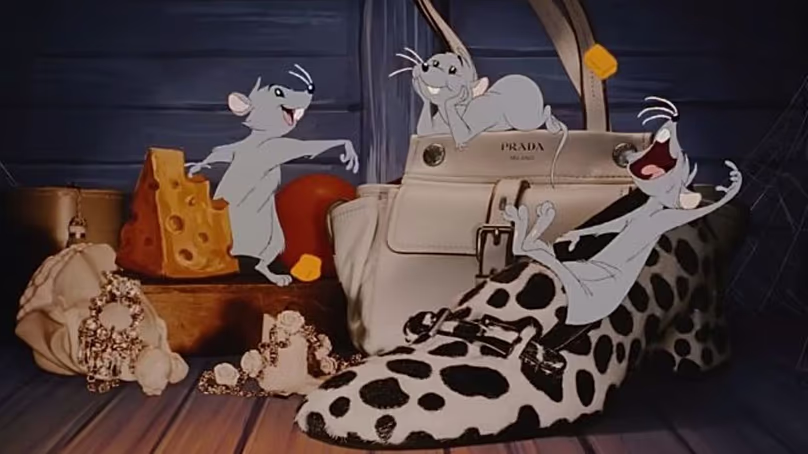
For luxury brands, the issue also has a strategic dimension. Their commercial identities frequently depend on craftsmanship, design heritage, exclusivity and the perceived value of specialized human expertise. A campaign emphasizing manual artistic production can reinforce those associations while differentiating the brand within an increasingly saturated digital advertising environment. In this context, the creative process becomes part of the commercial message: consumers are invited to recognize not only the finished images but also the skills and labor required to produce them. Whether that approach translates into measurable improvements in sales or brand loyalty remains a separate question requiring evidence beyond initial online reactions.
The campaign has generated favorable responses from social media users who welcomed its emphasis on human creativity. Some commentators described the illustrations as a refreshing alternative to the growing volume of automated promotional imagery, while others expressed admiration for the participation of professional animators. Such reactions suggest an audience for advertising that makes its creative processes visible, although individual comments should not be interpreted as representative evidence of consumer preferences across the luxury market. The broader significance lies in the growing visibility of production methods as a component of brand identity.
Prada’s approach also raises an important question about the future relationship between human creativity and artificial intelligence. The technologies are not necessarily mutually exclusive, and many creative industries already use digital tools alongside traditional artistic techniques. The central challenge involves determining which processes benefit from automation and where human judgment, technical skill and distinctive artistic expression remain essential to the intended result. By emphasizing hand-drawn animation, Prada demonstrates that technological advancement does not automatically make established creative practices obsolete, particularly when those practices communicate qualities that a brand considers central to its identity.
Ultimately, Drawing Prada: Animated by Hand is more than a seasonal fashion advertisement. It represents a deliberate artistic choice within a cultural environment increasingly shaped by automated image production and debates about the future of creative work. The campaign does not settle those debates, but it illustrates how companies can distinguish themselves by investing in recognizable human skills rather than treating technological novelty as an end in itself. At a moment when generative AI is transforming advertising, Prada’s Christmas campaign places craftsmanship, imagination and the people behind the images at the center of the story.
Phoenix24: Beyond the technology, the human creativity. / Más allá de la tecnología, la creatividad humana.