

 Phoenix 24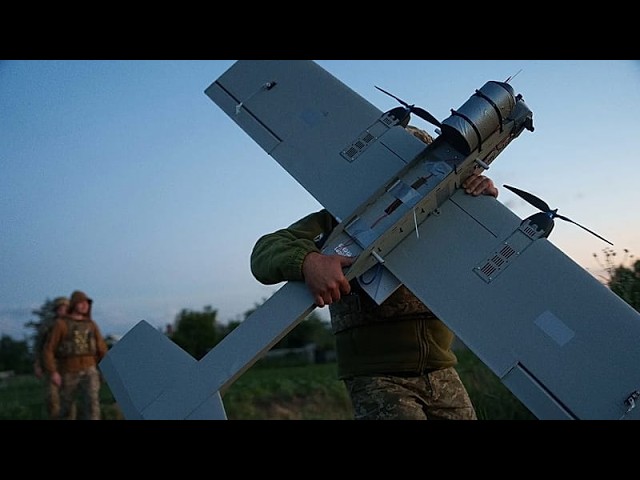
Kyiv pushes long-range pressure deeper into Russian territory.
Moscow | July 2026
Ukraine launched a large overnight drone operation against targets in central Russia, striking logistics facilities in the Moscow and Tambov regions and setting fire to an oil installation near the Russian capital. Euronews reported that Ukrainian President Volodymyr Zelenskyy described the affected sites as important supply hubs connected to the movement of sanctioned components, navigation systems and technology used in Russian drone production. Russian authorities confirmed fires, fatalities and injuries at several locations, although the full military impact of the attacks could not be independently verified.
Two warehouses operated by Wildberries, one of Russia’s largest online retailers, were among the locations affected. In Kotovsk, in the Tambov region, regional officials said seven night-shift workers were killed and 25 others were injured after a drone struck the facility. Another attack damaged a Wildberries logistics center in Elektrostal, east of Moscow, where authorities reported an additional death and dozens of injuries.
The casualties intensified debate over the legal and operational status of the targeted facilities. Kyiv maintains that some commercial logistics centers are being used to move restricted components and equipment linked to Russia’s military supply chain. Moscow, however, has emphasized the presence of civilian workers and presented the strikes as attacks against nonmilitary infrastructure.
The conflicting narratives illustrate the difficulty of distinguishing purely civilian facilities from dual-use sites in a war increasingly dependent on decentralized logistics. Warehouses, delivery centers and transport networks can simultaneously support commercial activity and the movement of technology with military applications. Without independent access to the affected locations, the precise function of each facility remains contested.
A separate drone strike triggered a fire at an oil depot in Noginsk, also in the Moscow region. Russian emergency services responded to the blaze, while nearby buildings were temporarily evacuated as a precaution. The incident reinforced the central role of fuel infrastructure in Ukraine’s strategy of weakening the logistical, industrial and transportation systems supporting Russian military operations.
Russian officials described the assault as one of the largest Ukrainian drone incursions recorded during the conflict. Moscow Mayor Sergei Sobyanin said numerous unmanned aircraft approached the capital region and claimed that local air defenses intercepted most of them. Russia’s Defense Ministry later reported hundreds of drones destroyed across several regions, Crimea and nearby maritime areas, although those figures remained unverified by independent observers.
The scale of the operation demonstrated Ukraine’s growing capacity to coordinate long-range unmanned aircraft against geographically dispersed targets. Such drones allow Kyiv to impose economic and logistical costs without relying exclusively on foreign-supplied missiles that may be subject to political or operational restrictions. They also force Russia to distribute air-defense systems across a vast territory instead of concentrating them near the front line and strategic military installations.
Russia continued its own aerial offensive against Ukraine during the same period. Ukrainian authorities reported that Moscow launched dozens of attack drones and several missiles, with the southern Odesa region facing particularly intense pressure. Additional strikes were reported in Kherson, where civilians were injured, reinforcing the reciprocal nature of the expanding aerial campaign.
The attacks show how the conflict has moved beyond conventional battlefield lines into a sustained contest against energy systems, warehouses, manufacturing centers and transportation corridors. Russia has repeatedly targeted Ukrainian postal and distribution facilities, arguing that some of them are used to store, assemble or transport drones. Kyiv now applies a similar justification when striking commercial sites inside Russian territory.
Ukraine has increasingly targeted Russian refineries, oil depots, terminals and fuel-distribution infrastructure in recent months. These operations are intended to disrupt military mobility, raise domestic costs and weaken the economic networks that support the war effort. Even limited physical damage can generate delays, security expenses, insurance losses and pressure on regional supply chains.
The strategy reflects Kyiv’s broader concept of imposing what Ukrainian officials describe as long-range sanctions. Rather than relying only on financial restrictions and international export controls, Ukraine seeks to physically interrupt the movement of fuel, components and technology used by Russia’s defense industry. The objective is to transform logistical vulnerability into a direct operational disadvantage.
For Moscow, the strikes create both security and political challenges. Russian authorities must defend an enormous territory while reassuring the population that critical infrastructure remains protected. Civilian deaths and damage to commercial facilities also provide the Kremlin with material to reinforce its narrative that Ukraine is deliberately attacking nonmilitary targets.
For Ukraine, however, the use of long-range drones also carries diplomatic and reputational risks. Civilian casualties can generate international scrutiny, especially when evidence of military activity at a targeted site has not been independently established. The credibility of Kyiv’s claims will increasingly depend on whether it can demonstrate that the facilities played a meaningful role in Russia’s military logistics.
The latest wave marks another escalation in a conflict increasingly defined by drones, dispersed infrastructure and contested dual-use targets. Russia retains greater industrial and military capacity, but Ukraine is demonstrating that distance no longer guarantees protection for facilities deep inside Russian territory. Logistics networks have become not only support systems for the war, but central battlegrounds within it.
The deeper the conflict reaches into commercial and civilian spaces, the more difficult it becomes to separate military pressure from human cost.
Phoenix24 | Global facts, human context. Hechos globales, contexto humano.