

 Phoenix 24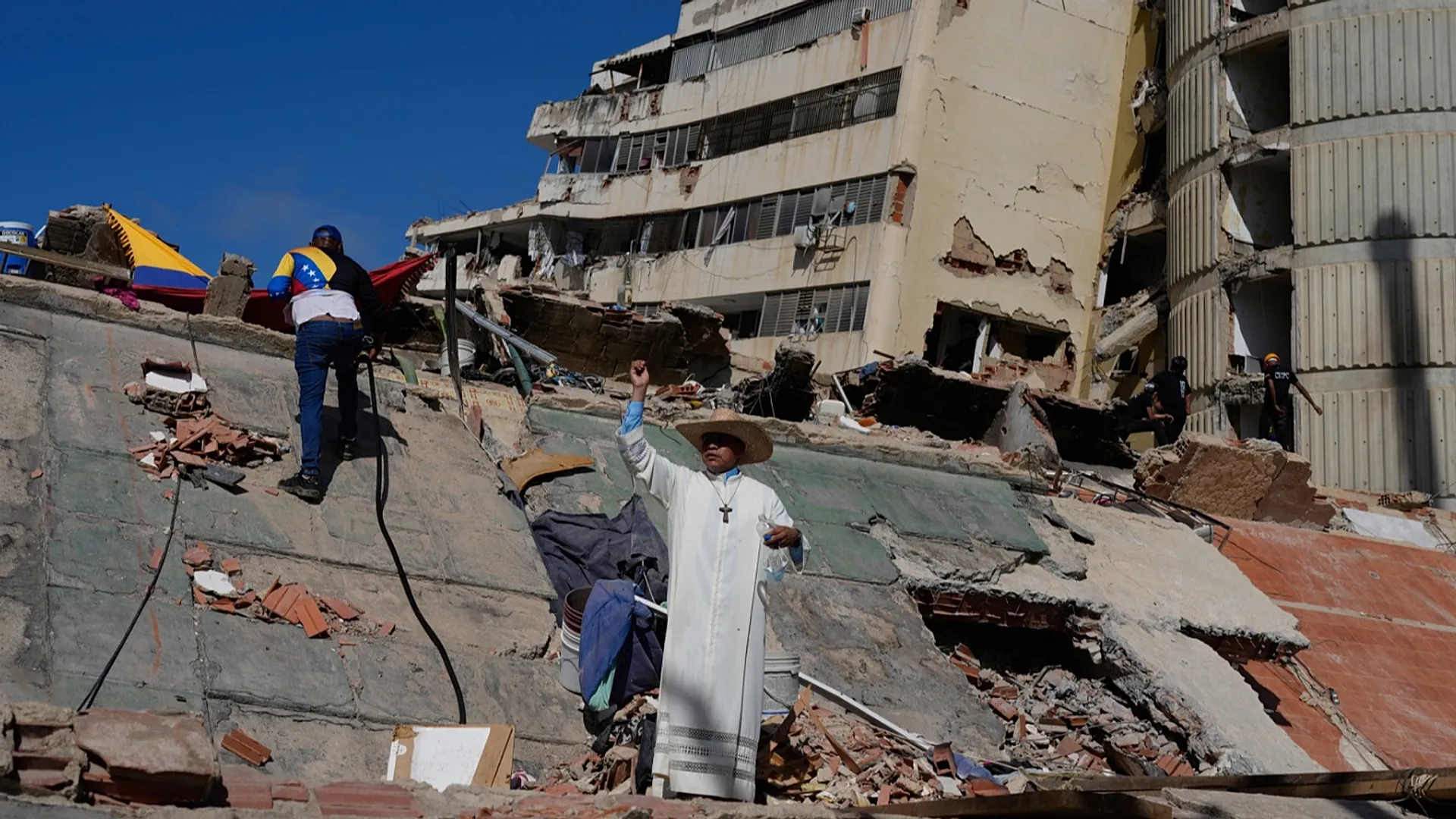
Rescue operations continue as humanitarian pressures intensify.
Caracas | July 2026
The official death toll from the two powerful earthquakes that struck northern Venezuela on June 24 has risen to 5,069, according to figures reported by Euronews. The number continues to increase as national and international rescue teams remove debris and search through the remains of collapsed residential buildings. More than three weeks after the disaster, the country remains immersed in one of the most complex emergency and reconstruction operations in its recent history.
The earthquakes, with magnitudes of 7.2 and 7.5, occurred only 39 seconds apart and caused extensive destruction across the northern coastal region. Since the initial seismic events, authorities have registered more than 1,300 aftershocks, prolonging uncertainty among residents and increasing concerns about the stability of damaged structures. La Guaira, located along the Caribbean coast, remains the state most severely affected by the disaster.
Venezuelan authorities have reported damage to 856 buildings, including 190 structures that collapsed completely. Hundreds of roads, bridges and other essential infrastructure components were also affected, limiting transportation and complicating the delivery of emergency assistance. Rescue workers and volunteers continue operating in areas where unstable debris, damaged access routes and recurring seismic activity present significant risks.
International rescue teams have joined thousands of Venezuelan emergency personnel searching for people who may remain trapped beneath the ruins. As time passes, however, operations are increasingly focused on recovering and identifying victims rather than finding survivors. Interim President Delcy Rodríguez has described the earthquakes as the most brutal natural catastrophe in Venezuela’s history.
The disaster has displaced more than 20,000 people, many of whom are currently living in overcrowded temporary camps. Humanitarian organizations have warned that some shelters lack safe and regular supplies of drinking water, as well as adequate sanitation services. These conditions could increase the risk of disease, particularly among children, older adults and people with chronic medical conditions.
The prolonged displacement has also intensified pressure on food distribution, public health services and emergency accommodation. Families whose homes were destroyed or declared unsafe face uncertainty about when they will be able to return to their communities. Many damaged buildings will require detailed structural evaluations before authorities can determine whether they can be repaired or must be demolished.
Beyond the immediate loss of life, the earthquakes have created a broad humanitarian emergency affecting transportation, housing, sanitation and medical care. The continuing aftershocks have contributed to anxiety among residents, many of whom remain reluctant to enter buildings that survived the initial tremors. The psychological consequences of the disaster may persist long after debris removal and reconstruction begin.
The Venezuelan government has announced the release of 346 million dollars, approximately 302 million euros, in resources previously frozen by the International Monetary Fund. Rodríguez said the funds would be directed toward recovery and reconstruction efforts in the northern coastal region. Priorities are expected to include housing, hospitals, roads, bridges and the restoration of essential public services.
The International Monetary Fund and the World Bank resumed relations with Venezuela in April after years of institutional separation. Access to international financing could become critical as the government attempts to address the scale of physical destruction and human displacement. The United States has also provided more than 300 million dollars in humanitarian assistance, according to information presented in the original report.
Reconstruction will require more than replacing collapsed buildings. Authorities must also restore water systems, transportation networks, medical facilities and public utilities while providing long-term accommodation for displaced communities. The economic cost could continue rising as engineers assess hidden structural damage and determine which buildings remain safe.
The situation in La Guaira illustrates the magnitude of the challenge. Entire residential zones have been affected, while damaged roads and bridges have restricted access to some locations. Emergency personnel must balance the urgency of rescue operations with the danger posed by unstable structures and continuing aftershocks.
For thousands of families, the disaster remains an unfolding personal tragedy. Some continue searching for relatives, while others await the formal identification of bodies recovered from collapsed buildings. Temporary shelters have become the center of daily life for communities that lost homes, possessions and access to basic services within seconds.
The death toll of 5,069 confirms the extraordinary human cost of the earthquakes. Yet the final impact will also be measured by the number of displaced families, the deterioration of public infrastructure and the country’s capacity to sustain a transparent and effective reconstruction process.
Venezuela has now entered a prolonged phase in which rescue, humanitarian assistance and rebuilding must advance simultaneously. The scale of the destruction means that recovery will depend not only on government action, but also on coordinated international support and continuous protection for the communities most exposed to the disaster.
Phoenix24 | Facts that cross borders. Hechos que cruzan fronteras.