

 Phoenix 24
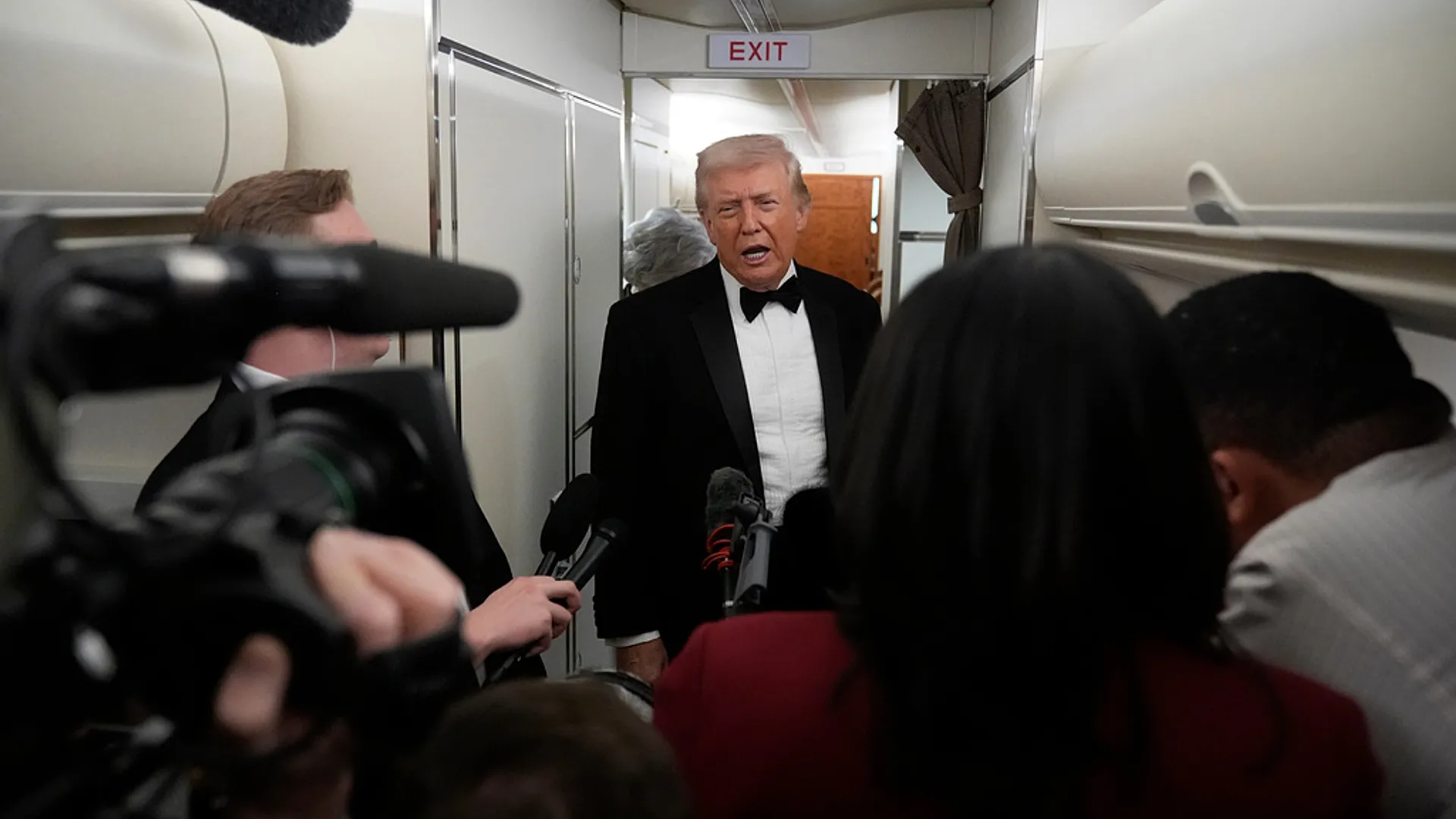
The announcement signals a potential shift in U.S. diplomacy even as economic pressure continues to shape bilateral relations.
Washington, February 1, 2026. U.S. President Donald Trump has indicated that the United States has started dialogue with Cuba, even as Washington maintains strict economic sanctions that have long defined relations between the two countries. The remarks reflect a strategic balancing act by the administration as it recalibrates diplomatic engagement while preserving leverage through sanctions that were intensified during previous U.S. policy cycles.
Trump’s comments came during a press event in Washington where he framed renewed communication with Cuban officials as part of broader efforts to advance U.S. interests in the Caribbean and Latin America. He suggested that opening lines of communication could help address a range of issues including migration, security cooperation, and economic reforms, while stopping short of announcing any immediate changes to the sanctions regime that has been a hallmark of U.S. policy toward Havana for decades.
The longstanding U.S. sanctions on Cuba, first broadly implemented in the early 1960s and reinforced under multiple administrations, restrict a wide range of economic activities and limit access to international financial markets. These measures have been justified by successive U.S. governments as leverage to promote human rights, political reforms, and economic liberalization, even as critics argue that they have contributed to hardship among ordinary Cubans without delivering significant political outcomes.
Trump’s statement did not specify the content or scope of the talks with Cuban representatives, nor did it indicate which U.S. agencies or envoys are leading the engagement. Some analysts suggest that the dialogue may be exploratory, aimed at identifying areas of mutual concern where cooperation could be possible without undermining U.S. policy objectives. Others interpret the move as a signal to regional partners that the United States seeks to play a more constructive role in hemispheric affairs amid shifting geopolitical dynamics.
Despite hints of engagement, the continuing presence of sanctions means that the economic and political relationship between Washington and Havana remains strained. U.S. trade restrictions and financial controls continue to limit the flow of goods, services, and investment, and many Cuban officials have publicly criticized the sanctions as an outdated policy that hampers development and feeds resentment. The Cuban government has responded in the past to overtures by emphasizing the need for respect of sovereignty and for changes to sanctions that they view as punitive.
The renewed communications come at a time when both Cuban domestic politics and U.S. foreign policy priorities are in flux. Cuba is navigating economic challenges linked to global market shifts, remittance flows, and internal demands for reform, while the United States is facing debates over immigration, regional diplomacy, and economic strategy in Latin America. These intersecting pressures have underscored the complexity of bilateral relations and the difficulty of reconciling long-standing differences.
Regional leaders in the Caribbean and Latin America have reacted cautiously to the news, noting that effective engagement with Cuba requires a clear understanding of the interests and constraints on both sides. Some have encouraged greater cooperation on issues such as climate resilience, disaster response, and public health, areas where shared challenges could provide a platform for constructive dialogue. Others emphasize that meaningful progress will necessitate addressing the underlying political and economic disputes that have historically divided Washington and Havana.
International observers have pointed out that any shift toward dialogue, even if limited in scope, reflects the pragmatic recognition that isolating Cuba entirely may not serve broader diplomatic or security objectives. In an era marked by shifting alliances and economic interdependence, policymakers in Washington are increasingly weighing the costs and benefits of engagement versus continued pressure, especially on matters that have implications beyond bilateral relations.
As talks continue in their early stages, the trajectory of U.S.-Cuba relations remains uncertain. The coexistence of diplomatic outreach and sustained sanctions suggests that any substantive evolution will occur incrementally and will depend heavily on political developments within each country as well as broader regional and global dynamics.
Detrás de cada dato, hay una intención. Detrás de cada silencio, una estructura.