

 Phoenix 24
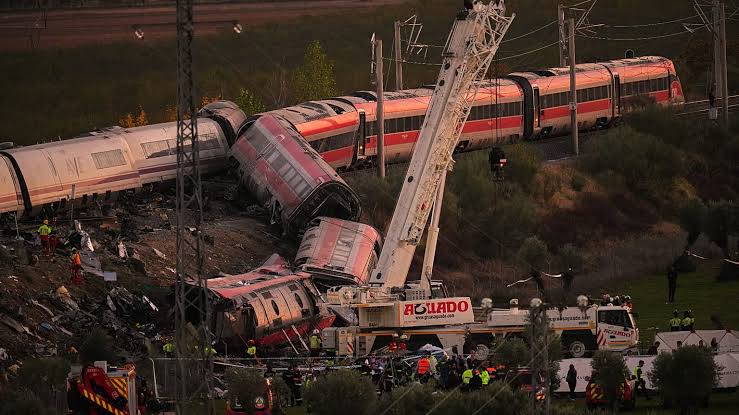
Two senior departures in 48 hours intensify questions about railway safety and political accountability.
MADRID, SPAIN — November 4, 2026. Spain’s railway crisis has triggered a second major leadership departure after Luis Pedro Marco de la Peña resigned as president of Adif, the state-owned company responsible for managing the country’s railway infrastructure. His decision came just one day after Transport Minister Óscar Puente stepped down following the October 28 high-speed train collision in Urda, Toledo, which killed 69 people. The resignations have placed Prime Minister Pedro Sánchez’s government under increasing pressure to restore public confidence in a railway system confronting questions about operational safety, infrastructure maintenance and institutional accountability.
Marco de la Peña submitted his resignation on Wednesday during a meeting with Carlos Cuerpo, Spain’s first deputy prime minister and economy minister, who has temporarily assumed responsibility for the Transport Ministry. According to Spanish media reports, the Adif president had already informed Puente of his intention to leave before the minister’s own departure. Cuerpo subsequently described the resignation as an appropriate decision, explaining that Marco de la Peña had presented reasons similar to those expressed by his predecessor. The government has not announced a replacement, leaving another important leadership position unresolved during an exceptionally sensitive period for Spanish rail transport.
The immediate cause of the crisis is the collision near Urda, where a Renfe high-speed train struck an Iryo service that had stopped ahead on the same line. Preliminary investigative findings indicate that a malfunction involving the LZB railway safety system disrupted normal operations before the collision. Investigators are examining why the Renfe train was subsequently authorized to resume its journey at normal speed despite the presence of the stationary train. The circumstances have raised questions about operational instructions, technical safeguards and communication between traffic controllers and train operators, although the final allocation of responsibility remains subject to investigation.
The accident has intensified scrutiny of Adif’s central role in railway safety. Unlike Renfe and other passenger operators, Adif manages infrastructure and coordinates functions essential to the safe movement of trains, including signaling and traffic control. Consequently, investigators are examining whether the events at Urda resulted from an isolated operational error, deficiencies in established procedures or a broader combination of technical and organizational weaknesses. These possibilities require different corrective measures, making it essential that the inquiry distinguish documented failures from conclusions that have not yet been established.
The political consequences have been substantial. Puente announced his resignation on November 3 after appearing before lawmakers to explain the accident and the government’s response. Sánchez accepted the decision the following morning, presenting it as an expression of respect for the victims and an attempt to rebuild public trust. Opposition leader Alberto Núñez Feijóo, however, argued that responsibility should extend to the prime minister himself. The competing reactions illustrate the political significance of the railway crisis, particularly as Spain approaches its November 29 general election.
The tragedy has also revived memories of another deadly railway accident earlier in 2026. The disasters at Adamuz, in Córdoba, and Urda have together claimed 115 lives, according to reporting by Reuters. Their combined impact has reinforced demands for stronger oversight, improvements in railway safety systems and greater transparency concerning infrastructure maintenance. Nevertheless, the two accidents must be investigated individually; their occurrence within the same year does not establish that they resulted from identical technical or organizational failures.
Marco de la Peña had led Adif since September 2024, following his appointment from the Basque regional government, where he served as deputy minister responsible for infrastructure and transport. His departure represents another change in the leadership of an organization that has had four presidents in slightly more than five years. Before resigning, he chaired an Adif board meeting that approved a financing framework with the Spanish state for 2026–2030. The agreement provides for approximately €20 billion in infrastructure investment and maintenance expenditure, underscoring the scale of the responsibilities now confronting the company’s next leadership team.
Financial commitments are only one element of the required response. Effective railway safety depends on the condition of physical infrastructure, the reliability of signaling technology, operational protocols, personnel training and the independence of technical investigations. The Spanish government has approved approximately €30 million in assistance for victims and their families, alongside additional measures intended to improve high-speed railway safety. These initiatives address immediate humanitarian and operational concerns, but their longer-term effectiveness will depend on implementation, independent evaluation and transparent reporting.
Cuerpo now faces the responsibility of maintaining transport operations while overseeing the institutional transition and responding to the findings emerging from the Urda investigation. His temporary appointment creates a demanding administrative situation because he retains his economic responsibilities while assuming oversight of a sector experiencing intense public scrutiny. Beyond naming new officials, the government must demonstrate that the investigation’s findings will inform concrete improvements in infrastructure management and risk prevention.
For passengers, the central concern remains the reliability and safety of a transportation network widely associated with Spain’s technological development and regional connectivity. High-speed rail supports tourism, business travel and economic activity, making public confidence essential to the system’s continued operation. Restoring that confidence requires more than leadership changes or political assurances; it depends on evidence that operational weaknesses have been identified, corrective actions implemented and safety standards consistently enforced.
The resignation of Adif’s president marks another institutional consequence of the Urda tragedy, but it does not settle the questions surrounding the accident. As investigators continue examining the technical and human decisions that preceded the collision, Spain faces a broader challenge: transforming political accountability into measurable improvements in railway governance. The effectiveness of that response will determine whether the current crisis becomes a turning point for infrastructure safety or another episode in a prolonged debate over public management and institutional responsibility.
Phoenix24: Beyond the headlines, the institutional responsibility. / Más allá de los titulares, la responsabilidad institucional.