

 Phoenix 24
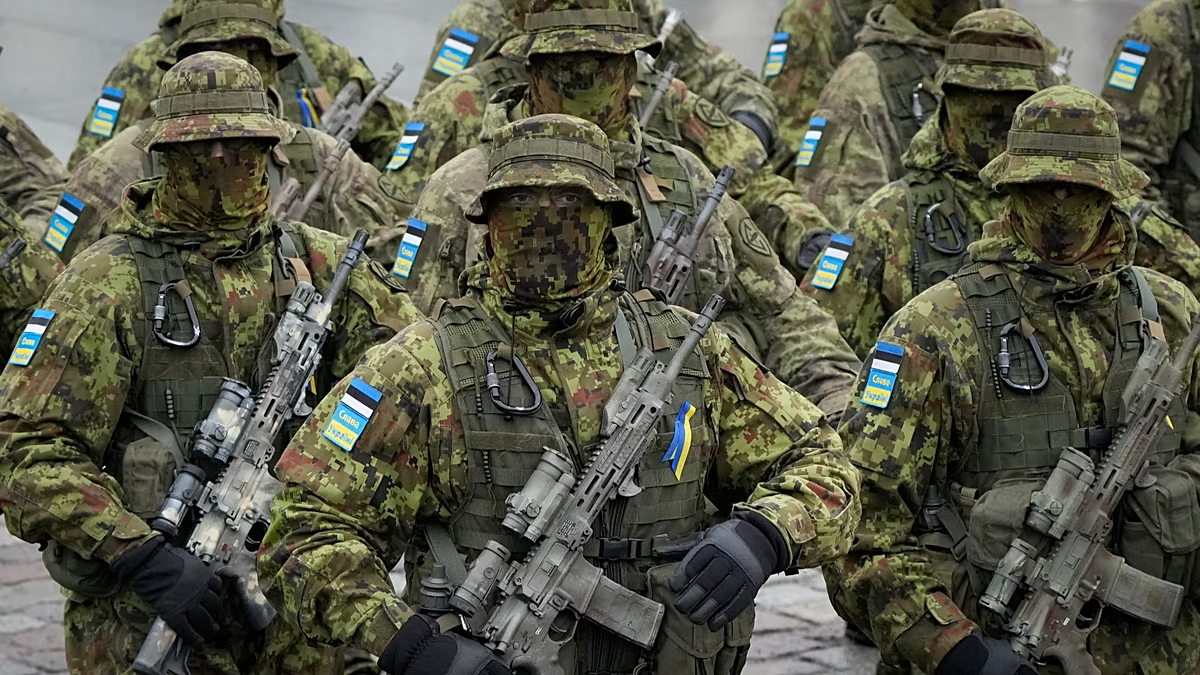
Record military spending has yet to deliver the capabilities Europe needs to respond independently to major security threats.
BRUSSELS, BELGIUM — November 4, 2026. The European Commission has warned that the European Union’s ambition to achieve full military readiness by 2030 is at risk, despite unprecedented increases in defense expenditure and growing political support for strengthening Europe’s security capabilities. The assessment, contained in the Commission’s 2027 work program and initially reported by Euronews from a leaked draft, exposes a fundamental weakness in European defense planning: higher spending has not yet translated into sufficiently deployable, sustainable and interoperable military forces. The warning comes as European governments confront continuing Russian aggression against Ukraine, hybrid security threats and uncertainty surrounding the future scale of American military support.
The financial figures illustrate the magnitude of the challenge. According to the European Defence Agency (EDA), EU member states spent approximately €418 billion on defense in 2025, equivalent to 2.2% of the bloc’s combined gross domestic product. Expenditure could reach €547 billion by 2029 if current investment trajectories continue. Nevertheless, the EDA’s first Annual Defence Readiness Report, presented in September, identified persistent deficiencies in military capabilities, industrial production and operational coordination. Its findings demonstrate that increased budgets do not automatically produce the personnel, equipment, logistics and integrated systems necessary for effective defense.
One of Europe’s most consequential vulnerabilities involves strategic enablers: specialized capabilities that allow armed forces to deploy, communicate, operate and sustain military missions. These include strategic air transport, aerial refueling, intelligence systems, satellite infrastructure, cybersecurity and sophisticated logistical networks. European Defence Commissioner Andrius Kubilius has emphasized the need to develop these capabilities domestically as Washington reassesses its military presence on the continent. According to estimates cited by Euronews, replacing or expanding the required strategic support capabilities could involve expenditure approaching €500 billion, although that figure should not be interpreted as an approved European budget.
The Commission’s newly adopted work program proposes establishing a European Instrument for Strategic Enablers to coordinate investments in these critical capabilities. The initiative would support cooperation among member states and seek to reduce operational dependencies that limit Europe’s ability to act effectively during major security emergencies. However, the proposal remains an institutional commitment requiring further development, financing arrangements and agreement on implementation. Its eventual effectiveness will depend on whether European governments can align procurement decisions and technical standards while preserving their national responsibilities for defense.
The difficulties extend to emerging technologies. Counter-drone systems have become particularly important as unmanned aircraft increasingly influence military operations and threaten critical infrastructure. Although European investment in counter-drone technologies reportedly increased sixfold between 2024 and 2025, Euronews reports that only approximately one-third of relevant EU programs are expected to deliver their planned capabilities by 2030. This gap between investment and operational availability illustrates the consequences of extended development timelines, fragmented procurement and the challenges of integrating new technologies into existing military structures.
Brussels is also exploring institutional changes intended to improve crisis management. The Commission proposes a European Security Emergency Protocol that could facilitate a coordinated response when a member state faces a direct and credible threat. Commission President Ursula von der Leyen has compared the concept with NATO’s Article 4 consultation mechanism, although the proposal has not secured unanimous support. The work program also raises the possibility of establishing a European Security Council with close international partners. These initiatives remain under discussion and do not constitute the creation of a unified European army or the replacement of NATO’s existing collective-defense arrangements.
The European Union’s defense objectives are closely connected to changes in the transatlantic security relationship. President Donald Trump’s decision to reduce aspects of the American military presence in Europe has increased concerns about the availability of capabilities historically supplied by the United States. For European governments, the issue is not simply replacing American personnel or equipment, but developing the industrial capacity, logistical infrastructure and operational coordination required to sustain independent contributions to collective defense. NATO remains central to European security, while the EU’s initiatives are intended to strengthen the capabilities of its member states within that broader framework.
Ukraine occupies an equally important position in the Commission’s strategy. Brussels intends to continue supporting Ukrainian defense production and cooperation with European manufacturers, particularly in air and missile defense, ammunition, drones and counter-drone technologies. Ukraine’s battlefield experience provides practical information about rapidly evolving military requirements, while European industrial partnerships could support the development and production of urgently needed equipment. Nevertheless, transferring technological knowledge into reliable manufacturing capacity requires financing, secure supply chains, skilled personnel and sustained coordination.
The challenge also has significant economic and industrial implications. European defense manufacturing remains divided among national markets, with different procurement requirements, equipment specifications and production capacities. Such fragmentation can increase costs, delay deliveries and make interoperability more difficult. The EU’s Readiness 2030 strategy, supported by initiatives including the €150 billion Security Action for Europe loan mechanism, seeks to encourage joint procurement and strengthen the continent’s defense industrial base. The effectiveness of these instruments will ultimately depend on measurable improvements in production capacity, delivery schedules and operational readiness.
The Commission’s assessment should not be interpreted as proof that Europe will be incapable of defending itself in 2030. Rather, it identifies a growing risk that declared objectives may not be achieved without faster implementation and closer cooperation among member states. Actual readiness must be evaluated through operational capabilities, logistical resilience and the ability to sustain military activities, not expenditure alone.
Europe’s central challenge is therefore transforming financial resources and political commitments into functioning defense capabilities. The 2030 deadline is becoming a test of industrial coordination, technological development and institutional effectiveness. As the security environment continues evolving, the credibility of Europe’s defense strategy will depend less on how much governments promise to spend than on whether their investments produce the capabilities necessary to protect the continent.
Phoenix24: Beyond military spending, the challenge of strategic readiness. / Más allá del gasto militar, el desafío de la preparación estratégica.