

 Phoenix 24
Dependence hurts, but fragility hurts more.
Havana, March 2026. There is no single universal answer to which country is most damaged by an energy crisis, because the impact depends on what is being measured. If the question is about systemic collapse in everyday life, Cuba stands out sharply right now. The island has suffered repeated nationwide blackouts, exposing an electricity system that no longer fails as an exception, but as a pattern. When an entire country loses power at that scale, the crisis extends far beyond electricity prices into water supply, refrigeration, communications, healthcare and basic urban life. In that sense, Cuba is not merely facing expensive energy. It is facing the breakdown of energy as public infrastructure.
If the question is about exposure to global oil and gas disruption, then the answer becomes broader and more geopolitical. Countries heavily dependent on imported fuel and lacking strong strategic cushions are especially vulnerable when war, shipping disruption or price shocks hit the market. In those cases, the damage may not look like total collapse, but it can spread through inflation, transportation costs, food prices and industrial pressure. The crisis then becomes economic before it becomes visibly infrastructural.
This is why the most serious answer is not always the country that imports the most energy, but the country least able to absorb disruption. By that standard, Cuba remains among the clearest examples. It combines grid fragility, fuel shortages, weak recovery capacity and immediate social consequences. Other countries may lose growth, face inflation or suffer sectoral disruption, but Cuba is confronting energy failure as a condition of daily life.
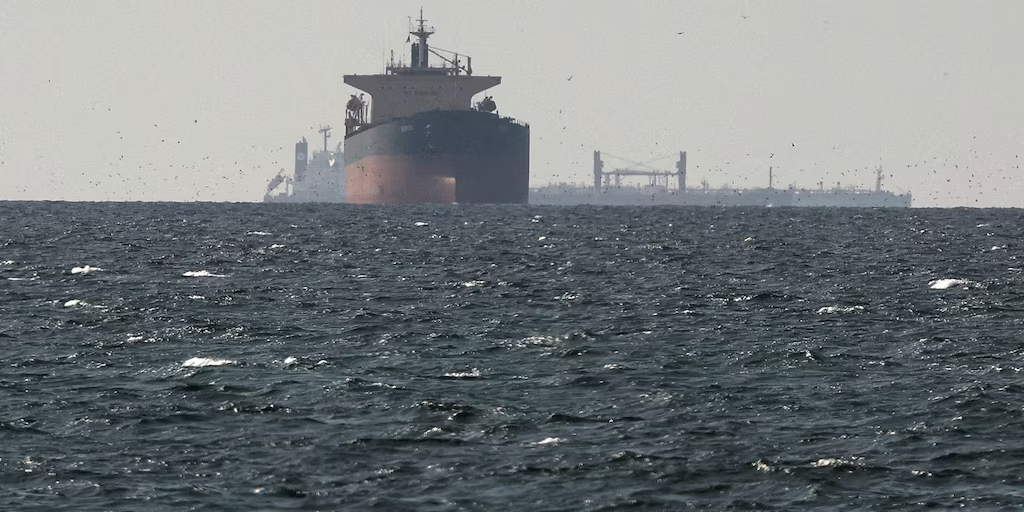
There are also countries that appear less dramatic in headlines while remaining deeply exposed in operational terms. Fuel-intensive economies, logistics-dependent states and countries with weak domestic refining or generation capacity may avoid full blackouts yet still endure severe damage through transport bottlenecks, industrial slowdown and rising household pressure. In those cases, the crisis is not darkness everywhere at once. It is the silent spread of stress across the economy.
That is why energy crises should be read through resilience rather than price alone. A wealthy country may absorb expensive fuel for longer through subsidies, reserves or infrastructure flexibility. A poorer or more fragile country may be pushed into breakdown much faster, even if it consumes less energy overall. The decisive variable is not only dependence. It is the ability to keep life functioning once disruption begins.
So the sharper conclusion is not that one country suffers most in every metric. It is that different countries are being hit in different ways. But in human and infrastructural terms, Cuba now stands among the most severely affected because the crisis has moved beyond economics and into the structure of daily survival. Energy crises do not punish everyone equally. They punish weakest resilience first.
More than the news, the pattern. Beyond the news, the pattern.