

 Mario López Ayala, PhD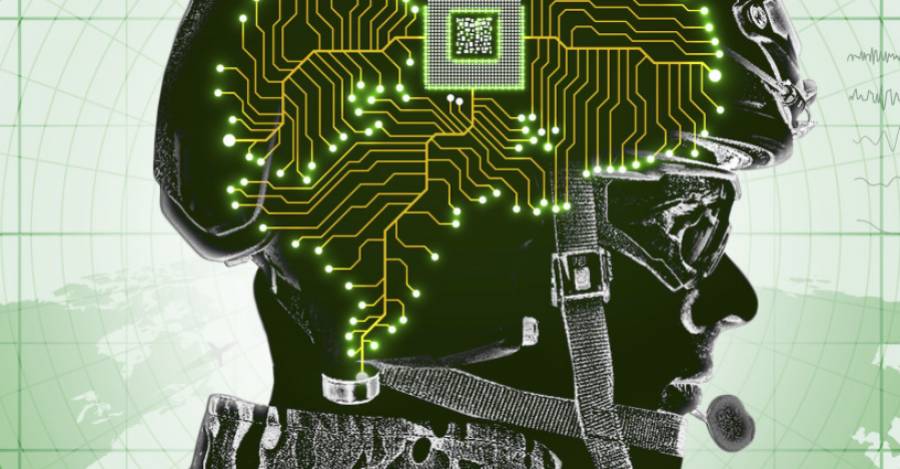
War no longer invades territories, it invades minds.
Washington, March 2026.
Cognitive warfare driven by artificial intelligence is already reshaping global geopolitics. For decades, geopolitics trained us to look outward. Maps, straits, maritime routes, critical minerals, energy corridors, logistical bottlenecks. That was where power seemed to reside. And, to a large extent, it did. But something shifted. Or perhaps something migrated. The decisive conflict of this era is no longer confined to the visible surface of the world, but unfolds within perception itself. Not on physical territory, at least not first, but in that less charted space where societies interpret, fear, react, and fracture. The central dispute is no longer only about controlling strategic resources. It is about intervening in mental frameworks, managing emotional climates, and shaping collective behavior without the need for conventional occupation.
What was once called propaganda now feels insufficient. Not because it disappeared, but because it was surpassed. Classical propaganda relied on centralized media, grand narratives, slower cycles. Contemporary cognitive warfare operates differently. More diffuse, more adaptive, less visible. It does not necessarily seek to convince entire populations of a single truth. It is enough to erode consensus. To introduce noise. To accelerate fatigue. To multiply versions compatible with preexisting anxieties. At that point, falsehood does not need to dominate. It only needs to destabilize reality.
Artificial intelligence amplifies this process in ways that are both subtle and profound. Not merely through the generation of believable synthetic content. That is only the surface. The real shift occurs elsewhere. In the reading of attention patterns, in the identification of emotional vulnerabilities, in the segmentation of audiences, in the continuous experimentation with narratives. Thousands of variations, tested in real time. Adjusted according to reaction. Optimized to provoke adhesion, rejection, saturation, or indifference. This is no longer just about informing or misinforming. It is about modulating attention. And when the attention of a society becomes programmable, the problem ceases to be merely communicational. It becomes structural.
From that vantage point, current geopolitical vectors acquire a different density. Rivalry among major powers can no longer be understood outside technological dominance. The United States protects its computational capacity as a strategic asset. China integrates artificial intelligence into a broader vision of power projection, both internally and externally. Europe attempts to regulate without falling behind. Russia and Iran operate in gray zones where informational distortion is part of the toolkit. At the same time, transnational technology corporations manage global spaces of conversation that, at times, exert more influence than many states. This is not a neatly ordered system. It is layered, overlapping, and often contradictory.
From psychology and sociology, the phenomenon reveals another dimension. Societies do not merely consume information. They construct meaning. When that process is persistently intervened by systems designed to maximize reaction, the social environment becomes more anxious, more polarized, more reactive. Social psychiatry is beginning to observe something significant. This is not only about misinformation. It is about erosion. Cognitive fatigue. Accumulated distrust. An increasingly unstable relationship with shared reality.
Cognitive warfare does not begin by destroying buildings. It wears down internal thresholds. It erodes concentration, fragments memory, reduces tolerance for complexity. A society exposed over time to saturation and contradiction becomes exhausted. And an exhausted citizenry does not only make more errors. It also seeks faster, simpler, more emotional answers. A fracture opens. Not necessarily toward a specific ideology, but toward any structure that promises order in the face of perceived chaos.
This is why the struggle over semiconductors, data, digital infrastructure, and artificial intelligence models is not merely economic. Nor purely military. It is a struggle over the capacity to structure what is visible. To hierarchize relevance. To influence credibility. Oil defined much of the twentieth century. Computation and attention are defining this one, in ways less visible, but more deeply embedded.
The response cannot be superficial. Labeling content or repeating narratives about digital literacy will not suffice. What is at stake is a more demanding notion of sovereignty. A strong democracy is not only one that holds elections. It is one that protects the cognitive integrity of its citizens. That requires regulation, transparency, and critical education. But it also requires recognizing that the problem is not only technological. It is human.
The dilemma is uncomfortable. Humanity created tools to expand its intelligence and now faces the possibility of delegating to them the management of its attention. This transition does not occur abruptly. It appears as convenience, personalization, efficiency. Contemporary colonization does not need to impose itself. It integrates. It normalizes. And when a society begins to confuse autonomy with induced behavior, the problem ceases to be visible.
Perhaps this is where the true tension of our time lies. Not in whether artificial intelligence will dominate the world, but in whether we will recognize in time how deeply it is already shaping the way we perceive it.
Mario López Ayala, PhD
Researcher and Director of Phoenix24