

 Phoenix 24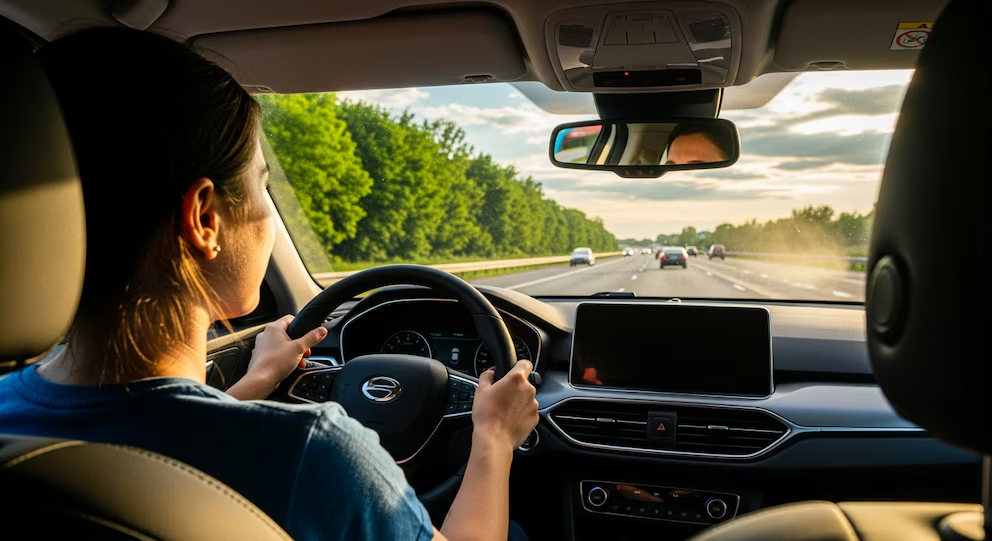
The gearbox also shapes the kind of driver you become.
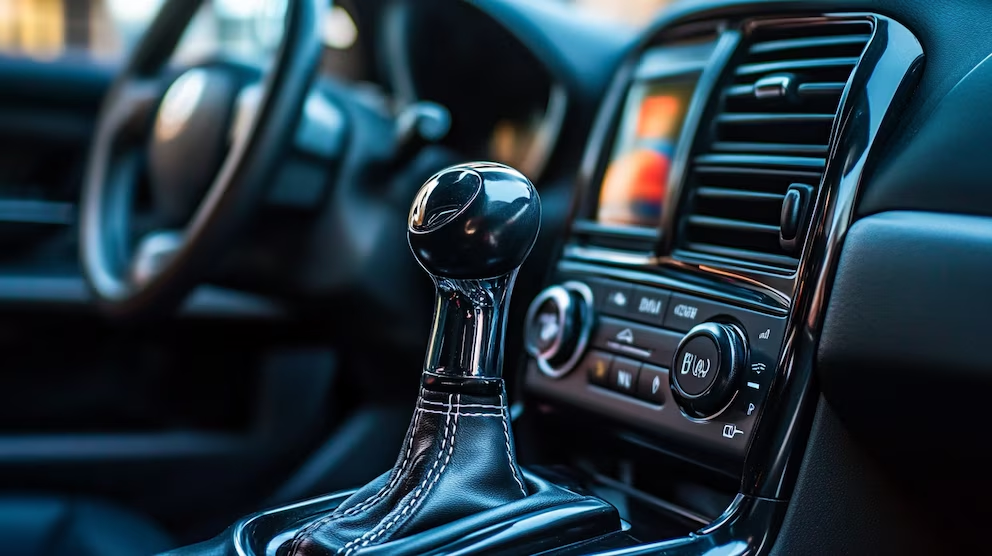
Detroit, March 2026. Choosing between a manual and an automatic vehicle is not simply a technical decision about how a car moves. It changes the driving experience, affects long-term operating costs and reveals how the market itself has evolved. The core difference remains straightforward: a manual transmission gives the driver direct control over gear changes, while an automatic delegates that work to the vehicle. But the real distinction runs deeper, because each system privileges a different balance between control, comfort, efficiency and learning curve.
Manual vehicles still appeal for one main reason: involvement. They give the driver a more direct sense of command over the machine, especially in conditions where rhythm, engine response and gear selection matter. For many drivers, that added control creates a stronger connection with the road. Manuals are also often associated with lower purchase prices and, in many cases, less expensive repairs when compared with more complex automatic systems. In markets where cost sensitivity remains high, that practical advantage still matters.
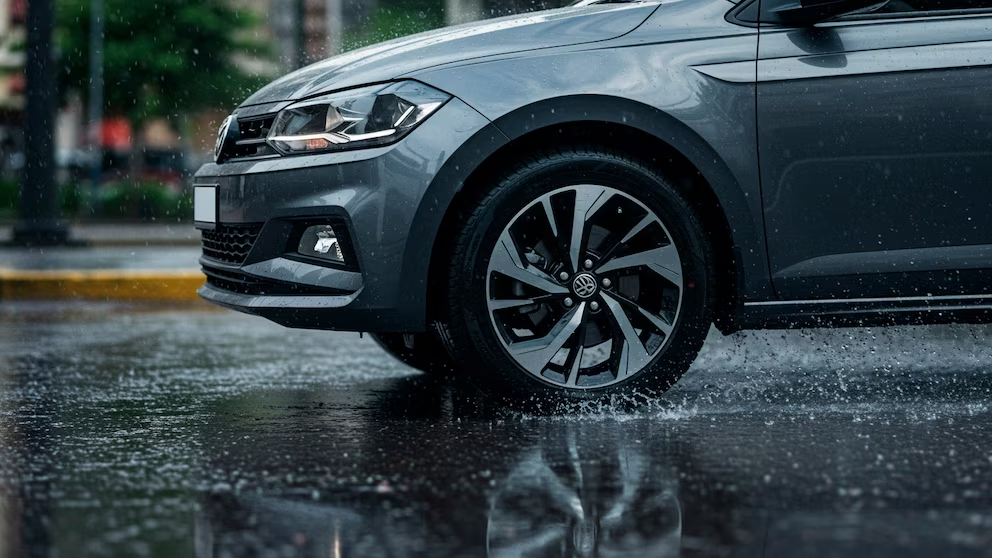
There is also a cultural dimension to the manual option. Driving a manual is often seen as a skill rather than a convenience. It demands coordination, anticipation and a more active relationship with the vehicle. That makes it attractive to people who value driving as an experience rather than merely a method of getting from one place to another. The downside, of course, is equally clear. In dense urban traffic, steep inclines or repetitive commuting, the same engagement that feels rewarding on open roads can become tiring and inefficient.
Automatic vehicles, by contrast, are built around ease. Their greatest advantage is comfort, especially in everyday city use. They reduce physical effort, simplify driving in stop-and-go traffic and make the car more accessible to inexperienced drivers. Modern automatic transmissions have also become far more sophisticated than older generations. In many cases, they now offer smoother shifts, stronger fuel management and better performance integration than the outdated stereotype of the sluggish automatic would suggest.
That shift is important because it changes the old logic of comparison. For years, manuals were widely assumed to be more efficient and automatics were viewed as easier but less economical. That gap has narrowed significantly. Improvements in transmission technology mean many modern automatic vehicles are now far more competitive in fuel use and day-to-day efficiency than before. As a result, the choice today depends less on a fixed hierarchy of what is objectively better and more on how the vehicle will actually be used.
The decision also carries long-term implications. A manual may still offer lower complexity and more direct mechanical control, but it demands more from the driver. An automatic may cost more upfront or involve more complicated maintenance in some cases, but it often pays back in convenience and accessibility. In other words, the comparison is no longer about superiority in the abstract. It is about alignment between the machine and the life of the person driving it.
That is why the best choice depends on context rather than ideology. A driver who values engagement, wants lower entry cost and does not mind a steeper learning curve may still prefer a manual. A driver who spends hours in urban traffic, prioritizes ease and wants a more relaxed daily experience will likely find the automatic more rational. The market increasingly reflects that reality. Automatic transmissions continue gaining ground because they fit contemporary driving patterns, not because manuals have lost all value.
The deeper truth is that this is no longer a debate between old and new, or between skill and simplicity. It is a debate about what drivers now expect from the act of driving itself. One system asks for more from the human behind the wheel. The other asks more from the machine. And that choice, in the end, says as much about lifestyle as it does about engineering.
More than the news, the pattern. Beyond the news, the pattern.