

 Phoenix 24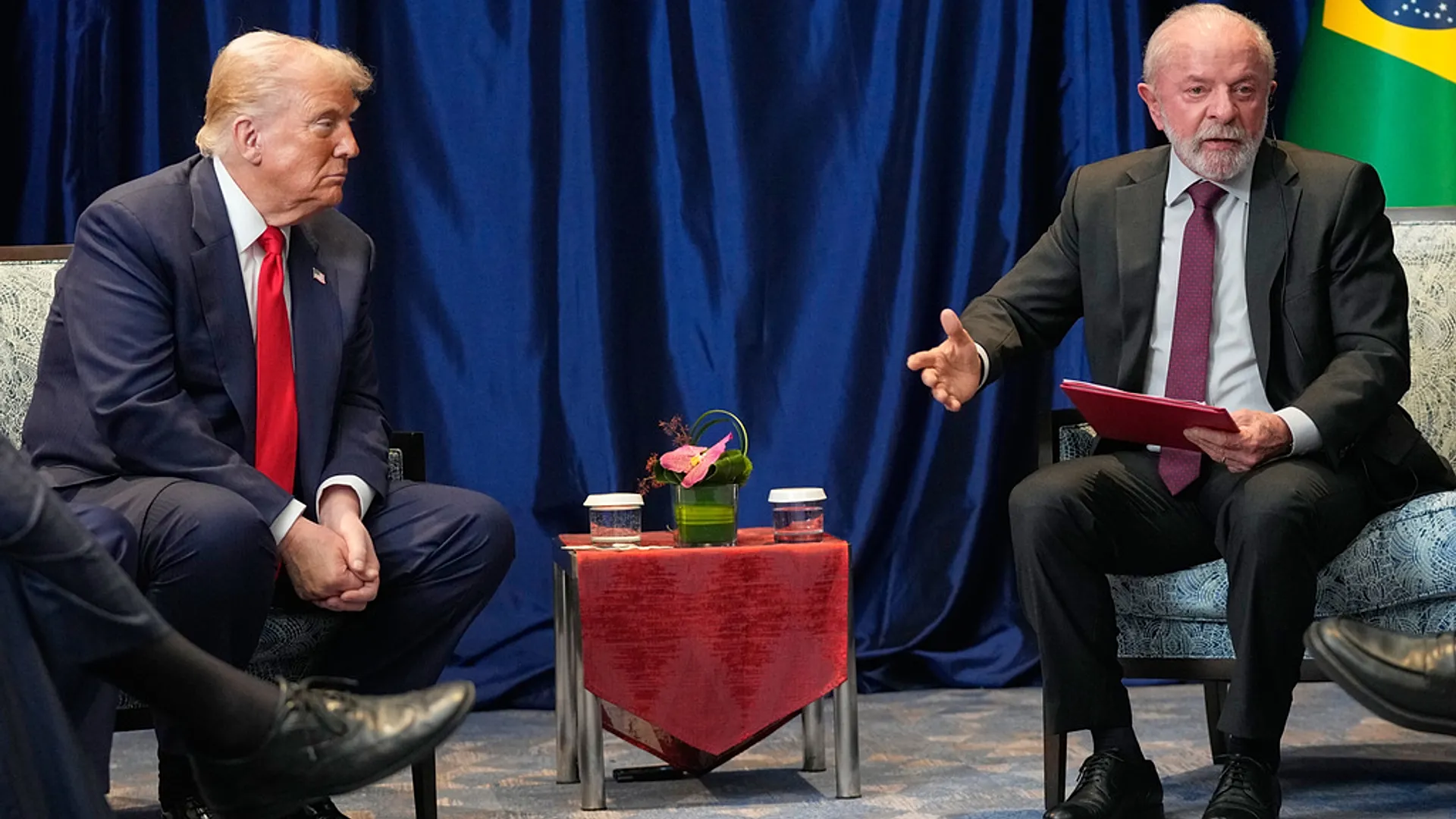
An unexpected dialogue between Trump and Lula reshapes the economic balance of the hemisphere.
Kuala Lumpur, October 2025
A brief yet strategic conversation between U.S. President Donald Trump and Brazil’s Luiz Inácio Lula da Silva on the sidelines of the Association of Southeast Asian Nations (ASEAN) Summit marked a subtle shift in bilateral relations, with ripple effects that could reach Venezuela’s political future. According to Brazil’s foreign ministry, Trump acknowledged that “we should be able to reach good deals for both countries” following their Sunday meeting.
The encounter—one of the first public interactions between both leaders after the tense Bolsonaro years—signaled Trump’s willingness to ease tariffs imposed on Brazilian exports. In return, Lula reportedly requested a partial rollback of sanctions under the Magnitsky Act affecting Brazilian Supreme Court magistrates, and offered to mediate talks between Washington and Caracas.
Trade remained the central axis of Trump’s visit to Malaysia, where he also discussed the ongoing dispute with China over rare earth elements. Within this context, rapprochement with Brazil gains strategic weight as it opens the possibility of a more pragmatic Latin American bloc aligned with U.S. interests.
From Brasília, diplomats view the moment as an opportunity to reposition Brazil as a global interlocutor after years of ideological rifts. Both administrations are reportedly planning reciprocal visits, with Trump expressing interest in traveling to Brasília and Lula considering a trip to Washington.
For the United States, strengthening ties with Brazil means consolidating its influence in South America while diversifying its trade front after the recent truce with Beijing. Chinese trade negotiator Li Chenggang confirmed a “preliminary consensus” on disputed areas shortly after Trump threatened 100 percent tariffs on Chinese products.
Regionally, Brazil’s potential mediation in the Venezuelan crisis reflects a broader reconfiguration of power. Long isolated under U.S. sanctions, Venezuela could find a diplomatic corridor through Brazil’s balancing role, which merges economic pragmatism with regional dialogue.
At first glance, the convergence between Washington and Brasília in an Asian forum may seem a diplomatic coincidence. Yet, viewed through the lens of global trade geopolitics, it signals the emergence of a new Latin American front aligned with Washington’s tariff logic—one that could recalibrate sanctions, supply chains, and control over strategic minerals.
Across the Western Hemisphere, Brazil is positioning itself beyond the traditional Washington–Bogotá–Lima axis. In Europe, both the EU and the OECD are closely watching how this emerging partnership may alter future trade negotiations, while the ASEAN itself rises as a neutral ground connecting the agendas of East and West.
Ultimately, the pragmatic turn in U.S.–Brazil relations suggests a new phase of stability built on mutual leverage: trade access for diplomatic mediation, and mediation as a currency of influence. An alliance born in Asia, quietly redrawing the hemisphere’s architecture.
Truth is structure, not noise. / La verdad es estructura, no ruido.