

 Phoenix 24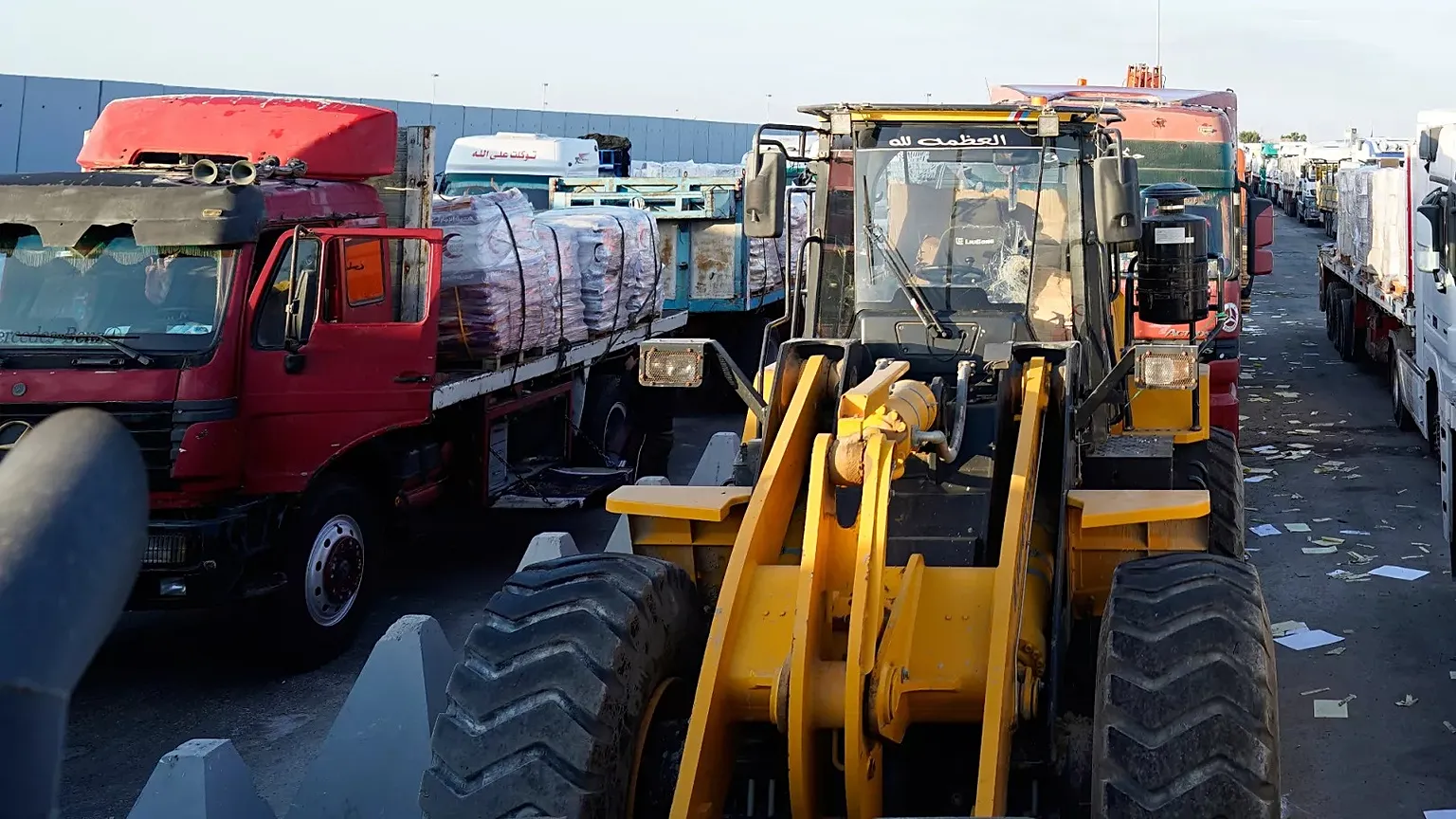
Amid ruins, excavators, and rising distrust, the strip turns into a landscape where diplomacy intertwines with exhumation.
Gaza, October 2025.
The air still tastes of dust and silence. Across what used to be crowded neighborhoods, Hamas teams have launched a new phase of recovery operations to locate the bodies of Israeli hostages presumed buried under Gaza’s wreckage. Egypt has joined the effort, sending heavy machinery and rescue units through the Rafah crossing — a move that blends humanitarian aid with calculated diplomacy. Egyptian authorities confirmed the arrival of convoys equipped with excavators and underground detection systems similar to those used in previous Sinai civil-engineering missions.
The goal is to unearth remains believed to lie several meters deep beneath collapsed structures. In recent weeks, Hamas admitted it could no longer continue recovery work alone, citing the magnitude of the destruction and unstable terrain. Cairo’s intervention carries both moral and political weight: it revives Egypt’s traditional role as mediator and positions it once again as a decisive player in the regional equation.
The exchange of human remains between the two sides remains at an impasse. According to figures verified by international observers, Israel has returned 195 Palestinian bodies, while Hamas has handed over 18 Israeli ones. Behind each number lies a slow, forensic process and discreet negotiations. In Jerusalem, government spokespeople reiterated that “no easing of the blockade or diplomatic normalization” will occur while hostages remain unaccounted for.
From Washington, U.S. President Donald Trump stated that his administration is “closely monitoring the restitution commitments” and expects the searches to conclude within 48 hours. Beneath that statement lies quiet logistical pressure: parts of the U.S. support team based in Egypt are indirectly assisting in convoy security coordination.
In Cairo, officials at the Ministry of Foreign Affairs confirmed that the decision to send machinery into Gaza followed intensive talks with Israeli intelligence and United Nations representatives. Egypt seeks to preserve its stabilizing role, wary that prolonged hostilities could threaten its eastern border and undermine migration and security accords with the European Union.
Inside Gaza, the mood is one of restrained resignation. The main efforts focus on Khan Younis and Rafah — areas turned into labyrinths of concrete after months of bombardment. Palestinian rescuers, supported by Egyptian engineers, use motion sensors and thermal cameras to detect potential cavities under the debris. At times, a personal belonging is enough to halt an entire day’s work; the emotional weight of the process equals its technical complexity.
Humanitarian organizations note that Cairo’s involvement also carries a symbolic message. In the midst of political paralysis and media restrictions, images of Egyptian-flagged excavators operating in Gaza are meant to project moral leadership and renewed regional initiative at a time when many Arab governments remain silent. The Arab League has expressed verbal support but offered no tangible commitment.
The International Monetary Fund’s latest post-conflict reconstruction report estimates Gaza’s rebuilding costs could exceed 15 billion USD — a figure at odds with the territory’s lack of basic infrastructure and persistent internal fragmentation. The United Nations, through UNHCR and the Office for the Coordination of Humanitarian Affairs, insists that humanitarian access must remain independent from any political negotiation or body-exchange deal.
Meanwhile, Israeli public opinion remains torn. For the families of hostages, every announcement of excavation revives equal measures of hope and fear. Human-rights groups in Tel Aviv accuse the government of “weaponizing grief,” delaying exchanges for strategic leverage. Military officials counter that premature swaps “would strengthen Hamas’s internal standing.”
The result is a paradox of mourning and maneuvering. Egypt now plays a dual role — visible mediator and technical operator in a devastated landscape. Hamas, under mounting pressure from its own population and foreign actors, tries to transform a humanitarian act into proof of control. Israel maintains cautious diplomacy while preserving its security calculus.
Ultimately, Gaza’s search for bodies has become a mirror of the war itself: every shovel of sand reveals not only the remains of the fallen but also the moral and political fractures keeping the conflict alive. What began as a recovery effort could morph into another flashpoint if discoveries fail to translate into tangible progress.
As evening falls, the image is stark — an Egyptian excavator carving through concrete in Rafah while a group of relatives watches in silence. There is no truce in grief, nor clarity on how many bodies remain to be found. Only the certainty that beneath the rubble lie the traces of a story the world has yet to resolve.
Phoenix24: clarity in the grey zone. / Phoenix24: claridad en la zona gris.