

 Phoenix 24
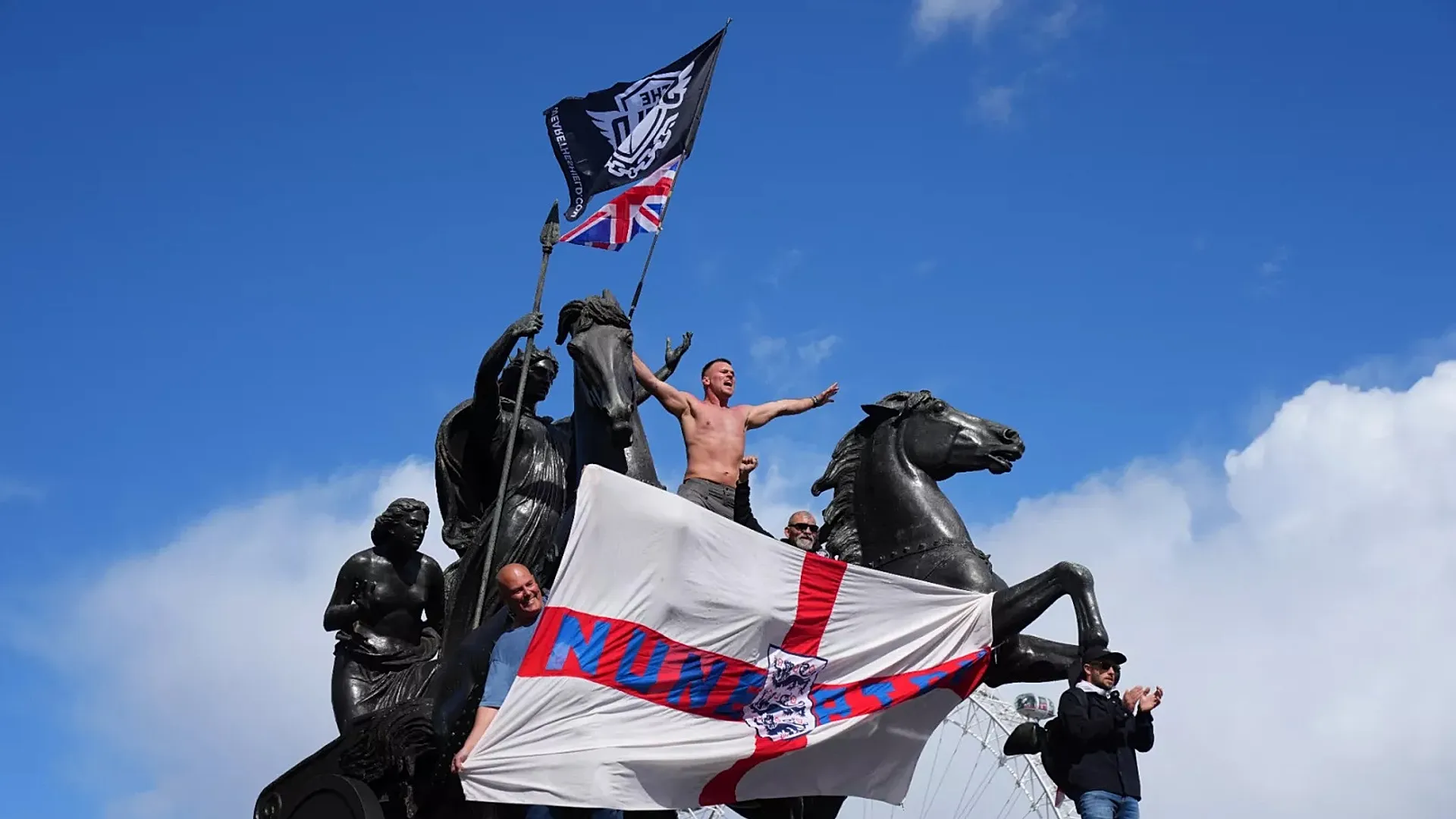
Freedom of expression demands responsibility when words ignite the streets and multiply risk.
London, September 2025. The political heart of the United Kingdom endured a weekend of social tension and discursive confrontation when Prime Minister Keir Starmer publicly condemned remarks made by Elon Musk during an anti-immigration protest in the capital. The South African-born entrepreneur, appearing by videoconference at the “Unite the Kingdom” rally organized by far-right activist Tommy Robinson, declared that “violence is coming” to Britain and warned citizens that they must “fight or die,” while calling for the immediate dissolution of Parliament and the holding of new elections.
The symbolic weight of these statements created a political shockwave. Starmer denounced the comments as “dangerous and incendiary,” stressing that such rhetoric carries the power to legitimize violence and undermine coexistence on the streets. His condemnation was swift but not solitary: Ed Davey, leader of the Liberal Democrats, urged both the government and the Conservative opposition to unite in rejecting Musk’s intrusion into British politics and to consider possible sanctions against what he described as a deliberate attempt to sow discord.
The protest itself turned violent. According to the Metropolitan Police, 26 officers were injured, four of them seriously, as demonstrators attempted to breach barriers separating them from a counter-protest organized by anti-racist groups. Twenty-five individuals were arrested on the scene, with authorities warning that the number of detentions could rise as investigations continued. The episode fed a wider debate on the role of global influencers when intervening in local conflicts.
Much of the political unease stems from the contrast between the institutional position of the British government and Musk’s status as a global entrepreneur. For London, his words cannot be dismissed as inconsequential; they are amplified by digital platforms with millions of followers and spoken in a climate of deep polarization. Critics argue that Musk has transformed freedom of expression into a tool of political pressure, amplifying messages that resonate with radicalized groups while weakening democratic institutions during moments of volatility.
Images of the protest circulated worldwide. Demonstrators waved the flag of St. George and the Union Jack as symbols of national belonging, though their presence was interpreted in conflicting ways: for some, it was an act of patriotic reaffirmation; for others, an intimidating gesture directed at ethnic and religious minorities in Britain. The use of such symbols in a charged atmosphere intensified debates over the weaponization of national identity in political struggles.
Starmer emphasized that British democracy rests on pillars of justice, tolerance, and decency, warning that incendiary rhetoric threatens to erode those values. His intervention sought to demonstrate resolve in defending constitutional order but also reflected the need to contain a narrative that spread rapidly across digital platforms. Within his own party, the response was uniformly supportive, while the Conservatives showed caution: some voices criticized Musk directly, but others shifted the focus toward police management of the protest, avoiding an outright confrontation with the billionaire.
The incident once again underscored the intersection of technology, politics, and security in the digital era. Elon Musk, as owner of global communication platforms, is no longer seen solely as a businessman but as a transnational political actor. His ability to intervene in domestic debates abroad is raising alarm among European governments who fear that imported radical rhetoric could exacerbate local tensions. For Britain, still shaped by the legacy of Brexit, sensitivity to perceived manipulations of national discourse is particularly acute.
The violence in London also reopened discussion about the management of public security during mass protests. For police forces, keeping rival groups apart in the narrow streets of the city center required a complex tactical deployment. The priority was to prevent escalation beyond the protest perimeter, yet the injuries suffered by officers highlighted shortcomings in the strategy and fueled criticism about preparedness for such high-risk events.
International reactions to Musk’s remarks were mixed. Some analysts interpreted his intervention as part of his broader clash with European governments, which he has accused of suppressing free speech online through regulations he claims amount to censorship. Others saw it as a calculated attempt to undermine Starmer’s government at a time when it seeks to advance immigration reforms and consolidate political leadership after months of economic and social strain.
The British government announced that it had no plans to engage directly with Musk or to impose immediate sanctions, though officials signaled that the rhetoric surrounding the protest would remain under close scrutiny. This ambiguous stance reflected both the difficulty of confronting a figure who controls major digital platforms and the need to avoid inflating a conflict that could easily escalate in public perception.
The London protest is part of a broader global pattern: the use of digital discourse to disrupt social and political climates in established democracies. For international observers, the United Kingdom faces a strategic challenge—ensuring the right to protest while preventing verbal and physical violence from eroding basic norms of coexistence. By denouncing Musk, Starmer attempted to draw a line between legitimate political critique and rhetoric that transforms public space into both symbolic and physical battlegrounds.
Ultimately, the episode revealed the vulnerability of democracies when global leaders with direct access to millions choose to intervene in domestic debates. London experienced a day of violence, but the echo of Musk’s words will continue to resonate in British and European politics as a reminder that in the digital age power is measured not only in votes or seats, but in the ability to shape narratives that influence both street-level security and institutional stability.
Behind every piece of data, there is an intention. Behind every silence, a structure.