

 Phoenix 24
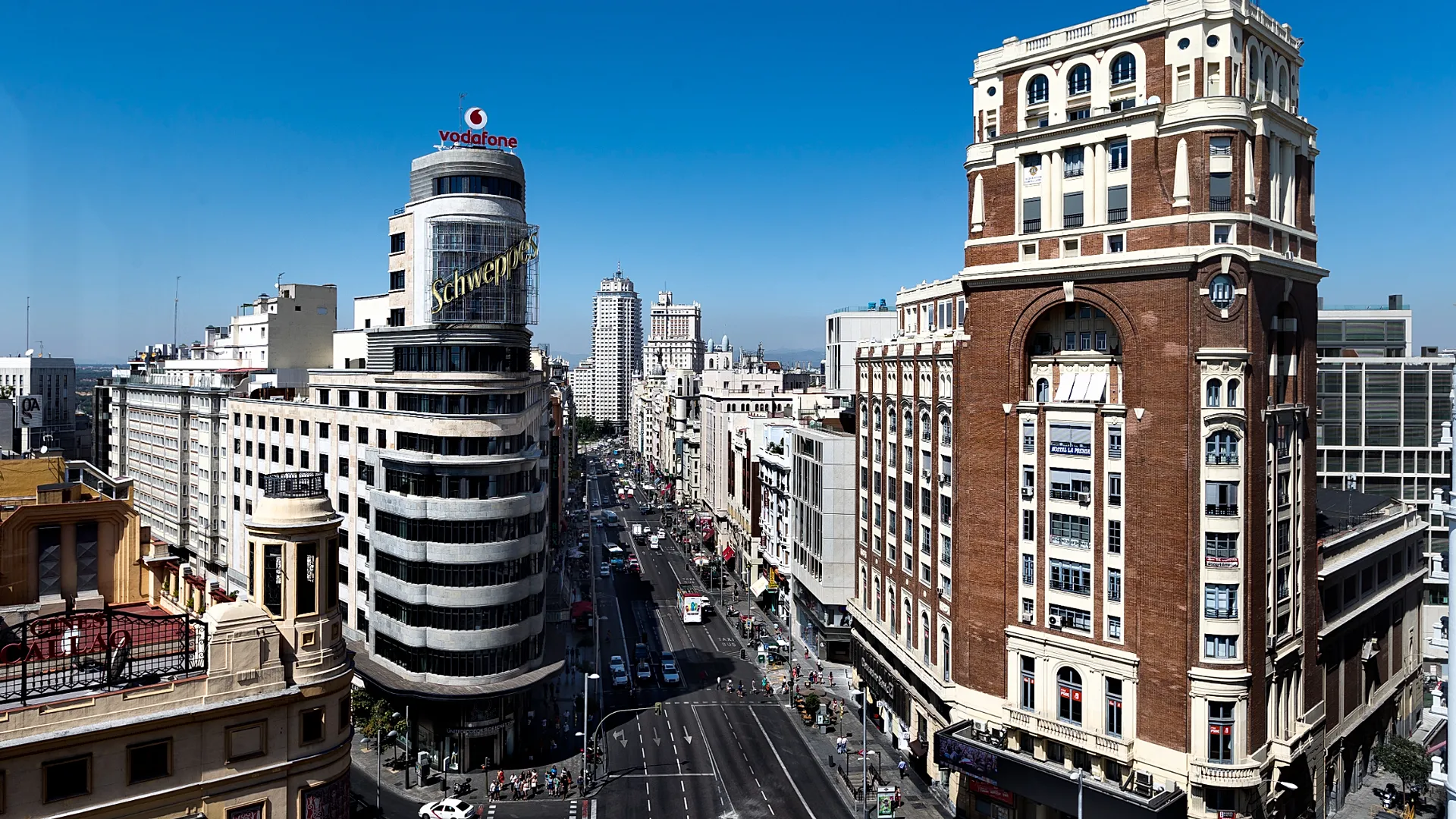
Tension gripped the heart of the Spanish capital when an injured man turned an apartment into a focal point of risk and fear.
Madrid, September 2025. The daily pulse of Gran Vía, usually marked by tourists, workers, and the relentless pace of urban life, was abruptly interrupted when a man barricaded himself inside a third-floor apartment with several butane canisters, threatening to blow them up. The image of an individual with visible cuts on his arms, locked inside a confined space and ready to unleash a potentially devastating explosion, triggered one of the most complex police operations deployed in central Madrid in recent years. Although contained within a single building, the threat reverberated symbolically across a country well aware of the impact that any perceived act of violence can have in such an iconic setting.
The initial minutes were filled with confusion. Witnesses on the street began filming with their phones and sharing the images online, spreading the news at lightning speed. Within minutes, “Gran Vía” was trending across Spain, amplifying the perception that the capital was facing a critical episode. Police responded immediately, surrounding the building and deploying crisis negotiators, ambulances, and fire brigades prepared to intervene in the event of an explosion. The decision to close the nearest metro entrance was taken as a precaution, though the train service continued in order to prevent a wider disruption of the city’s mobility.
The barricaded man became the center of an operation that tested both the tactical readiness and the emotional resilience of law enforcement. For hours, negotiators worked to open a channel of communication that could de-escalate the situation and prevent the threat from becoming reality. According to police sources, such procedures require not only technical expertise but also deep psychological insight, as negotiators aim to buy time and ease the emotional intensity of a person in crisis. The possibility of a butane explosion in a densely populated building posed a genuine risk of casualties and structural damage, pushing authorities to evaluate every move with utmost caution.
Meanwhile, ordinary citizens were turned into unwilling spectators. Pedestrians were evacuated to nearby streets, shops in the area closed their doors, and the fear of a blast spread rapidly. For those who live or work in the district, memories of past attacks and threats in Spain resurfaced, as the idea of an explosion in the heart of Madrid stirred dormant anxieties. Media outlets followed the developments closely, while real-time images shared online reinforced the sense of danger, showing official vehicles, heavily armed officers, and police cordons sealing off the area.
This incident cannot be seen in isolation. In recent years, Spain has dealt with a series of urban crises that demanded swift and decisive responses from its security forces. From simulated bomb threats to violent episodes in transport hubs, authorities have faced the challenge of maintaining public calm while neutralizing real or perceived dangers. Gran Vía, as a symbol of tourism, commerce, and modernity, carries an additional weight of international visibility, meaning that any disruption along its stretch becomes a story with global resonance.
Eventually, after hours of tension, the police confirmed the man’s arrest. The conclusion—no victims and no explosion—was credited to patience, negotiation skills, and precise logistical deployment. Yet the resonance of the event did not vanish with his detention. In the aftermath, social networks filled with debates on urban safety, mental health, and prevention protocols. The image of an injured man threatening to ignite butane canisters in central Madrid became a metaphor of fragility and urban vulnerability, a reminder that risks are not always tied to organized violence or terrorism but can also emerge from individuals under extreme psychological strain.
Security experts stressed that episodes like this underscore the importance of reinforcing coordination between police forces, medical services, and local authorities. Crisis management goes beyond neutralizing the immediate threat; it requires clear communication to the public, containment of rumors that may escalate tensions, and restoring city life without allowing fear to dominate. At the same time, psychologists and social analysts highlighted the need to address the individual dimension: behind every visible crisis lies a personal story that, if left unattended, can become a trigger for collective danger.
The Gran Vía episode marks a turning point in how Madrid confronts threats in emblematic spaces. The arrest of the man allowed the authorities to close the operational chapter, but it opened broader questions about the city’s resilience when facing high-impact events amplified by media and social networks. In a global context where cities are increasingly the stage for unpredictable crises, Madrid’s response will be studied as an example of negotiation, containment, and tactical efficiency, while also serving as a reminder of how thin the line is between the ordinary rhythm of urban life and the sudden eruption of fear in public spaces.
Behind every piece of data, there is an intention. Behind every silence, a structure.