

 Phoenix 24
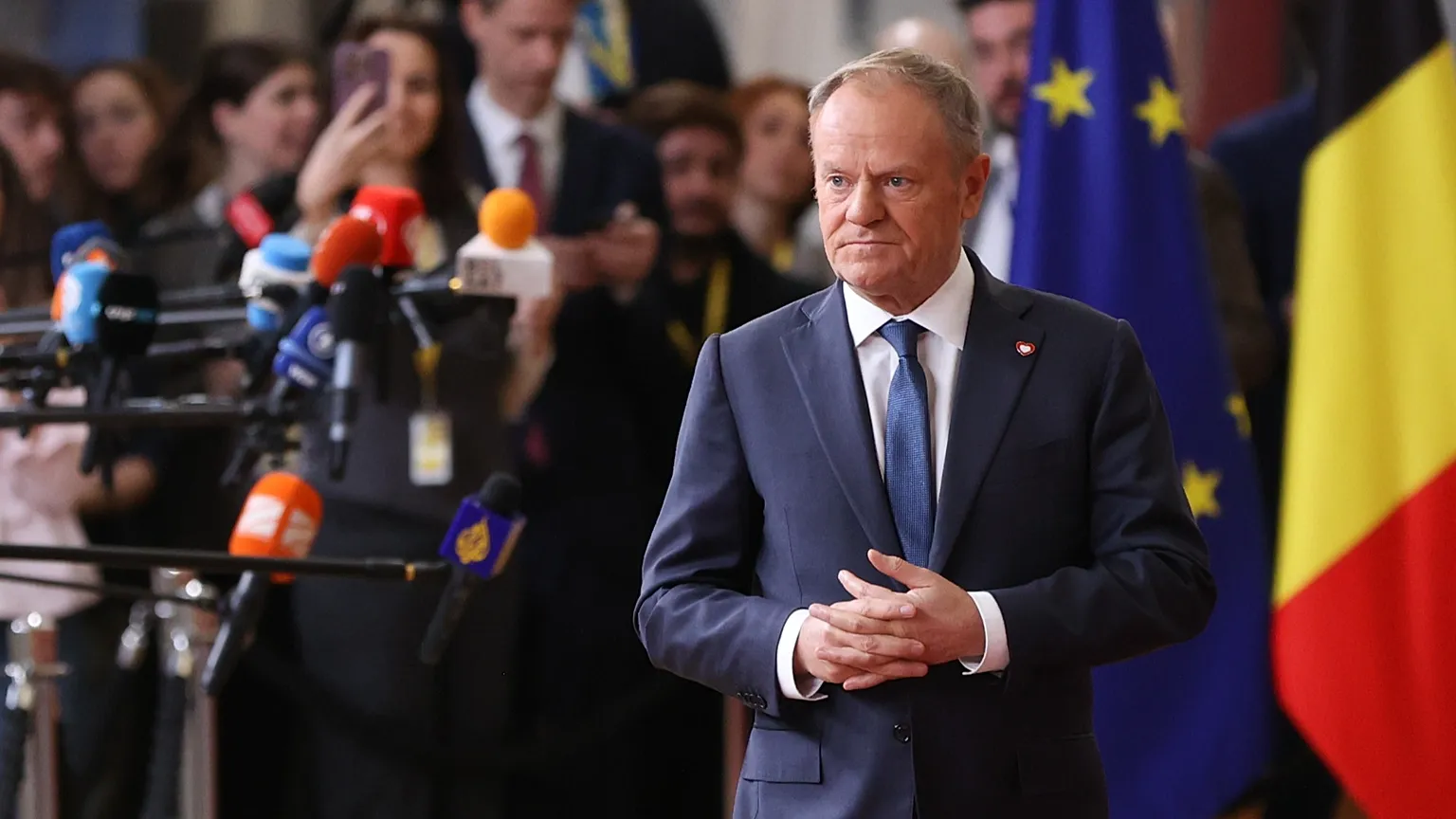
WARSAW, POLAND — November 2, 2026. Poland’s constitutional crisis has entered a new phase of political and institutional confrontation, with Prime Minister Donald Tusk’s government and President Karol Nawrocki advancing opposing interpretations of the legitimacy of the country’s Constitutional Tribunal. In separate interviews with Euronews on Monday, representatives of both political camps defended their positions as European institutions continued monitoring developments. The dispute, which has intensified following the suspension of the tribunal’s president and clashes outside its Warsaw headquarters, has raised concerns about judicial independence, constitutional authority and Poland’s relationship with the European Union.
The latest confrontation follows extraordinary scenes on October 30, when police surrounded the Constitutional Tribunal as competing groups of judges disputed control of the institution. Judge Anna Korwin-Piotrowska announced the temporary suspension of Tribunal President Bogdan Święczkowski and Vice-President Bartłomiej Sochański, arguing that the leadership had obstructed judges appointed by Parliament. Święczkowski rejected the decision as unlawful, while President Nawrocki returned to Warsaw from an official trip and challenged the developments at the courthouse. Demonstrations and the presence of police officers transformed a prolonged legal dispute into a highly visible confrontation over institutional authority.
Speaking to Euronews, Marcin Przydacz, a senior presidential adviser, rejected the legal foundation of the government’s actions and questioned the legitimacy of the judicial changes. He argued that the decisions affecting the tribunal’s leadership lacked proper constitutional authorization and emphasized the importance of ensuring that its judges had been appointed through valid procedures. Przydacz also acknowledged that Poland was experiencing a constitutional crisis, referring to the demonstrations outside the court as evidence of public concern. His remarks reflect the presidential camp’s interpretation of the dispute rather than a definitive judicial determination concerning the legality of the suspension.
A contrasting assessment came from Michał Wawrykiewicz, a Polish member of the European Parliament affiliated with the European People’s Party and Tusk’s Civic Coalition. He maintained that the current confrontation originated in judicial appointments made during the Law and Justice party’s period in government, beginning in 2015. According to Wawrykiewicz, the governing coalition and judges elected by Parliament are seeking to restore constitutional procedures in accordance with European judicial decisions. He described the confrontation as an unprecedented situation extending beyond Poland’s domestic political system, emphasizing its significance for European standards of judicial independence.
The disagreement has its origins in the contested appointment of Constitutional Tribunal judges more than a decade ago. During the years when Law and Justice governed Poland, reforms affecting judicial appointments and the tribunal’s operations attracted criticism from European institutions concerned about political interference in the courts. Tusk’s coalition, which assumed office in December 2023, pledged to reverse elements of those changes but encountered resistance from officials appointed under the previous administration. The election of President Nawrocki in 2025 added another institutional obstacle, particularly when he declined to administer the oaths of several judges selected by the parliamentary majority.
Brussels has adopted a position emphasizing constitutional procedures rather than endorsing every measure undertaken by either side. European Commissioner for Justice Michael McGrath confirmed that the European Commission was closely following the situation, while the institution reiterated that appointing Constitutional Tribunal judges falls within the constitutional powers of the Sejm, Poland’s lower house of Parliament. The Council of Europe’s Venice Commission has also addressed the limits of presidential authority in judicial appointments. These positions provide important legal context, but they do not automatically resolve the separate controversy over the suspension of the tribunal’s leadership or the procedures governing its internal administration.
The crisis has broader consequences because constitutional courts are responsible for determining whether legislation and government decisions comply with fundamental legal principles. When the legitimacy of the court’s judges and leadership becomes contested, uncertainty can affect pending proceedings, institutional continuity and public confidence in legal protections. Poland’s experience illustrates how disputes over appointments can become self-reinforcing when successive political administrations reject the legitimacy of decisions made by their predecessors. Resolving such conflicts requires procedures capable of retaining legal credibility regardless of which political party controls the executive or legislature.
The confrontation could also carry economic and international implications. Reuters reported that economists at Poland’s PKO BP bank warned that prolonged institutional instability could increase perceived political risks and negatively affect assessments of the country’s creditworthiness. European Union funding had previously been restricted amid concerns about judicial reforms under the former Law and Justice administration, although financial relations improved after Tusk’s government took office. Meanwhile, the United States remains an important strategic partner for Poland, making developments affecting political stability relevant to a broader international environment shaped by European security concerns.
Attention is now turning to the General Assembly of Constitutional Tribunal judges scheduled for November 3, when Korwin-Piotrowska intends to address organizational matters affecting the institution. The meeting faces an immediate procedural challenge because the tribunal must establish whether it has the necessary quorum to adopt legally valid decisions. Reuters reported that ten of the court’s fifteen judges would ordinarily be required, but the disputed status of certain members complicates the process. Even if the assembly reaches decisions, their acceptance by opposing judicial and political authorities remains uncertain.
The crisis highlights a fundamental tension between restoring contested institutions and ensuring that corrective measures themselves comply with constitutional requirements. Tusk’s government argues that decisive action is necessary to restore judicial independence, while Nawrocki’s political allies maintain that the measures undermine the very legal principles they claim to defend. European institutions have emphasized Parliament’s appointment authority and the importance of effective constitutional safeguards, but the dispute remains unresolved. As Poland approaches another critical institutional meeting, the central question is whether its political and judicial authorities can establish a credible legal settlement without allowing the contest for institutional control to deepen the divisions that have shaped the country’s constitutional order for more than a decade.
Phoenix24: Beyond the headline, the institutional consequences. / Más allá del titular, las consecuencias institucionales.