

 Phoenix 24
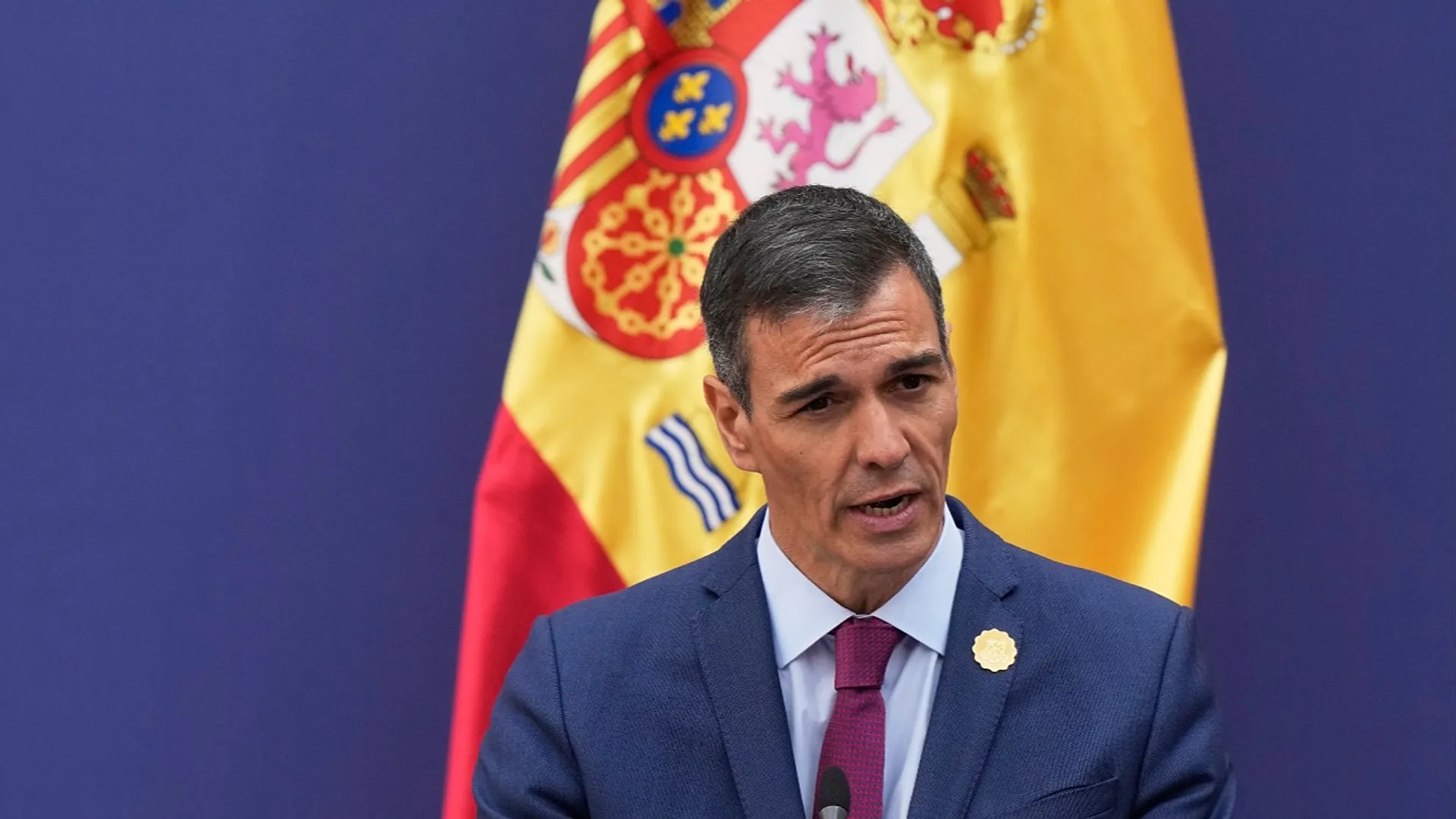
With a tone of urgency that calls for consensus, Madrid appeals to unity in the face of a challenge that no longer admits delay.
Madrid, September 2025
Spanish Prime Minister Pedro Sánchez has called for a State Pact on the Climate Emergency, urging political parties, regional governments, municipalities, civil society, trade unions, scientists, farmers, and environmental groups to agree on a shared strategy that goes beyond electoral cycles and partisan divides. His proposal opens the political season at a time marked by extreme weather events—wildfires, droughts, and floods—that threaten to become permanent if action is not taken decisively.
The government is expected to approve a roadmap composed of ten concrete commitments. Among them are the creation of permanent funds at both national and regional levels to prevent and repair damage, the maintenance of emergency corps year-round, the establishment of a National Agency for Civil Protection and Emergencies, the design of a network of Climate Shelters across cities and towns, and new tools to strengthen water resilience and modern forest management adapted to the 21st century.
The proposal is supported by European institutions and the scientific community. The European Union has framed adaptation as a priority within its environmental security agenda, while Spanish researchers warn of a 1.8-degree rise in average national temperature and a projection approaching 3 degrees by 2050 if urgent measures are not adopted. Scientific assessments converge on one point: without stable investment and coordinated policies, natural disasters will intensify in both frequency and magnitude.
Recent figures underscore this urgency. Spain endured in August one of the most devastating fire seasons, with more than 330,000 hectares consumed, resulting in casualties, injuries, and mass displacement. Torrential rains in other regions further exposed the country’s vulnerability to climate extremes. These data have placed Spain at the forefront of Europe’s climate fragility, reigniting debates on whether permanent funding mechanisms and structural adaptation can no longer be postponed.
Minister for Ecological Transition Sara Aagesen defended in the Senate the need for an unprecedented deployment of resources and confirmed that the State Pact is the only effective response to prevent climate disasters from destroying more lives and ecosystems. She insisted that the climate crisis cannot be politicized and must be addressed with technical rigor and foresight. Her intervention pointed to one of Spain’s historical weaknesses: the discontinuity of environmental policies across administrations.
The initiative, however, faces resistance. Opposition parties such as the Popular Party, Vox, and Podemos have questioned the proposal. Some interpret it as an attempt to monopolize the climate agenda, while others denounce it as a political distraction. In response, Sánchez appealed to pragmatism, calling for the silencing of partisan noise and recalling that Spain has achieved broad agreements in the past, such as the Toledo Pact or the national consensus against gender violence, when leadership and collective responsibility prevailed.
The real test will be implementation. Spanish citizens, especially those in the regions hardest hit by drought and fire, expect concrete results rather than rhetoric. Environmental organizations and civic movements will increase their pressure as the next critical summer season approaches. For much of the population, climate change is not a distant abstraction but a daily threat affecting crops, energy costs, and safety.
The proposal offers Spain a chance to advance toward a structural adaptation. The coming months will show whether the political system is capable of providing the consensus needed to guarantee its success. In a global landscape where climate change has become a matter of security, economy, and public health, Spain seeks to position itself among those countries that anticipate rather than merely react. The outcome will depend on the coherence between political discourse and sustained action.
The visible and the hidden, in context.
Lo visible y lo oculto, en contexto.