

 Phoenix 24
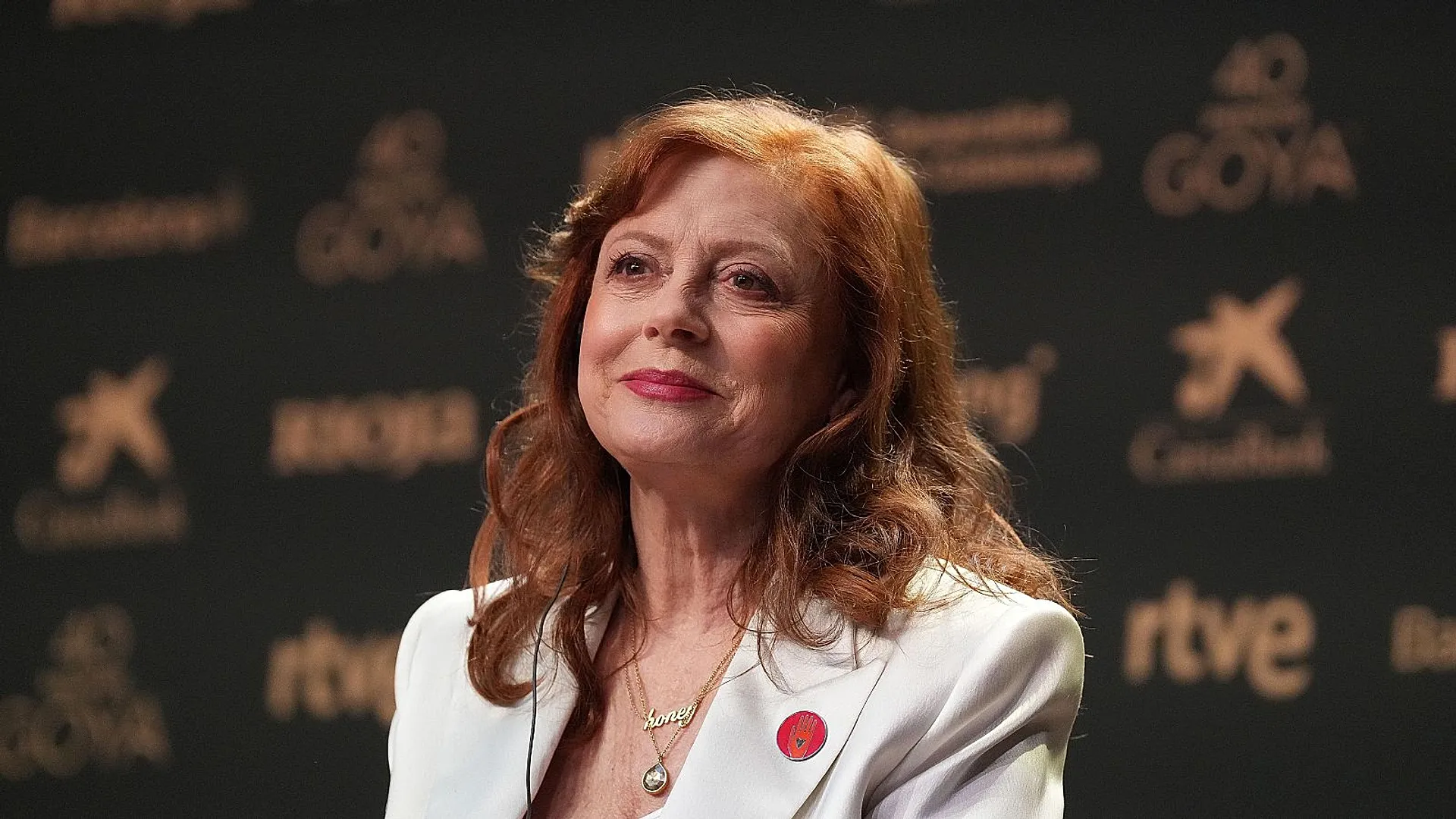
Celebrity language can still redraw diplomatic attention.
Barcelona, February 2026.
Susan Sarandon’s public praise of Pedro Sánchez for being, in her words, on “the right side of history” over Gaza was not just an awards season soundbite. It was a political intervention delivered from a cultural stage, at a moment when European governments remain under pressure to define their positions on the war in Gaza in moral as well as diplomatic terms. The comment, made in Barcelona ahead of the Goya Awards where Sarandon is set to receive the International Goya 2026, immediately moved the event beyond cinema and into the terrain of international legitimacy, symbolic alignment, and public narrative power.
What gives the statement weight is not only Sarandon’s profile, but the setting in which it was made. Film industry events are often treated as soft spaces, places where politics appears in fragments and can be dismissed as emotional rhetoric. Yet that is precisely why such interventions matter. They reach audiences that do not follow summit diplomacy, parliamentary debates, or foreign ministry language in detail. A sentence spoken at a cultural press conference can travel faster than a policy memo, especially when it links a political leader to a moral frame as strong as “the right side of history.”
Sarandon reportedly coupled that praise with remarks about Spain’s moral clarity and its willingness to speak out on Gaza. That formulation matters because it shifts the discussion from a single leader’s stance to a broader national posture. In practical terms, this gives symbolic reinforcement to Spain’s positioning within European debates on Gaza, where governments have not spoken with one voice and where the language of human rights, ceasefire demands, accountability, and recognition politics continues to divide capitals. When a globally recognized actor validates a government’s stance in explicitly moral terms, the effect is not legal or institutional. It is reputational and discursive.
The deeper pattern here is the fusion of culture and diplomatic signaling. In earlier eras, celebrity interventions on war and foreign policy were often treated as peripheral. Today, they operate inside an attention ecosystem where legitimacy is contested across politics, media, activism, and entertainment at the same time. This does not mean celebrities replace diplomats or alter state policy directly. It means they can amplify frames, accelerate public pressure, and strengthen the symbolic architecture around specific positions. Sarandon’s intervention fits that pattern. It does not create Spain’s stance on Gaza, but it reinforces the moral narrative attached to it.
There is also a strategic reason this comment resonated quickly. The phrase “right side of history” is politically powerful because it compresses a complex conflict into a moral horizon. It does not debate legal clauses, ceasefire mechanisms, humanitarian corridors, or negotiating frameworks. Instead, it asks audiences to judge where history will eventually place actors once the immediate fog of war clears. That rhetorical move is effective in public discourse because it reduces technical ambiguity and raises reputational stakes. It invites alignment, not procedural discussion. It also pressures political leaders by implying that neutrality or silence will be judged harshly in retrospect.
At the same time, this kind of intervention carries a predictable tension. Supporters read it as moral courage and necessary clarity in the face of mass suffering. Critics read it as celebrity simplification of a deeply complex conflict and as political messaging inserted into a cultural platform. That tension is not accidental. It is built into the contemporary politics of visibility, where public figures are increasingly expected to speak on global crises and then criticized either for speaking too forcefully or for not speaking at all. Sarandon is not new to that dynamic, and her history of outspoken positions on Palestine means her comments are interpreted through an already established activist profile rather than as an isolated remark.
For Spain, the political effect is more subtle than applause lines suggest. Praise from an international celebrity can strengthen soft power optics and project moral visibility, but it can also intensify polarization around foreign policy positions, especially when domestic and European audiences are already divided. In other words, symbolic endorsements are assets and stress tests at the same time. They can elevate a government’s international profile while also sharpening scrutiny of whether its rhetoric is matched by policy consistency, diplomatic follow through, and coalition discipline within Europe.
The Barcelona context adds a final layer. A ceremony designed to honor artistic achievement became, at least briefly, a platform where culture, war, and European political identity intersected. That overlap is increasingly common. Cultural institutions are no longer insulated from geopolitical conflict, and public figures receiving honors often arrive with political meaning attached to their presence, whether organizers want that or not. In that environment, every appearance carries dual potential: celebration on the surface, strategic messaging underneath.
Sarandon’s statement should therefore be read as more than celebrity praise for Sánchez. It is part of a wider struggle over who gets to define moral legitimacy in Europe’s public conversation on Gaza, and from which platforms that legitimacy can be projected. The immediate comment was brief. Its effect was not. It inserted a cultural event into an international argument over history, responsibility, and the power of narrative to validate political positioning beyond formal diplomacy.
Narrative is power too. / Narrative is power too.