

 Phoenix 24
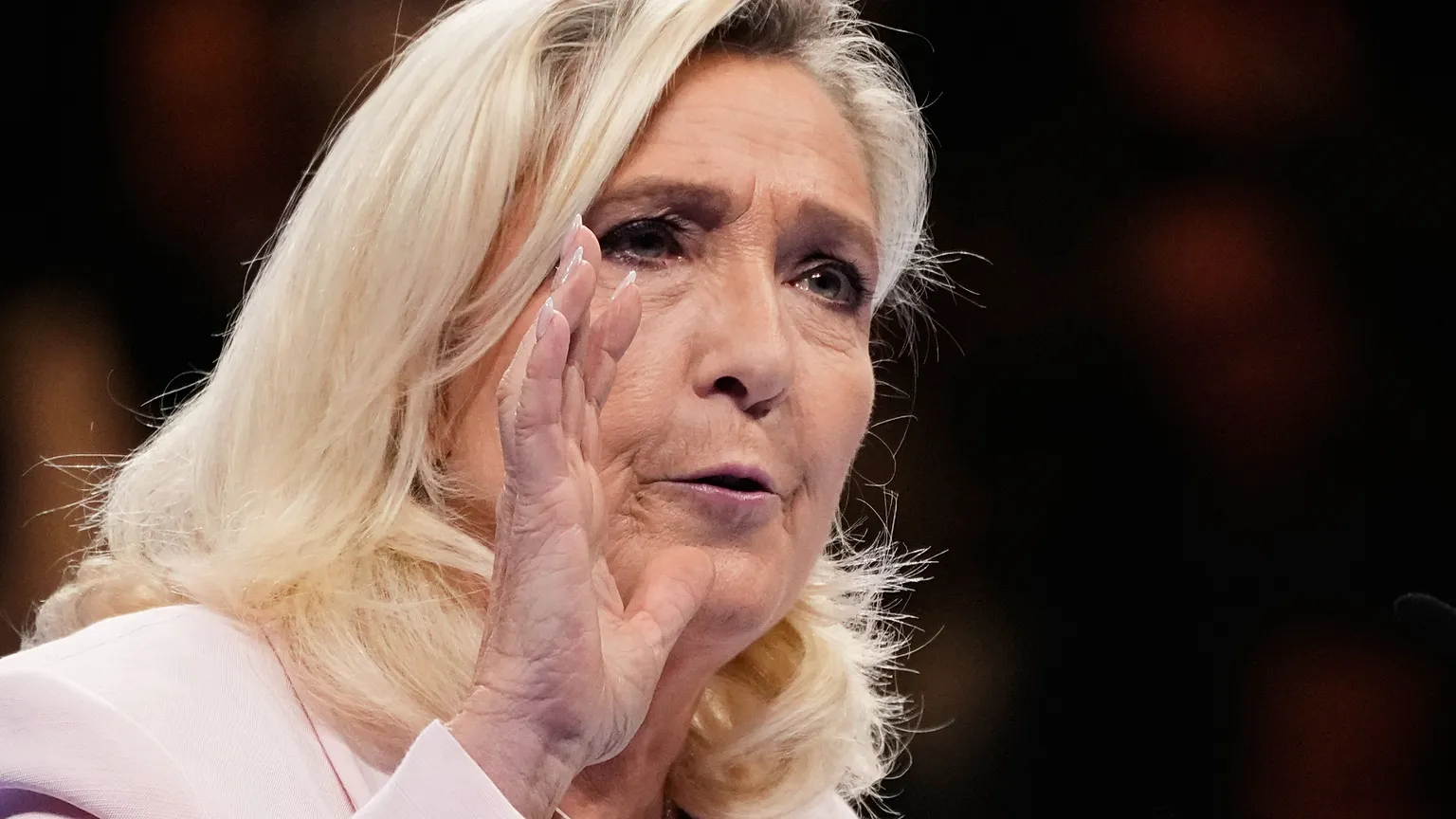
WARSAW, POLAND — November 2, 2026. France’s National Rally leader Marine Le Pen has entered Poland’s escalating constitutional dispute, accusing the authorities of an apparent attempt to seize control of the country’s Constitutional Tribunal and questioning the European Union’s response. Her intervention prompted a sharp rebuke from Polish Foreign Minister Radosław Sikorski, who urged the French politician to respect Poland’s domestic political affairs. The exchange has introduced a new international dimension to a confrontation already dividing Prime Minister Donald Tusk’s government, President Karol Nawrocki and competing judicial authorities, raising broader questions about constitutional legitimacy, national sovereignty and the consistency of European rule-of-law standards.
In a statement published Sunday on X, Le Pen expressed serious concern about the temporary suspension of Constitutional Tribunal President Bogdan Święczkowski and the deployment of security personnel around the institution’s Warsaw headquarters. She suggested that the developments resembled an attempt to take control of a constitutional body through force, while arguing that efforts to restore the rule of law must themselves respect established legal procedures. Her intervention reflected the political position of France’s National Rally, which has frequently criticized European institutions over questions involving national sovereignty and democratic authority. However, Le Pen’s characterization of the events remains a contested political assessment rather than an established legal conclusion.
Sikorski responded directly to the French politician, emphasizing that Poland and France maintain friendly relations but that those ties should be accompanied by respect for domestic political independence. In his public reply, he asked Le Pen to refrain from interfering in Polish politics, rejecting the implication that an outside political leader should determine how the country’s constitutional dispute is interpreted. His response did not resolve the underlying legal disagreements, but it demonstrated the sensitivity surrounding foreign political commentary at a moment when Poland’s institutions are advancing competing claims to authority. The exchange also revealed contrasting interpretations of European solidarity: Le Pen invoked shared democratic standards to justify criticism, while Sikorski emphasized the boundaries of political intervention between allied countries.
The controversy follows an extraordinary confrontation on October 30, when Judge Anna Korwin-Piotrowska assumed responsibility for the Constitutional Tribunal after the suspension of Święczkowski and Vice-President Bartłomiej Sochański. The suspended officials rejected the validity of the measure, while President Nawrocki interrupted a foreign trip and returned to Warsaw to challenge developments at the court. Police secured the institution’s headquarters as political representatives and demonstrators gathered outside, transforming a longstanding disagreement about judicial appointments into a highly visible institutional confrontation. Tusk’s government maintains that its actions seek to restore the tribunal’s independence following years of disputed judicial reforms, while the opposition Law and Justice party (PiS) accuses the governing coalition of attempting an unconstitutional takeover.
Le Pen directed part of her criticism toward Brussels, suggesting that European institutions had failed to respond adequately to developments threatening the constitutional balance of a member state. That accusation, however, requires an important factual qualification: the European Commission has publicly addressed the dispute and confirmed that it is closely monitoring events. In comments reported by Euronews on October 31, a Commission spokesperson stated that appointing eight new Constitutional Tribunal judges falls within the constitutional powers of the Sejm, Poland’s lower house of Parliament. The Commission also emphasized that Polish authorities must ensure the tribunal operates in accordance with the national constitution and relevant jurisprudence of the Court of Justice of the European Union.
The Commission additionally referred to interim measures issued on May 5, 2026, by the European Court of Human Rights concerning judges elected by the Polish Parliament. Those measures called on the competent authorities not to obstruct the judges from assuming and exercising their judicial duties. The European Court of Human Rights belongs to the Council of Europe rather than the European Union, an institutional distinction relevant to understanding the different legal frameworks involved. Neither the Commission’s statement nor the interim measures automatically resolves every contested decision concerning the tribunal’s leadership, but both provide legal context beyond the competing political accusations.
The confrontation has developed against the background of a constitutional dispute dating to 2015, when rival parliamentary majorities challenged appointments to Poland’s highest constitutional court. During PiS’s subsequent period in government, changes affecting judicial appointments and institutional procedures attracted criticism from European authorities concerned about judicial independence. Since returning to power in December 2023, Tusk’s coalition has sought to reverse aspects of those reforms, but its initiatives have encountered resistance from judges and political officials associated with the previous administration. The current dispute illustrates how unresolved disagreements over the legality of appointments can persist across changes of government and undermine confidence in the institutions responsible for interpreting constitutional law.
Le Pen’s involvement also places the Polish controversy within a broader European political debate. National Rally has emphasized national decision-making authority and criticized what it regards as inconsistent intervention by European institutions, while parties associated with Tusk’s governing coalition have generally supported closer cooperation with the EU’s legal and institutional framework. These differences help explain why the same events can generate sharply contrasting political interpretations beyond Poland’s borders. Nevertheless, assessments of judicial independence require examination of specific constitutional provisions, appointment procedures and judicial decisions rather than conclusions based exclusively on party affiliation or ideological alignment.
The diplomatic exchange carries particular significance because Poland and France are important European partners whose cooperation extends to economic policy, defense and regional security. Public disagreements between political figures do not necessarily indicate a deterioration in bilateral government relations, especially when the criticism originates from a politician who does not hold executive office. Sikorski’s intervention should therefore be understood as a response to Le Pen’s political comments, not as evidence of a formal diplomatic dispute between Warsaw and Paris. Its significance lies primarily in the internationalization of a domestic constitutional controversy already receiving attention from European institutions.
For Poland, the immediate institutional challenge remains the restoration of a functioning Constitutional Tribunal whose membership, leadership and decisions possess recognized legal legitimacy. The disagreement cannot be settled simply by deciding whether the government or its opponents have presented the more persuasive public narrative. It requires resolving contested appointment procedures, the authority to suspend judicial officials and the legal conditions under which the tribunal may conduct its work. As political tensions continue, the intervention by Le Pen and the response from Sikorski demonstrate how constitutional disputes can become part of wider European debates about sovereignty, judicial independence and institutional accountability.
The latest exchange ultimately highlights a fundamental distinction between political solidarity and legal judgment. European politicians may express concern about developments in another member state, while national authorities retain responsibilities concerning their own constitutional institutions. Neither principle removes the need for independent legal scrutiny or consistent application of democratic safeguards. Poland’s continuing crisis therefore presents a challenge extending beyond its borders: ensuring that disputes over constitutional authority are resolved through credible legal procedures rather than competing political narratives, while preserving both national institutional independence and the obligations arising from European cooperation.
Phoenix24: Beyond the headline, the geopolitical context. / Más allá del titular, el contexto geopolítico.