

 Phoenix 24
A local vote just redrew the national conversation.
London, February 2026.
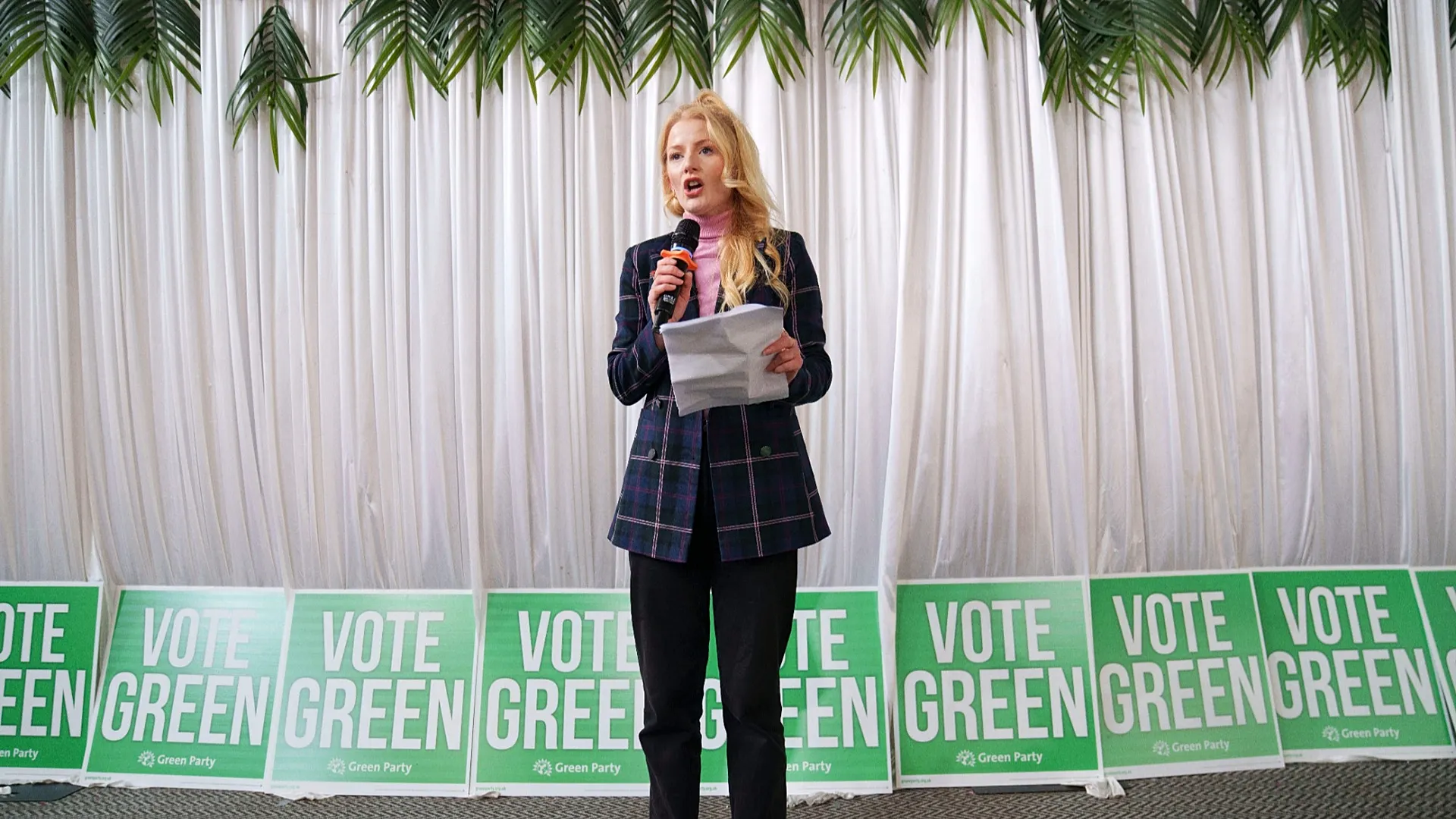
The Green Party’s victory over Reform UK in the Gorton and Denton by election is more than an electoral upset. It is a signal that Britain’s political disruption is no longer moving in only one direction. Euronews reported that the Greens won the seat with Hannah Spencer, finishing ahead of Nigel Farage’s Reform UK candidate Matt Goodwin, while Labour collapsed into third place in what should have been a politically manageable contest for the governing party. The headline result matters not simply because the Greens beat the far right, but because two insurgent forces together pushed Labour into a humiliating position in a seat shaped by urban volatility, identity politics, and economic frustration.
The by election became a concentrated test of Britain’s fragmented political order. It was held in Greater Manchester after the resignation of a Labour MP, and the campaign quickly evolved into a symbolic confrontation between an increasingly assertive left populist Green movement and a media amplified hard right challenger. That configuration gave voters a chance to punish Labour from both directions at once. In practice, that is what happened. The Greens converted anti establishment anger into a progressive electoral vehicle, while Reform remained competitive enough to prove that right wing insurgency still has momentum, even when it loses the headline battle.
What makes the result strategically significant is the way it reorders narratives about who benefits from Labour’s weakness. For months, much of the UK political conversation has been dominated by Reform’s rise, especially after local election gains and sustained polling strength. This by election complicates that story. It shows that Labour’s erosion does not automatically translate into far right gains, particularly in constituencies where class grievance, multicultural demographics, and Gaza era political realignment create an opening for a more radical left alternative. In other words, Labour is not only losing voters to nationalist populism. It is also losing space to a reorganized left flank with stronger moral and economic messaging.
The Greens’ performance also reflects a broader leadership and branding shift. Euronews described how the party’s recent momentum has accelerated under Zack Polanski, whose profile blends environmental politics with sharper economic and anti establishment language. That matters because it expands the Greens beyond their traditional image as a secondary issue party focused mainly on climate. In this election, the Green message reportedly leaned into fairness, working class decline, and resistance to divisive ethnic scapegoating. That mix is politically potent in urban constituencies where economic stress and identity based polarization coexist. It allows the party to present itself as both socially inclusive and materially confrontational, a combination Labour has struggled to maintain convincingly.
Reform UK’s second place finish, meanwhile, is not a trivial outcome even in defeat. The party remains capable of reaching the final contest in high profile races and shaping the ideological terrain of the campaign, especially on migration, national identity, and anti elite sentiment. Yet this result also highlights a structural vulnerability. When Reform fields candidates associated with highly polarizing rhetoric, it can energize core supporters while triggering coalition limits in mixed constituencies. The by election suggests that Britain’s anti establishment mood is real, but not ideologically uniform. Different kinds of insurgency can thrive in different local ecosystems, and the far right does not hold a monopoly on political anger.
For Labour, the implications are more serious than a single loss. Falling to third place in a by election of this profile damages not only seat arithmetic, but narrative authority. Governing parties can survive local defeats. What is harder to survive is the perception that they no longer define the main contest. In Gorton and Denton, Labour appeared to be the object of voter punishment rather than the vehicle of political choice. Once that perception spreads, every future contest becomes harder because candidates are forced to campaign against a national image of drift, elite insulation, and reactive leadership rather than on local credibility alone.
The deeper pattern is that British politics is moving further into a multi insurgent phase. The old two party rhythm has not disappeared institutionally, but it is increasingly unstable psychologically. Voters are now more willing to use by elections as instruments of message sending, and insurgent parties are better equipped to convert discontent into narrative dominance even when they lack broad parliamentary representation. That gap between institutional size and discursive power is one of the defining features of the current moment. Small parties can shape national political tempo if they win the right symbolic battles.
This result also reveals something important about contesting the far right. The Greens did not beat Reform simply by sounding more respectable. They appear to have won by offering an alternative emotional and economic grammar of protest. That distinction matters across Europe. Where mainstream parties fail to absorb social anger, anti system voters do not always default to the radical right. They will move toward whichever actor best combines grievance, identity, and plausibility in the local context. In this case, the Greens captured that lane more effectively.
The Gorton and Denton by election will not by itself determine Britain’s next general election. But it may prove to be one of those moments that changes how every party reads the map. Labour now faces pressure from both insurgent poles at once. Reform remains dangerous, but not invincible. The Greens have shown they can convert cultural momentum into electoral force under the right conditions. The local vote was small in geography, yet large in meaning: Britain’s political crisis is no longer just about the rise of the far right. It is about the collapse of old channels and the scramble to inherit public anger.
Beyond the news, the pattern. / Beyond the news, the pattern.