

 Phoenix 24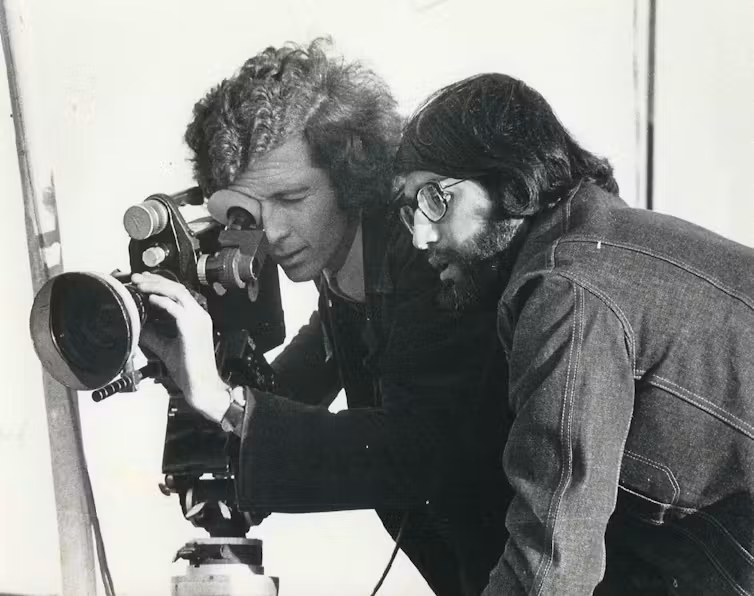
His documentaries transformed political testimony into a lasting cinematic language.
PARIS, FRANCE
Patricio Guzmán, one of Latin America’s most influential documentary filmmakers, has died at the age of 85. The Chilean director suffered cardiorespiratory arrest at a hospital in Paris after living with an illness for approximately three years.
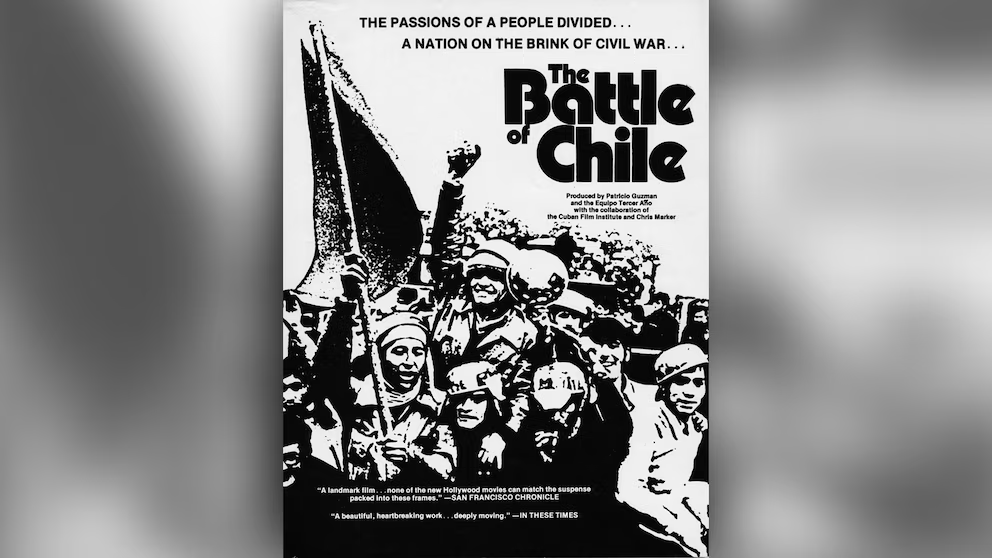
Guzmán achieved international recognition with The Battle of Chile, a monumental three-part documentary filmed during the political crisis that preceded the 1973 military coup against President Salvador Allende. Rather than reconstructing events retrospectively, Guzmán and his team recorded strikes, demonstrations, parliamentary conflict, military preparations and popular organizing while Chilean democracy was collapsing around them.
The project survived under extraordinary circumstances. French filmmaker Chris Marker helped Guzmán obtain film stock, while cinematographer Jorge Müller captured many of its defining images. Müller was later detained and forcibly disappeared by Pinochet’s security apparatus. Guzmán was imprisoned in Santiago’s National Stadium after the coup, interrogated and subjected to intense psychological pressure before being released.
The footage was secretly removed from Chile and eventually edited in Cuba. Released between 1975 and 1979, the trilogy became an essential work of political documentary cinema and a primary visual record of the destruction of the Allende government and Augusto Pinochet’s seizure of power.
Exile became a permanent condition of Guzmán’s life and the central tension of his art. He lived in Cuba, Spain and France but repeatedly returned to Chile through film. His later works examined how landscapes, bodies and institutions preserve histories that governments and societies sometimes attempt to suppress.
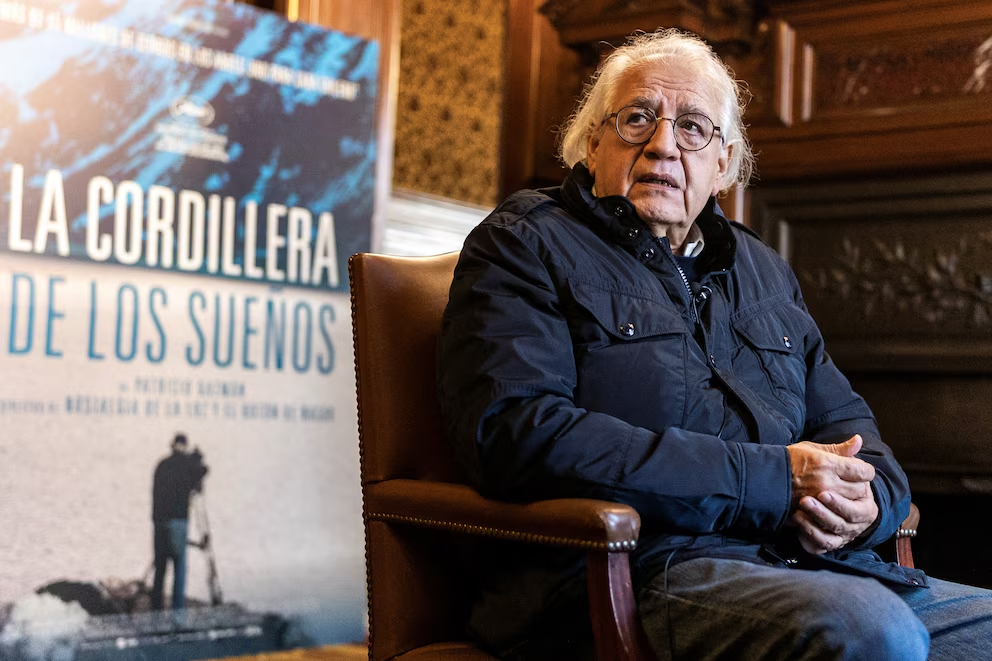
In Nostalgia for the Light, astronomers searching the Atacama Desert for evidence about the universe appear alongside women searching the same terrain for the remains of relatives disappeared by the dictatorship. The Pearl Buttonconnected Chile’s water, Indigenous history and political violence, while The Cordillera of Dreams explored the Andes as both geographical boundary and repository of memory. My Imaginary Country turned toward the social uprising that began in 2019.
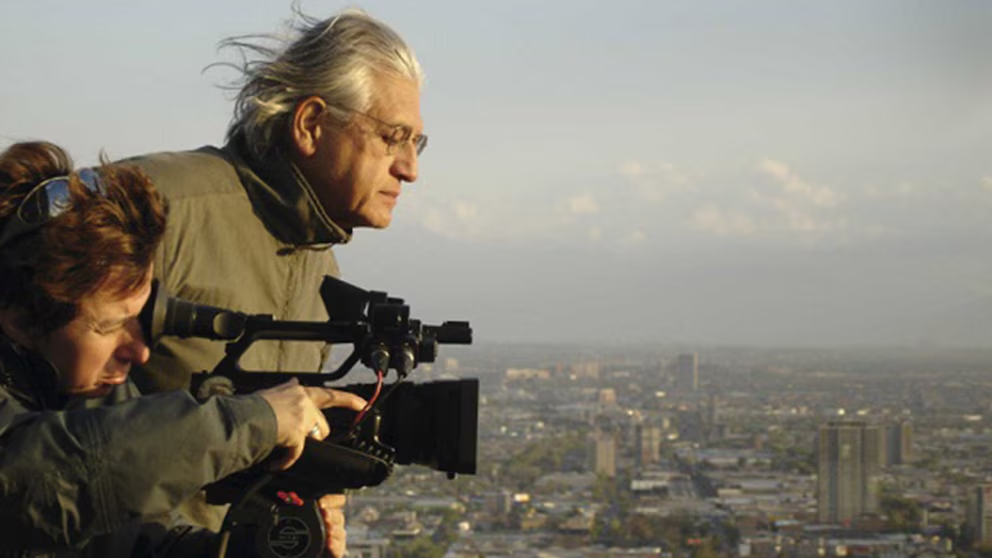
Guzmán received Chile’s National Prize for Performing and Audiovisual Arts in 2023 and earned major recognition at Cannes, Berlin and other international festivals. He also founded the Santiago International Documentary Festival, helping create a platform for subsequent generations of nonfiction filmmakers.
His work never treated memory as passive remembrance. For Guzmán, documenting the past was a form of civic resistance against disappearance, denial and historical amnesia. His death closes an extraordinary career, but the images he preserved will continue challenging every attempt to separate Chile’s present from the violence that shaped it.
Memory becomes resistance when power demands forgetting.