

 Phoenix 24
A theatrical journey turns bones into questions of identity
Buenos Aires, Argentina | June 2026
The Argentine play “Osamenta y patria” has arrived at Teatro del Pueblo with a reflective proposal that brings together childhood memories, rural landscapes, historical imagination and the unresolved meaning of homeland. Written by Andrés Binetti, the work does not approach the idea of patria as a fixed patriotic slogan, but as a field of tension where personal memory, collective history and buried remains intersect. Through that perspective, the production invites audiences to look at national identity not as a closed certainty, but as a question that continues to move beneath the surface.
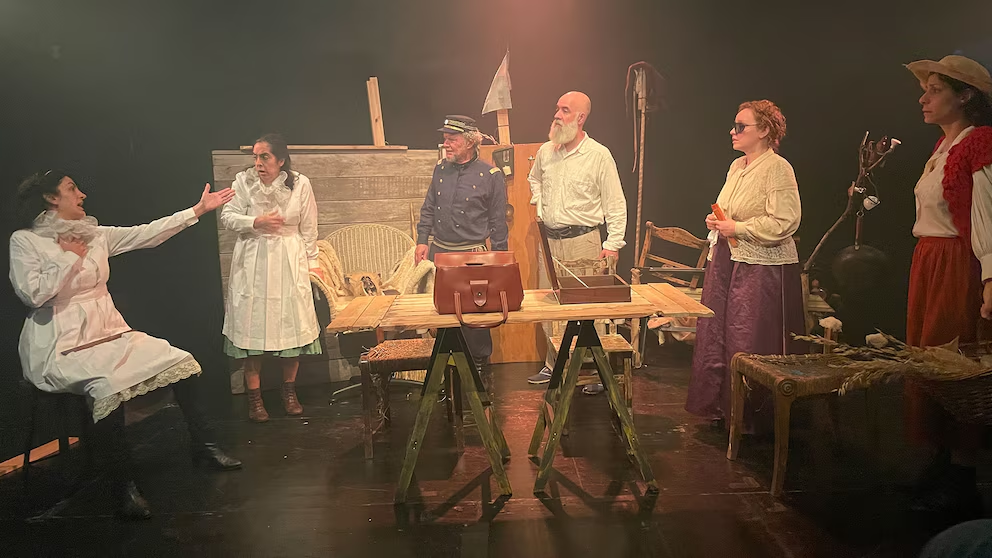
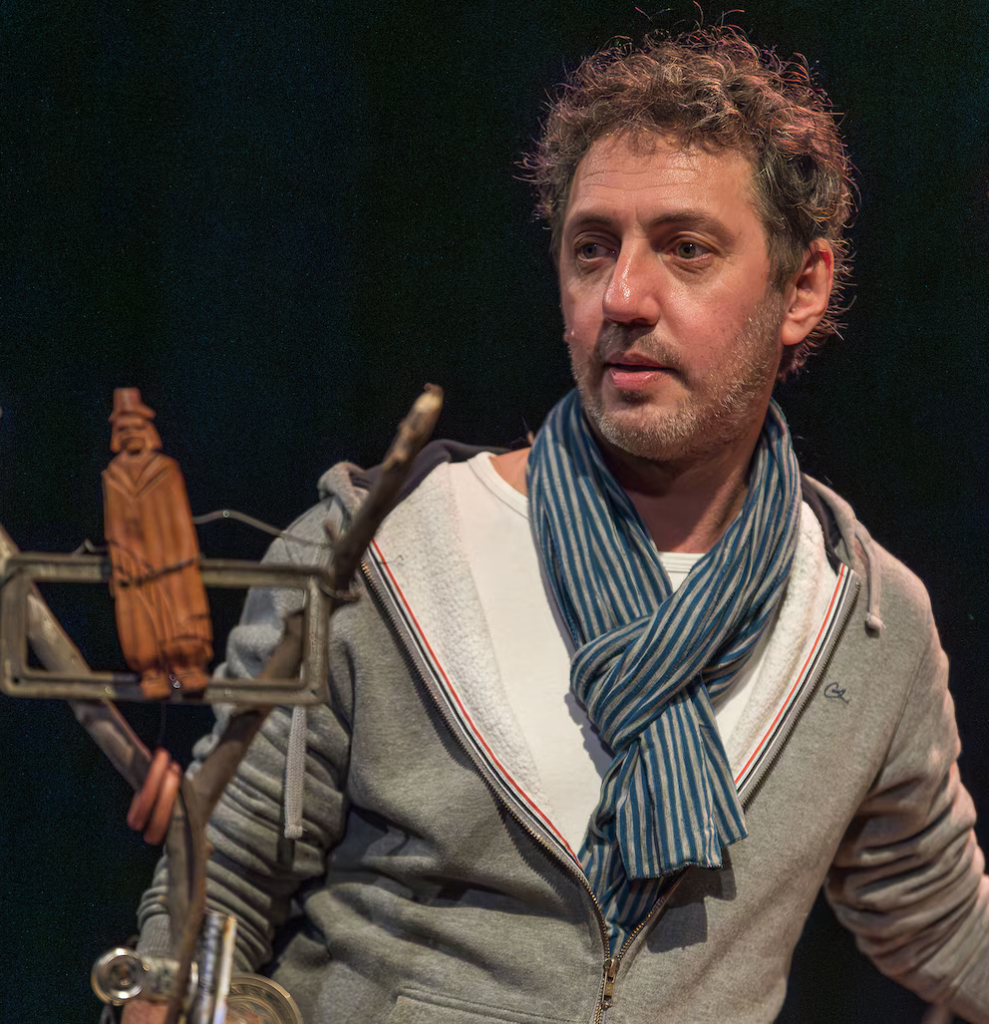
Binetti connects the origin of the play with his childhood in the Argentine countryside, particularly with the landscapes and sensory images that shaped his early perception of the world. The pampa, the small town, the open fields, the animals, the fences and the rural horizon become more than scenic memories. They function as emotional materials through which the playwright examines how a person first imagines belonging, territory and origin. In that sense, the play suggests that homeland is not only learned through history books or official speeches, but also through the fragments of childhood that remain attached to the body and memory.
The title itself opens a strong symbolic path. “Osamenta” refers to bones, remains and what is left behind after time, violence or abandonment. “Patria” evokes nation, territory and emotional belonging. When both words are placed together, the result is uncomfortable and powerful: the homeland appears not only as landscape, flag or memory, but also as a space where bodies, silences and unresolved histories may be buried. The play therefore moves between the intimate and the political without reducing either dimension.
The plot follows a journey that leaves the city and moves toward territories marked by forts, wells and rural traces. The presence of baqueanos, figures traditionally associated with knowledge of the land, gives the narrative a connection with local experience and oral memory. These guides are not merely functional characters; they represent another way of reading the territory, one based on paths, signs, stories and knowledge that often escapes official narratives.
The work’s theatrical strength appears to come from its capacity to transform the landscape into a question. The countryside is not presented as a peaceful postcard or nostalgic refuge. Instead, it becomes a site where memory can be beautiful, disturbing and politically charged at the same time. The discovery or evocation of bones introduces the possibility that beneath familiar places there may be hidden histories that demand recognition.
This approach places “Osamenta y patria” within a broader tradition of Argentine theater that uses intimate stories to explore national tensions. The country’s stage history has often returned to questions of memory, violence, identity, class, territory and the symbolic construction of the nation. Binetti’s play contributes to that tradition through a rural and poetic lens, avoiding direct pamphlet language while still engaging with deeply political material.
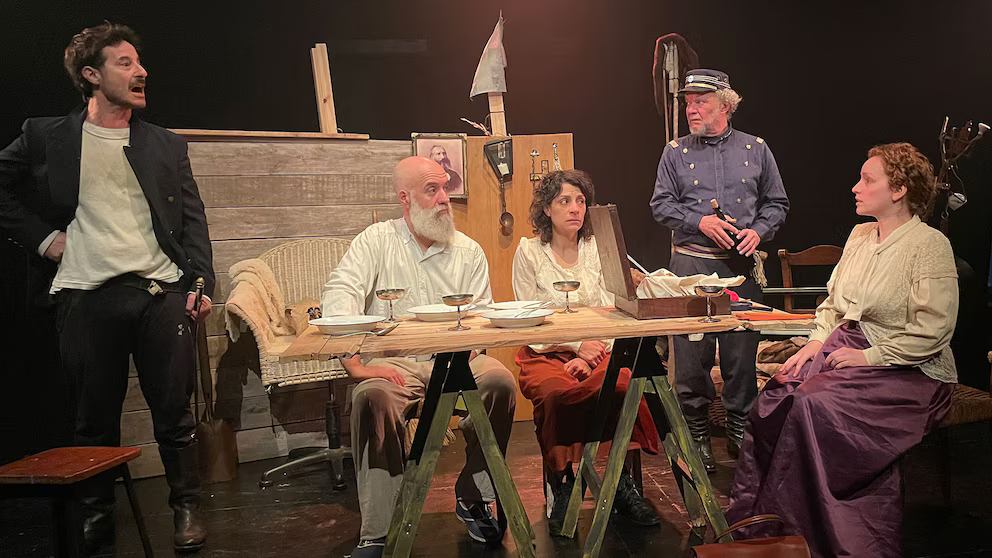
The production also raises questions about how urban perspectives interpret the countryside. What may appear to city dwellers as an idealized image of authenticity can, for those who grew up in rural spaces, carry more complex meanings. The pampa is not only an emblem of national identity; it is also a lived environment shaped by labor, silence, family memories, social hierarchies and historical wounds. The play seems to challenge the audience to move beyond romantic images and confront the density of the land.
By combining memory, travel and historical inquiry, “Osamenta y patria” turns theater into a space for investigation. The stage becomes a place where the past is not simply represented, but searched for. The audience is invited to follow a movement that is both geographic and emotional: from the city to the rural interior, from visible landscapes to buried traces, from childhood recollection to collective uncertainty.

The fact that the play is being presented at Teatro del Pueblo also adds cultural significance. The venue has a long association with independent Argentine theater and with works that privilege artistic risk, social reflection and dramaturgical exploration. In that context, “Osamenta y patria” appears as a piece aligned with theater’s capacity to question the present through the unresolved material of the past.
At its center, the work asks what remains when the idea of homeland is stripped of ceremony and confronted with memory, bones and territory. The answer does not seem simple, and perhaps that is precisely the point. “Osamenta y patria” does not offer a closed definition of nationhood. Instead, it opens a poetic detour where childhood, land and historical remains force viewers to ask what kind of country is built from what it remembers, what it forgets and what it leaves underground.
Phoenix24 News | Information with responsibility.