

 Phoenix 24
The Spanish filmmaker will combine cosmic terror, grotesque imagery and four interconnected eras in his first animated feature for adults.
Madrid, June 2026
Spanish filmmaker Álex de la Iglesia will make his feature-animation debut with Ages of Madness: The Howling of the Jinn, an adult-oriented 3D horror film inspired by the literary universe of H. P. Lovecraft. The project was unveiled during the 2026 Annecy International Animation Film Festival and is scheduled to enter production near the end of the year. De la Iglesia will direct and produce the film through a collaboration involving 3Doubles Producciones, Sumendi Uhartea and Pokeepsie Films, the company he leads with Carolina Bang. The announcement places one of Spain’s most recognizable genre filmmakers inside a medium he had considered for years but had never previously explored as a feature director.
The story will unfold through several tragic narratives connected by the Necronomicon, the forbidden book that occupies a central position within Lovecraft’s fictional mythology. According to the initial description, the volume will travel through four distant historical and geographical settings while attracting people driven by curiosity, ambition and a dangerous desire for prohibited knowledge. The characters will confront ancient forces whose existence threatens both their sanity and humanity’s place in the universe. Rather than adapting a single Lovecraft story directly, the production appears designed to assemble his recurring ideas, entities and symbols into an original anthology-like structure.
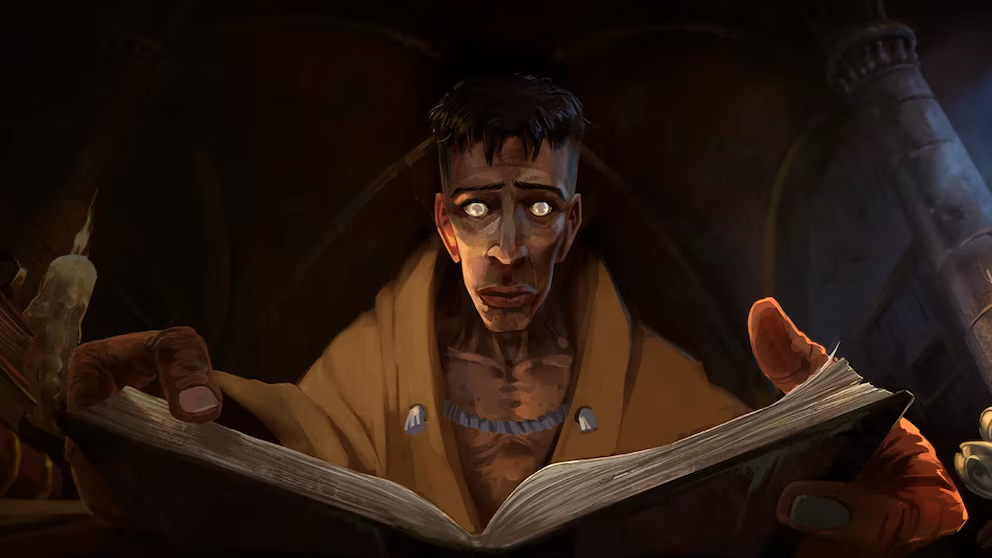
Among the figures linked by the book are a young woman trapped inside a sinister cult, a detective investigating supernatural events and a man burdened by horrors originating in another period. Their separate experiences will gradually converge as ancient gods move closer to awakening and the distinction between reality and madness begins to collapse. The film’s structure allows the Necronomicon to function not merely as an object but as a narrative force moving across time and corrupting everyone who attempts to understand it. Its pages may contain the knowledge required to prevent catastrophe, yet reading them could also become the act that releases the approaching chaos.
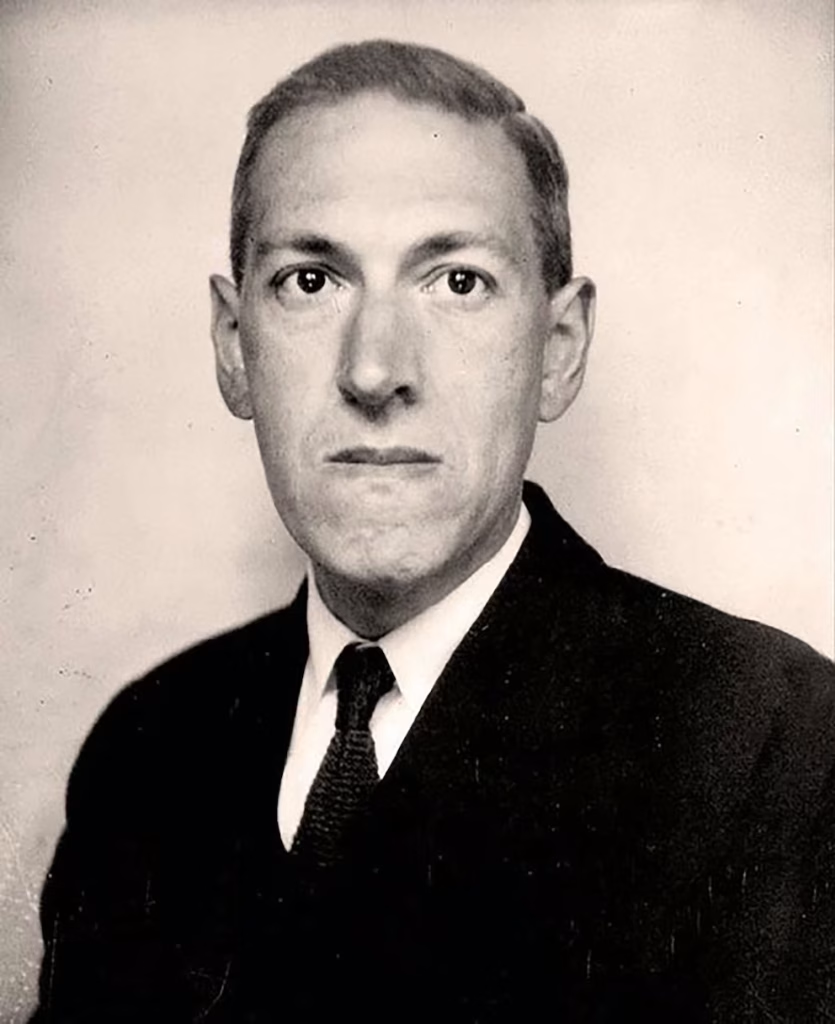
Lovecraft’s horror is built around the idea that human beings occupy an insignificant position within a universe governed by forces beyond comprehension. His characters often discover that knowledge does not provide control, but instead destroys the psychological defenses that allow ordinary life to remain possible. Ages of Madness will explore that fragility by showing people confronting truths that their minds were never prepared to absorb. The project’s early materials suggest a world in which curiosity becomes both a survival instinct and a path toward madness, reflecting one of the most enduring contradictions within Lovecraftian fiction.
Animation offers unusual possibilities for translating those concepts to the screen because it is not restricted by physical locations, conventional creatures or the practical limitations of live-action effects. Impossible architecture, changing bodies, vast cosmic entities and dreamlike landscapes can be designed as integral parts of the visual world rather than added afterward as isolated spectacles. The four historical settings can also possess distinct artistic identities while remaining connected through the film’s overall atmosphere and recurring symbols. For a mythology defined by things that supposedly cannot be described, animation may provide De la Iglesia with greater freedom to suggest scale, deformation and psychological disintegration.
The filmmaker has acknowledged that this freedom comes with a demanding production process. Animation requires extensive planning, complete storyboards and decisions that must be made before the final images are produced, leaving less room for spontaneous changes on set. De la Iglesia described the technical discipline involved as extremely complex and said he approaches the medium with considerable respect. Unlike live-action filmmaking, where another camera angle or performance can sometimes be captured immediately, animation requires every movement, environment and expression to be built deliberately.
Despite those challenges, the project reconnects the director with an earlier stage of his creative life. Before becoming a filmmaker, De la Iglesia drew monsters and developed a visual imagination influenced by comics, grotesque figures and exaggerated bodies. He has described Ages of Madness as an opportunity to return to those roots and recover some of the excitement he felt at the beginning of his career. The combination of drawing, horror and unrestricted visual invention therefore represents more than a technical experiment; it brings together interests that existed before his first feature films.
His filmography already demonstrates a strong affinity with the collision of horror, comedy, religion and social disorder. The Day of the Beast transformed an apocalyptic prophecy into a violent satire of modern Madrid, while The Community placed greed and collective madness inside an apartment building. Witching and Bitching, The Bar and the television series 30 Coins continued exploring groups of unstable people trapped within increasingly irrational circumstances. Lovecraft’s mythology provides a natural extension of that universe because it allows De la Iglesia to combine cosmic terror with desperate characters, black humor and grotesque physical imagery.
The director has argued that horror is currently one of cinema’s most creatively liberated genres. In his view, filmmakers working within it can construct morally ambiguous characters, violate conventional narrative expectations and explore extreme emotional states without the restrictions imposed by more standardized forms. He has pointed to contemporary directors and films that use horror not merely to frighten audiences but to experiment with structure, psychology and visual language. An adult animated production intensifies that freedom because it removes the expectation that animation must primarily serve children or family audiences.
The film also represents an ambitious step for Spain’s animation industry. Tenerife-based 3Doubles Producciones has worked on projects including SuperKlaus and Norbert, while the collaboration with Sumendi Uhartea and Pokeepsie Films connects specialized animation experience with De la Iglesia’s established production infrastructure. The companies have presented the project as a major attempt to adapt Lovecraft’s complex universe comprehensively through adult 3D animation. Its scale, multiple settings and emphasis on horror could help expand international perceptions of what Spanish animated cinema can produce.
The broader Ages of Madness concept existed before De la Iglesia joined the feature, including the animated short Helen, which followed two students in 1920s Providence after their encounter with an occult grimoire. That project demonstrated how Lovecraftian material could be interpreted through stylized 3D imagery and an adult tone rather than through conventional live action. The new film appears to expand the concept into a larger temporal and geographic journey organized around the Necronomicon. De la Iglesia’s involvement gives the property a more prominent creative identity and positions it for wider international attention.
Important elements remain undisclosed, including the voice cast, complete budget, release date and the precise historical periods represented in the four interconnected stories. Production is expected to begin in late 2026, while De la Iglesia has indicated that his directorial work will extend into 2027. The complexity of 3D animation means the finished film may require a lengthy period before reaching theaters. Its success will depend on whether the production can combine technological ambition with the atmosphere of helplessness and forbidden discovery that defines Lovecraft’s work.
Ages of Madness: The Howling of the Jinn is not simply a change of format for its director. It is an attempt to merge his taste for social chaos and grotesque humor with a mythology built around ancient beings, collapsing reason and humanity’s fear of the unknown. Animation could allow him to construct images that would be prohibitively difficult or less convincing through conventional filmmaking, while the adult orientation frees the project from softening its darker implications. If those elements align, the film could become one of the most distinctive works in De la Iglesia’s career and a significant experiment in European animated horror.
La animación puede dar forma a los monstruos, pero el verdadero terror comienza cuando la mente intenta comprenderlos. / Animation can give shape to monsters, but true horror begins when the mind tries to understand them.