

 Phoenix 24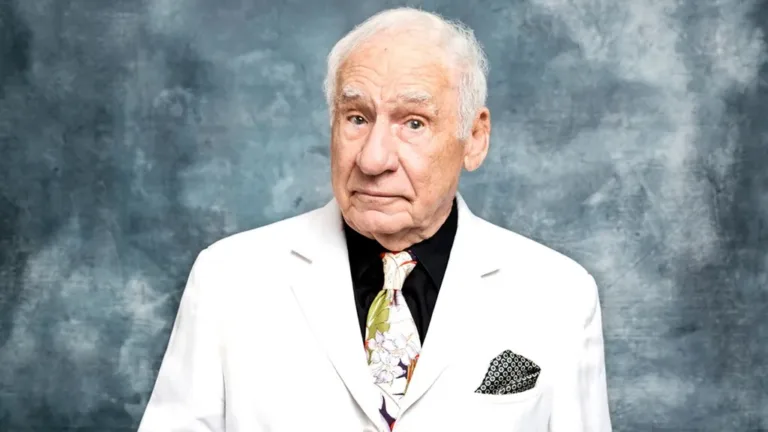
From World War II soldier to comedy legend
New York, United States | June 2026
Mel Brooks, one of the most influential comic minds in American entertainment, celebrates his 100th birthday after a life that moved from the battlefields of World War II to the highest levels of film, television, theater and cultural satire. Born Melvin Kaminsky in Brooklyn on June 28, 1926, Brooks became a defining figure in modern comedy by turning fear, absurdity and authority into material for laughter.
Before becoming a legend of humor, Brooks served in the U.S. Army during World War II. His wartime experience left a permanent mark on his worldview, especially as a Jewish American confronting the reality of Nazi violence in Europe. That background later shaped one of the boldest elements of his comedy: the decision to mock dictators, fascism and antisemitism rather than treat them as untouchable symbols of fear.
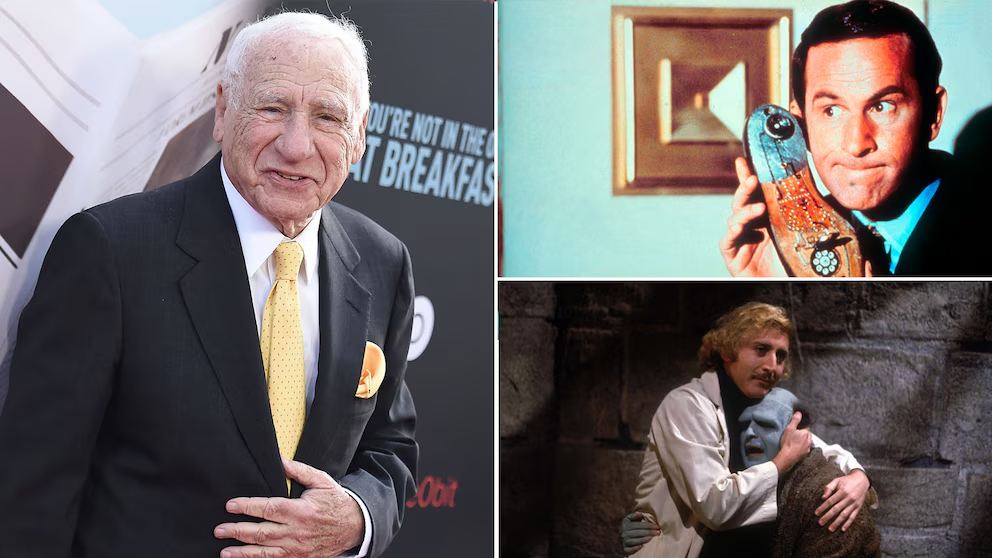
After the war, Brooks entered entertainment through the Borscht Belt and later became a writer for Sid Caesar’s Your Show of Shows, one of the most important comedy programs of early American television. There he developed the timing, discipline and collaborative style that would define his career. His friendship with Carl Reiner led to the famous 2,000 Year Old Man sketches, a landmark in spoken comedy and improvisational absurdity.
Brooks’ film career changed comedy with The Producers, released in 1967, a movie that shocked audiences with its outrageous premise and won him an Academy Award for original screenplay. He later delivered classics such as Blazing Saddles, Young Frankenstein, High Anxiety, Spaceballs and History of the World, Part I, building a style based on parody, speed, irreverence and fearless attacks on hypocrisy.
His work often crossed the limits of conventional taste, but it also opened space for satire as a weapon against power. Brooks understood that comedy could do more than entertain; it could puncture authoritarianism, expose prejudice and reduce fear by making the terrifying look ridiculous. That philosophy made him one of the most distinctive voices in postwar American humor.
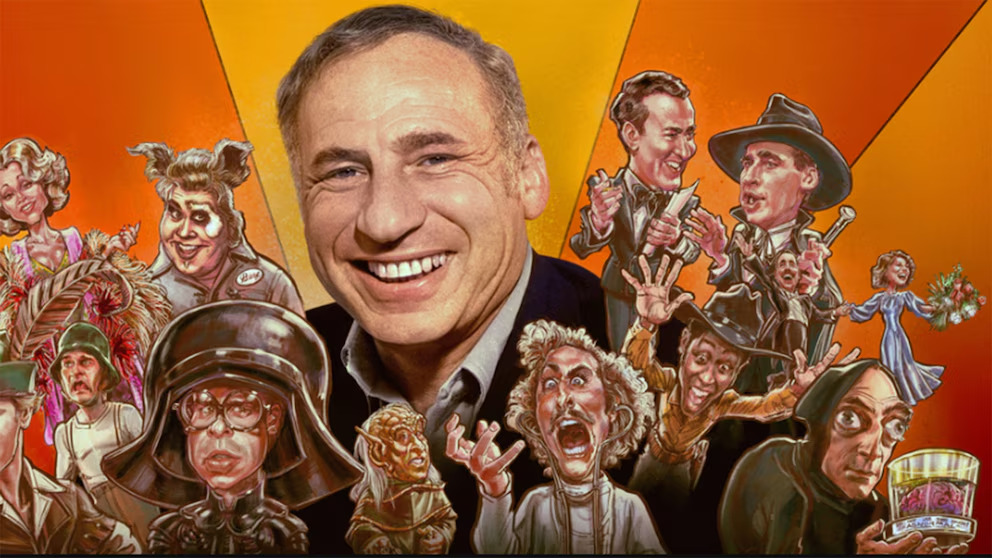
His career also extended beyond performing and directing. Brooks produced serious films, including The Elephant Man, showing that his artistic instincts were not limited to comedy. On Broadway, The Producers became a major success and won a record number of Tony Awards, confirming his rare ability to move between media and generations.
Brooks is also one of the few artists to achieve EGOT status, winning Emmy, Grammy, Oscar and Tony awards. That recognition reflects not only longevity, but also extraordinary versatility across television, recording, cinema and theater. Few entertainers have influenced so many formats with such a recognizable creative identity.

At 100, Brooks remains a symbol of resilience, Jewish American creativity and the enduring power of laughter. His legacy is not simply that he made people laugh, but that he used laughter to confront fear, violence, arrogance and historical trauma. A century after his birth, Mel Brooks stands as proof that comedy can survive war, age and changing times while continuing to challenge the world with intelligence and irreverence.
Phoenix24 News | Information with responsibility.