

 Phoenix 24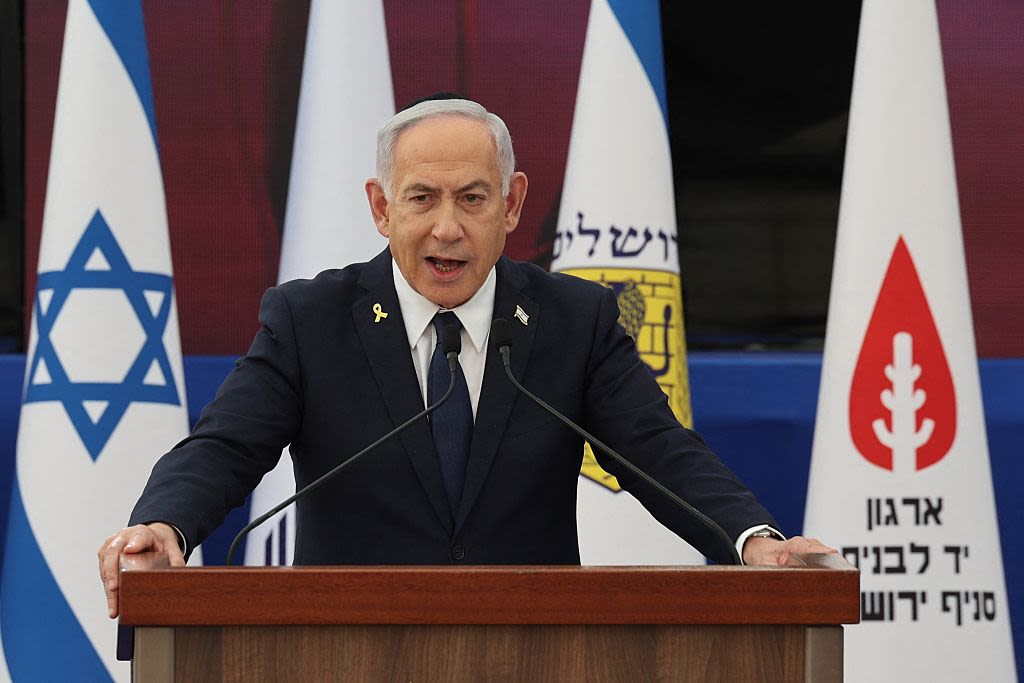
When wars become structural, they no longer seek victory—they seek to redraw the moral map of the world.
Tel Aviv, August 4, 2025 — In a move that redefines the balance of power in the Middle East, Israeli Prime Minister Benjamin Netanyahu has announced his government’s decision to “fully occupy Gaza,” discarding any diplomatic or tactical containment formula upheld since the Oslo Accords. The statement—made following a closed-door national security cabinet meeting and leaked first to Kan News—marks a definitive rupture with the international legal framework that still recognized the Palestinian Authority as a political actor in the enclave.
According to sources close to the Institute for National Security Studies (INSS) in Tel Aviv and analysts from the Middle East Institute in Washington, Israel’s objective now goes far beyond Hamas. It is about dismantling any remaining capacity for Palestinian self-governance, reinstating a military occupation authority of indefinite duration, and managing Gaza through a paramilitary model—possibly involving private security firms—akin to the post-Intifada West Bank. Experts consulted by Phoenix24 warn this signals a population engineering strategy cloaked in the rhetoric of “humanitarian evacuation,” which in practice would mean forced displacement toward the Egyptian border.
International reactions have been as predictable as they are ineffective. From Brussels, the European Union expressed its “deep concern over recent developments” while reaffirming its commitment to “a sustainable two-state solution.” Yet behind the diplomatic wording, countries such as Germany, France, and the Netherlands continue exporting dual-use technologies to Israel, according to records from the Stockholm International Peace Research Institute (SIPRI). Only Ireland, Norway, and Spain have called for an arms embargo—thus far blocked by the European Council.
In the United States, the Biden administration faces its most severe foreign policy and moral dilemma since Russia’s invasion of Ukraine. While the president issued a cautious statement urging the avoidance of “unnecessary bloodshed,” the State Department has renewed military aid packages without conditions. Pro-Israel lobbying group AIPAC has intensified pressure in Congress, while senators like Lindsey Graham and Tom Cotton openly back the offensive, calling it “a necessary step to eradicate Islamic terrorism.”
On the ground, reports from the International Committee of the Red Cross and the UN Human Rights Office document systematic targeting of schools, hospitals, and civilian shelters. More than 38,000 Palestinians have been killed since the start of the Israeli offensive triggered by Hamas’s October 7, 2023 attack. Another 75,000 have been wounded or are missing, according to updated figures from the Palestinian Red Crescent and verified by the International Rescue Committee.
Meanwhile, Israeli Defense Forces (IDF) have begun setting up permanent checkpoints in key areas of Gaza, particularly along corridors linking Rafah, Khan Younis, and Gaza City. Satellite imagery analyzed by OSINT platform AI4OSINT and shared with Phoenix24 reveals the deployment of heavy machinery, long-range logistical movements, and the rapid construction of “buffer zones,” all indicating long-term military presence.
Within Israel’s military establishment, there is no attempt to hide the doctrinal shift. Retired General Amos Yadlin, former head of military intelligence, stated in an interview with Channel 12 that “the era of surgical operations is over; Gaza will now be administered as a strategic zone under total control.” His remarks align with Israel’s updated deterrence doctrine adopted in 2024, which frames permanent occupation as a legitimate strategy of political and symbolic neutralization.
From the Arab world, responses range from rhetorical outrage to diplomatic paralysis. Saudi Arabia condemned the decision as “a flagrant violation of international humanitarian law” but has not recalled its ambassador or frozen ties with Tel Aviv. Egypt—caught between international pressure and a longstanding security agreement with Israel—has kept the Rafah crossing closed to civilians but discreetly facilitates the evacuation of severely injured patients in coordination with the WHO. Qatar, a traditional mediator, has withdrawn its delegation from negotiations in Doha and temporarily halted its financial support for Gaza’s reconstruction.
Russia and China, meanwhile, have seized the crisis to escalate their diplomatic offensive against the West. The Russian Foreign Ministry accused the U.S. of “double standards and active complicity in war crimes,” while China’s Foreign Ministry spokesperson declared that “Israel’s full occupation of Gaza reflects the moral failure of the liberal international order.”
Yet the real battlefield may lie in global perception. The narrative of a “necessary occupation” collides with the collapse of the legal architecture that once sustained the illusion of a peace process. In a hyperconnected world, images of bodies under rubble, children in collapsed hospitals, and Israeli convoys rolling through demolished neighborhoods dismantle—at real time—decades of rhetoric on universal values.
If nothing changes, Israel will consolidate a permanent military presence in Gaza, institutionalizing a de facto regime that recasts occupation as preventive security. If disruption occurs, such as a leadership shift in Washington, a multilateral humanitarian intervention, or a regional military escalation, the strategic axis may collapse. But if new actors enter the board—Turkey from the Mediterranean flank, or Iran via Lebanon—the conflict could escalate across multiple fronts, with unpredictable consequences for global energy stability and the Gulf’s diplomatic architecture.
This article was produced by the Phoenix24 editorial team based on public information, verified international sources, and independent geopolitical analysis.
Esta nota fue elaborada por el equipo editorial de Phoenix24 con base en información pública, fuentes internacionales verificadas y análisis geopolítico independiente.