

 Phoenix 24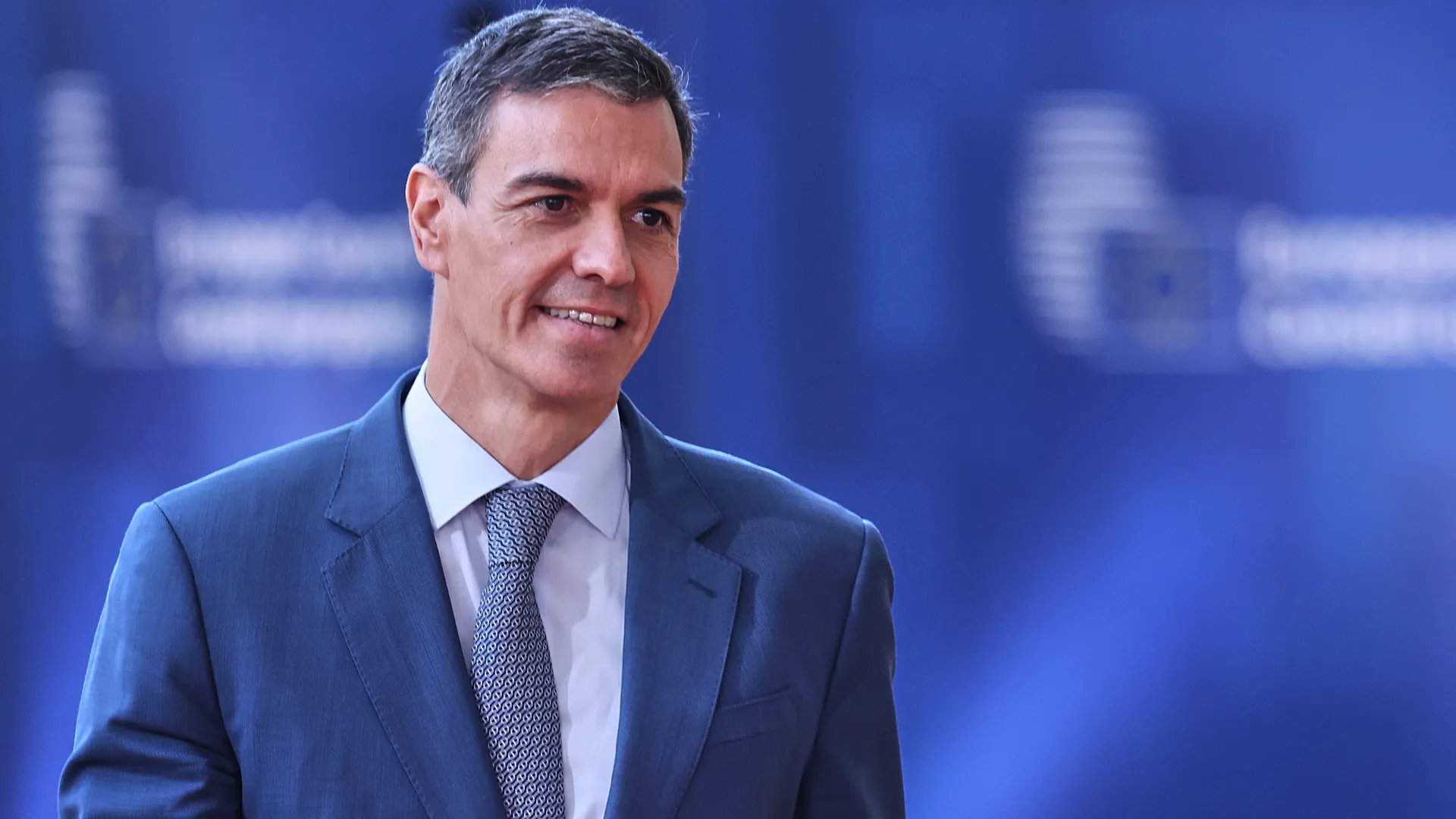
Coalition partners are narrowing the government’s room.
MADRID, Spain | June 2026
Spanish Prime Minister Pedro Sánchez has opened the door to an early general election if his government fails to secure parliamentary approval for a new national budget. Speaking before a European Council meeting, Sánchez said the executive would make the necessary decisions if the political conditions required to pass the spending plan did not materialize. His remarks marked the clearest indication so far that the continuity of the legislature could depend on the government’s ability to rebuild a viable parliamentary majority. The statement immediately intensified pressure from opposition parties and several forces that supported his investiture.
Sánchez insisted that the government would continue negotiating and would not anticipate scenarios before the budget proposal had been formally presented. He said the executive intended to defend accounts consistent with the policies pursued since 2018, including economic growth, social protection and public investment. The prime minister also appealed to parliamentary groups to act responsibly when the proposal reaches Congress. Even so, his acknowledgment that decisions could be taken if the budget failed represented a significant shift in tone.
Coalición Canaria joined the Basque Nationalist Party in arguing that elections should be called if Sánchez cannot approve new General State Budgets before the end of the current term. Cristina Valido, the party’s spokesperson in Congress, said approaching the fourth year of the legislature without updated public accounts would leave little justification for extending the political cycle. Her position adds pressure from within the broader group of parties that enabled Sánchez to remain in office. It also reinforces the idea that parliamentary support can no longer be taken for granted on major legislative initiatives.
The PNV had issued a similar warning one day earlier through its parliamentary spokesperson, Maribel Vaquero. She called on Sánchez to submit the budget to Congress and, if he cannot gather enough votes, dissolve the legislature and convene elections. Vaquero said the political term had entered its final stretch and described the continuing budget debate as increasingly unusual in the current environment. The intervention was especially relevant because the PNV has traditionally played a decisive role in close parliamentary negotiations.
The Spanish government depends on a fragmented and ideologically diverse majority that includes parties with different territorial, economic and political priorities. That arrangement allowed Sánchez to secure his investiture, but it has also made each major vote a complex negotiation. Budget approval requires more than general political support because it involves spending commitments, regional financing and concessions across multiple policy areas. A single defection can therefore undermine the entire legislative strategy.
The situation has become more delicate amid judicial investigations affecting people close to the prime minister and growing opposition pressure on the government. These controversies have weakened the executive’s political position and increased demands for parliamentary accountability. Sánchez’s opponents argue that the legislature has lost stability and should be brought to an end. The government maintains that it still has a mandate to govern and that institutional decisions should not be dictated by political pressure or unresolved investigations.
Alberto Núñez Feijóo, leader of the conservative Partido Popular, has intensified contacts with other parties in an attempt to promote a no-confidence motion. He said from Brussels that political forces criticizing the government should act together to remove it and immediately call elections. The PP, Vox, UPN and Coalición Canaria do not hold the 176 seats required to approve such a motion. Feijóo would therefore need support from either the PNV or Junts, neither of which has committed to joining the initiative.
The arithmetic illustrates the limits of the opposition’s strategy. A no-confidence motion in Spain must be constructive, meaning that it must present an alternative candidate capable of securing an absolute majority. This requirement makes symbolic motions politically visible but institutionally ineffective unless a broad coalition is already prepared to replace the sitting government. The PNV and Junts remain central to any such scenario because their votes could determine whether the parliamentary balance changes.
At the same time, the PNV and Junts have indicated support for a decree updating advance payments to Spain’s autonomous communities. The measure would distribute approximately 157.7 billion euros to regional administrations. Their willingness to support that financial package shows that criticism of Sánchez does not automatically translate into alignment with the PP. Both parties continue to negotiate issue by issue and retain significant leverage over the government’s legislative agenda.
Coalición Canaria has also challenged the decision of the Congress Bureau to block a plenary vote on amendments from the PP and Junts calling for early elections. The governing PSOE and its coalition partner Sumar hold a majority on the bureau and argued that dissolving parliament is an exclusive constitutional power of the prime minister. Valido rejected the decision and said there should be no fear of allowing the chamber to debate the proposals. The dispute reflects a broader confrontation over whether parliamentary pressure can be used to force an electoral timetable.
The budget has therefore become more than a financial document. It now functions as a test of whether Sánchez still commands enough political support to govern effectively. Passing it would demonstrate that the coalition supporting the executive remains operational despite internal tensions. Failure could confirm that the legislature has entered a period of paralysis from which an early election becomes increasingly difficult to avoid.
Sánchez still controls the timing of any dissolution of parliament, but his allies are reducing his political room to delay a decision. Their message is that a government unable to approve its central annual policy instrument may no longer possess the legitimacy or capacity required to continue. The coming negotiations will determine whether the executive can convert its fragmented investiture majority into a working budget coalition. Spain’s political stability now depends on whether those parties still see greater value in sustaining Sánchez than in returning to the polls.
La narrativa también es poder. / Narrative is power too.