

 Phoenix 24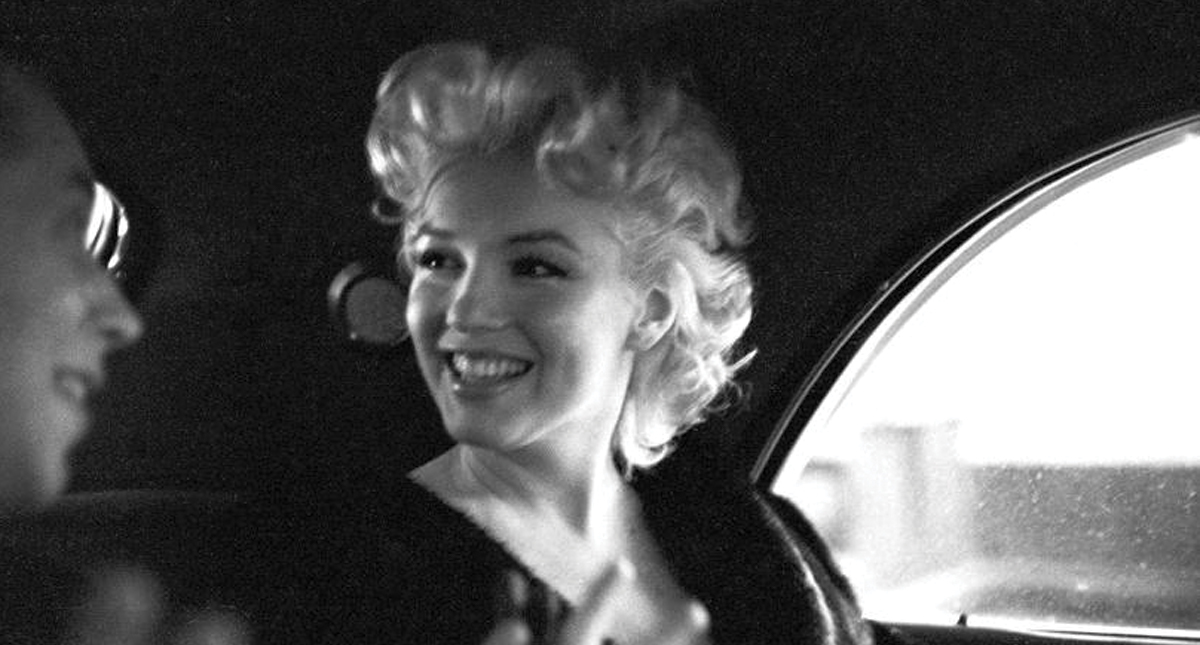
The archive turns glamour into memory.
London, June 2026
Marilyn Monroe returns to London through an exhibition that brings together around 200 pieces connected to her life, image, and cultural afterlife. The show does not simply revisit a Hollywood star. It reconstructs the machinery of a myth that has survived beyond cinema, fashion, celebrity culture, and the century that produced her.

The exhibition gathers dresses, photographs, personal objects, film material, and memorabilia that trace Monroe’s transformation from Norma Jeane into one of the most recognizable figures in global popular culture. Each object works as a fragment of a larger contradiction: the public fantasy of beauty, sensuality, and fame standing beside the private vulnerability of a woman consumed by the same system that elevated her.
London is an especially powerful stage for that return. Monroe’s image has long crossed national borders, becoming less a purely American symbol than a global language of glamour, fragility, desire, and tragedy. Her presence in a museum setting confirms that celebrity can become historical material when time turns performance into archive.
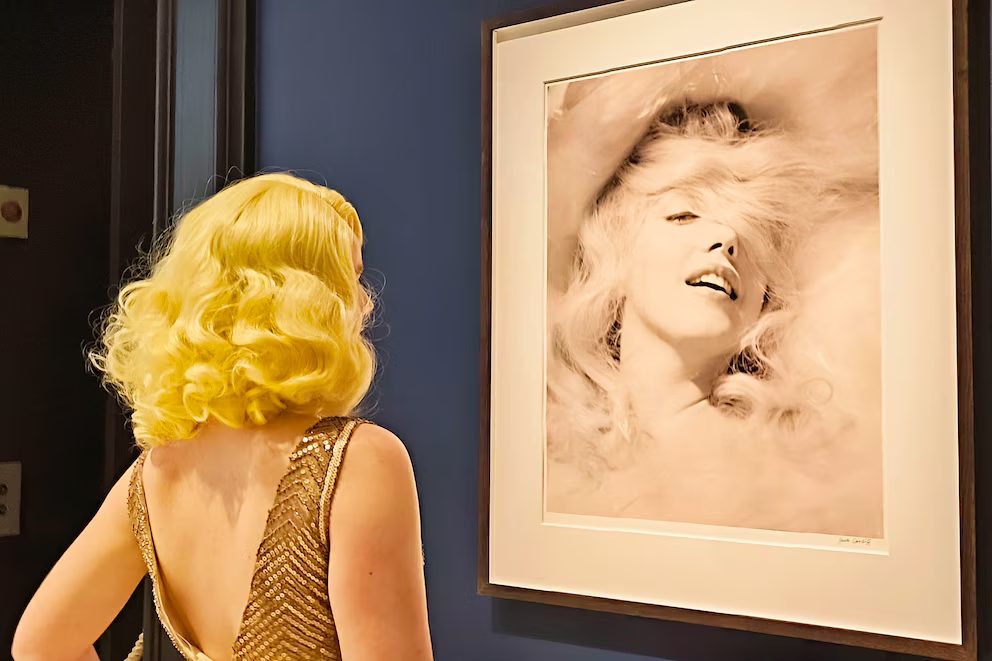
The show also arrives in a cultural moment obsessed with revisiting female icons through new lenses. Monroe is no longer read only as a blonde bombshell or tragic screen goddess. Contemporary audiences increasingly interpret her as a woman negotiating power, exploitation, mental health, ambition, and control over her own image inside a ruthless entertainment industry.
That shift matters because the Marilyn Monroe myth has always been unstable. It can be commercialized, romanticized, politicized, or mourned, depending on who tells the story. An exhibition of this scale forces viewers to confront both the seduction and the violence of fame: the beautiful surface, the manufactured persona, and the human cost hidden beneath it.
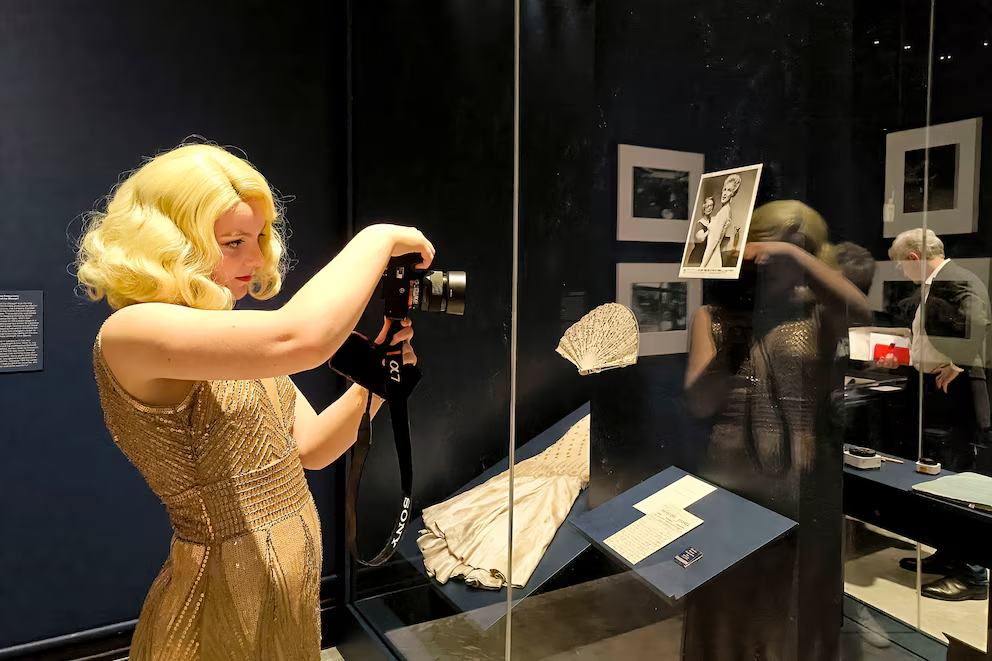
More than six decades after her death, Monroe remains culturally alive because she represents a conflict that has not disappeared. The world still builds women into icons, consumes them as symbols, and later tries to recover the person behind the image. In London, Marilyn returns not only as memory, but as evidence.
The visible and the hidden, in context. / Lo visible y lo oculto, en contexto.