

 Phoenix 24
Azerbaijan’s capital brings international artists together to explore cultural heritage, biodiversity and the creative possibilities of contemporary art.
BAKU, AZERBAIJAN — November 4, 2026. Azerbaijan’s capital has strengthened its international cultural profile through the second edition of Baku Art Weekend, a three-day celebration bringing together contemporary art, traditional craftsmanship and environmental awareness. Held from October 30 to November 1 under the theme Fly to Baku: Sense the Future NOW, the festival transformed galleries, museums and historic spaces into platforms for artistic experimentation. Organized by the Heydar Aliyev Foundation and the IDEA Public Union, the event featured Azerbaijani and international artists exploring the relationships between cultural identity, nature, technology and human experience.
One of the festival’s central themes was the preservation of the Caucasus region’s biodiversity. Organizers highlighted five emblematic animals: the Caucasian leopard, Eastern imperial eagle, grey wolf, goitered gazelle and brown bear. Through exhibitions, photography and interactive installations, artists encouraged visitors to consider the relationship between human activity and the natural environment. Rather than treating conservation exclusively as a scientific subject, the festival presented artistic expression as another way to communicate ecological concerns and encourage public engagement.
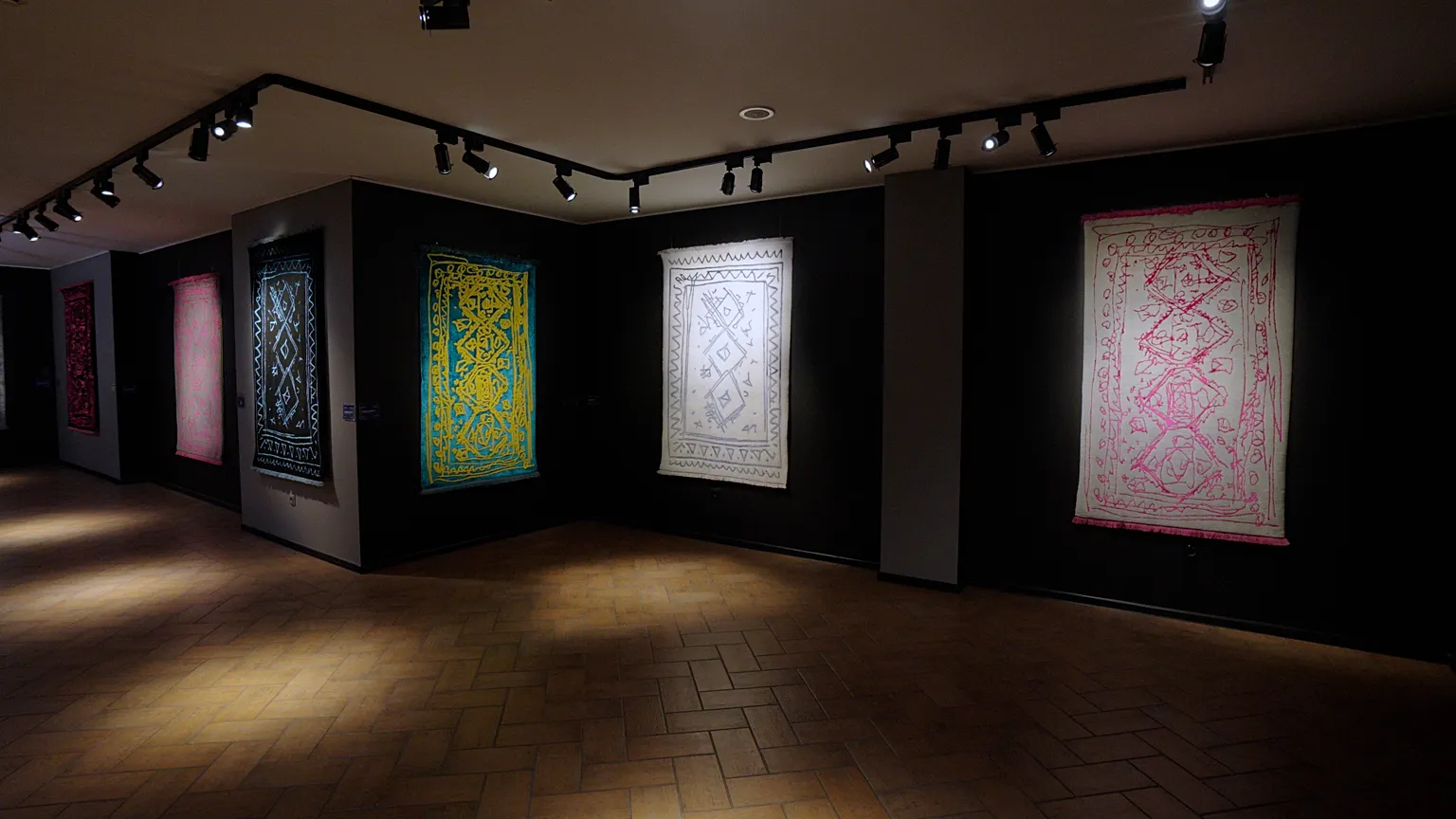
Azerbaijani artist Farid Rasulov demonstrated how traditional craftsmanship can acquire new meanings through contemporary experimentation. Born in Shusha, Rasulov drew inspiration from the Karabakh carpets that surrounded him during childhood, particularly their representations of animals, plants and natural landscapes. His Karabakh Carpets 2.0 series reinterprets those familiar visual elements within a contemporary artistic language. Presented alongside work by Faig Ahmed in the exhibition Beyond Memory, the project explored how cultural traditions evolve without losing their connection to collective identity.
Sculptor Aydan Salahova approached the relationship between heritage and personal freedom through an installation inspired by Baku’s historic Maiden Tower. Drawing on the monument’s associated legend, she imagined a woman escaping established restrictions and pursuing an independent future. Her work combined historical symbolism with a contemporary reflection on individual choice. Salahova, who works between Azerbaijan and Italy, also emphasized the different expressive possibilities of Carrara marble and locally sourced Aglay limestone, demonstrating how materials influence artistic interpretation.
International participation introduced additional perspectives. Chinese artist Zhang Ji challenged conventional painting methods by applying pigment with syringes rather than traditional brushes, producing highly textured surfaces. His practice also draws on religious architecture and visual traditions from different civilizations. Instead of presenting a single cultural interpretation, Zhang invited audiences to experience the works through their forms, textures and emotional effects. His participation illustrated how contemporary art can establish connections across languages and cultural backgrounds.
The relationship between architecture and nature emerged in the work of Dutch-Canadian artist Ryan Koopmans, whose digital images depict abandoned buildings gradually reclaimed by vegetation. Presented through The Wild Within, a project developed with Alice Wexell, the images explore the temporary character of human construction and the changing relationship between urban environments and natural ecosystems. Koopmans also identified Azerbaijan’s architecture as a source of inspiration, particularly the coexistence of Persian, Ottoman, Soviet and local influences within Baku’s urban landscape.
London-based artist Ori Gersht examined a related theme through photography. His work Pomegranate investigates the relationship between beauty, transformation and destruction, using photographic technology to reveal moments that ordinary human perception cannot fully capture. The project illustrates how technological innovation can expand artistic expression without replacing the photographer’s creative judgment. Together, the works of Gersht and Koopmans demonstrated different approaches to examining time, memory and the unstable boundaries between the natural and constructed worlds.
Wildlife conservation also reached audiences through documentary filmmaking. Harriet Pratten presented Europe’s Last Leopard, drawing on her experience documenting the elusive Caucasian leopard in Azerbaijan’s Hirkan National Park. Developed in connection with conservation efforts involving IDEA and WWF Azerbaijan, the film used storytelling to make an endangered animal more visible to audiences. Exhibition curator Lesley Gray emphasized the importance of animals as indicators of environmental conditions, reinforcing the relationship between scientific observation and cultural communication.
The festival attracted figures from the international art community, including auctioneer and curator Simon de Pury, whose career was explored through a screening of the documentary The Hammer. Representatives of international cultural platforms also attended exhibitions and met participating artists. Beyond showcasing individual works, the event created opportunities for professional exchanges, international visibility and connections between Azerbaijan’s artistic community and broader cultural networks. These activities contribute to Baku’s ambition to establish itself as a destination for contemporary artistic expression.
Baku Art Weekend’s significance lies in its ability to connect established cultural traditions with new forms of artistic experimentation. Its exhibitions demonstrated that carpets, sculpture, photography, digital imagery and documentary film can address shared questions about memory, identity and environmental responsibility. Although the festival’s long-term influence will depend on sustained cultural investment and international collaboration, its second edition presented a distinctive vision of a city using contemporary art to reconsider its heritage and its relationship with the natural world.
Phoenix24: Beyond the artwork, the dialogue between culture and nature. / Más allá de la obra, el diálogo entre cultura y naturaleza.