

 Phoenix 24
Dark humor confronts the consequences of power and guilt.
VENICE
John Malkovich has emerged as the defining presence in Wild Horse Nine, the latest dark comedy from British-Irish filmmaker Martin McDonagh, whose exploration of political violence, moral responsibility and mortality has already earned the American actor the Volpi Cup for Best Actor at the Venice International Film Festival. The film arrives in theaters with considerable critical attention and renewed discussion of Malkovich’s place among contemporary cinema’s most distinctive performers.
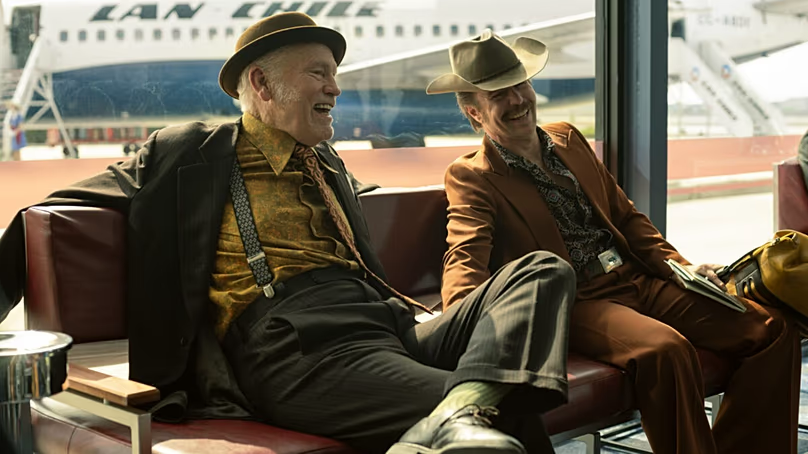
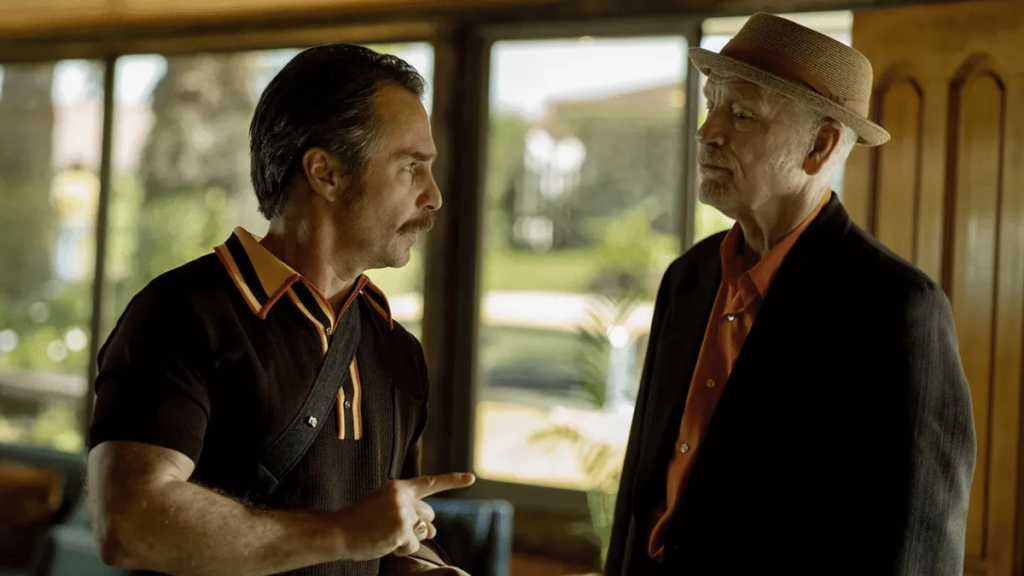
Set shortly before Chile’s 1973 military coup, the story follows two veteran CIA operatives, Chris, played by Malkovich, and Lee, portrayed by Sam Rockwell, who are dispatched from Santiago to Easter Island by their superior, MJ, played by Steve Buscemi. What initially resembles an unusual assignment gradually develops into a confrontation with their professional histories and personal choices.
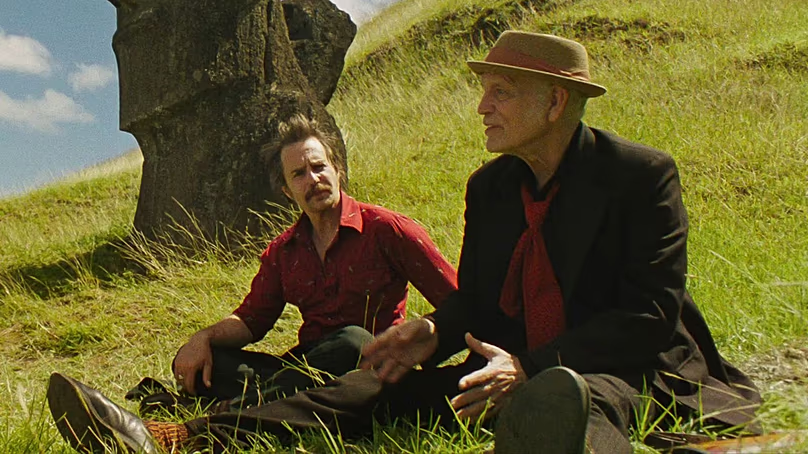
The remote landscapes of Rapa Nui provide a striking contrast to the characters’ troubled relationship. Surrounded by the island’s monumental moai statues, the agents navigate conversations filled with suspicion, bitter humor and uncomfortable reflections on their involvement in covert operations.
Complications arise when Chris develops an unexpected connection with two politically engaged students, played by Mariana di Girolamo and Ailín Salas. Their presence introduces questions about ideological conviction and the human consequences of political interference, placing the characters’ private dilemmas against a historically sensitive backdrop.
McDonagh, whose previous films include In Bruges, Three Billboards Outside Ebbing, Missouri and The Banshees of Inisherin, returns to familiar creative territory. His storytelling combines morally compromised protagonists, provocative dialogue and moments of vulnerability that challenge audiences to reconsider their initial judgments.
Malkovich’s performance has attracted particular attention for its combination of sharp comic delivery and emotional restraint. His character’s deteriorating health and troubled memory introduce an additional dimension, transforming what might otherwise be a conventional espionage comedy into a meditation on regret and accountability.
The performance received formal recognition at the 83rd Venice International Film Festival, where Malkovich won the Volpi Cup for Best Actor in September. The award has also generated discussion about a possible return to Academy Award contention, although no nomination has been announced.
Critical reception has not been uniformly enthusiastic. Some reviewers have questioned the film’s narrative discipline and the comparatively limited development of its female characters. Others have highlighted the chemistry between Malkovich and Rockwell and the effectiveness of McDonagh’s distinctive dialogue.
The screenplay also reflects a broader cinematic interest in examining political intervention through fictional characters. Although the narrative takes place against the historical context of Chile’s 1973 coup, its invented intelligence operations should not be confused with independently documented historical events.
For McDonagh, Wild Horse Nine represents another attempt to balance irreverent comedy with questions of conscience. For Malkovich, it offers a prominent leading role that draws upon his ability to portray eccentricity without sacrificing emotional complexity.
Beyond its awards recognition, the film’s significance lies in its examination of whether individuals accustomed to exercising power can meaningfully confront the consequences of their decisions.
Behind Every Fact, a Deeper Story.