

 Phoenix 24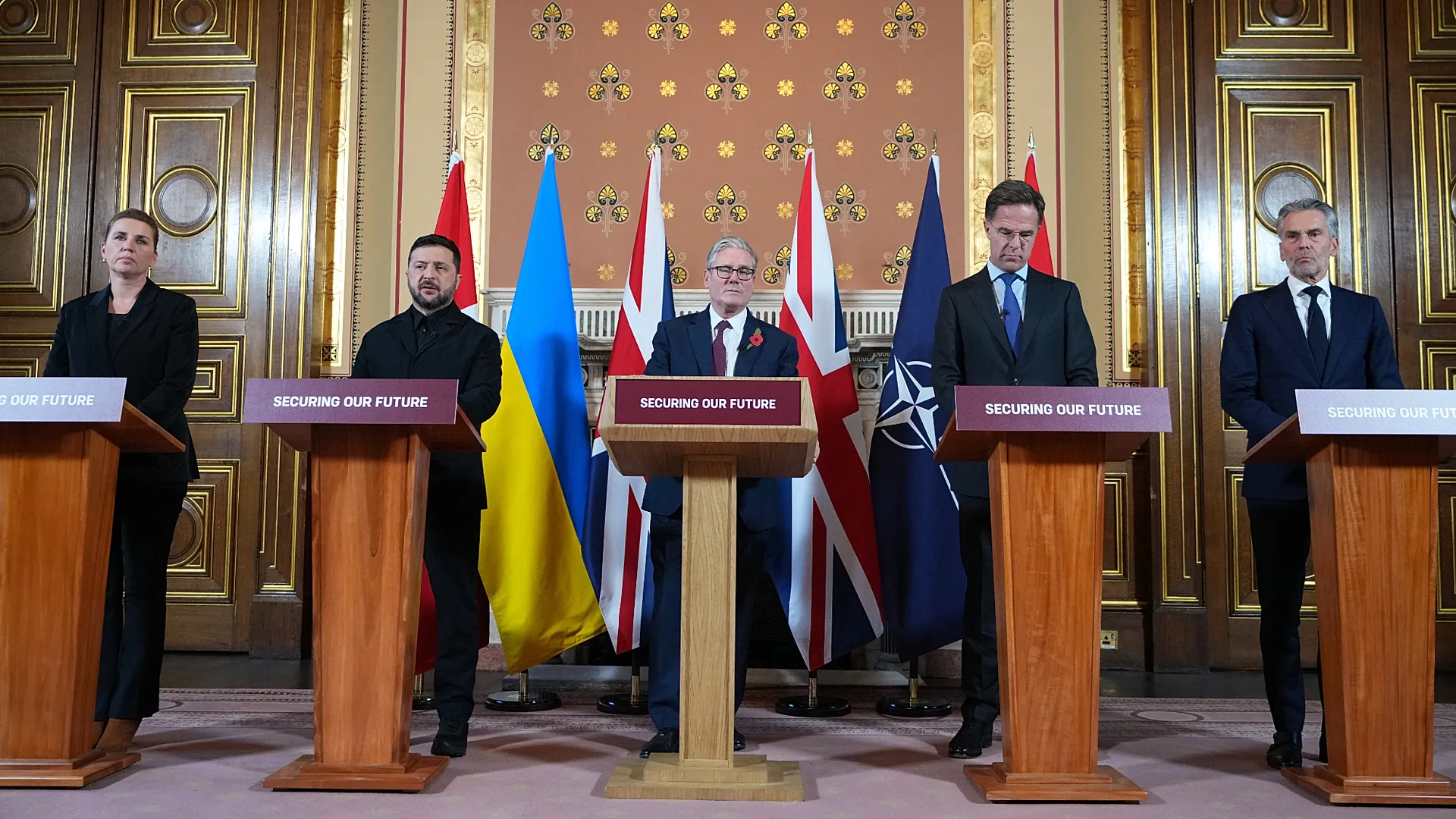
The message is less about negotiation than about defining the limits of illusion.
Brussels, Belgium.
The European Union has moved to harden its political language on Ukraine’s future, framing accession not as a symbolic aspiration but as a structural element of long-term European security. Speaking from Brussels, Ursula von der Leyen reaffirmed that Ukraine’s path toward EU membership remains open and anchored in merit, even as the war with Russia continues to reshape the continent’s strategic calculus.
Von der Leyen presented accession as more than a postwar reward. In her framing, integration into the European Union functions as a protective architecture, embedding Ukraine within a system of legal norms, economic interdependence and political obligations that extend beyond military guarantees. The argument reflects a shift in tone inside EU institutions, where enlargement is increasingly discussed as a security instrument rather than a purely bureaucratic process.
This position was reinforced by remarks from Friedrich Merz, who called for what he described as honesty in Europe’s dealings with Russia. The phrase was deliberately chosen. Rather than signaling openness or compromise, it underscored a growing frustration with what European leaders view as Moscow’s reliance on ambiguity, denial and strategic distortion in diplomatic exchanges.
Merz’s emphasis on honesty was widely interpreted as a rejection of performative negotiations detached from realities on the ground. In practical terms, it signals that European leaders are no longer willing to entertain peace narratives that ignore territorial aggression, responsibility for escalation or the structural nature of the conflict. Honesty, in this context, functions as a boundary-setting mechanism rather than a conciliatory gesture.
The linkage between Ukraine’s EU accession and the tone adopted toward Russia is not accidental. By tying enlargement to principles of transparency and rule-based order, Brussels is reinforcing a binary distinction between integration and coercion. Ukraine’s future, as presented by EU leadership, is framed as European by construction, while Russia is addressed as an external actor whose relationship with the bloc is conditioned on facts rather than narratives.
This posture also reflects internal EU dynamics. While member states differ on the pace and sequencing of accession, there is increasing convergence around the idea that ambiguity itself carries strategic cost. Delaying clarity on Ukraine’s European trajectory risks signaling hesitation, both to Kyiv and to Moscow. In this sense, reaffirming accession serves as a stabilizing signal to allies and a deterrent message to adversaries.
At the diplomatic level, the call for honesty responds to repeated episodes in which Russian officials have advanced claims contested by independent verification and Western intelligence. European leaders appear intent on narrowing the space in which such claims can influence negotiations or public opinion. The objective is not escalation, but narrative containment.
Ukraine’s accession process remains complex and conditional. Reforms related to governance, anti-corruption frameworks and judicial independence continue to be prerequisites. Yet the political message from Brussels is that war has not frozen the process. On the contrary, the conflict has accelerated a reassessment of where Ukraine belongs in Europe’s institutional architecture.
Strategically, the EU’s stance suggests a recalibration of its role. Enlargement is no longer treated as a distant horizon deferred by crisis, but as part of crisis management itself. Integrating Ukraine becomes a way of shaping the postwar order in advance, rather than reacting to it after the fact.
The insistence on honesty toward Russia also signals an evolution in European diplomacy. Rather than pursuing engagement at any cost, the Union is increasingly defining dialogue in terms of constraints and consequences. This does not foreclose negotiation, but it reframes it within a narrower corridor of acceptable premises.
Taken together, the statements from Brussels outline a coherent line. Ukraine’s European future is framed as non-negotiable in principle, even if gradual in execution. Russia is addressed not as a partner to be persuaded, but as an actor to be confronted with reality. In that configuration, accession, diplomacy and security converge into a single strategic narrative.
Europe is not closing doors. It is clarifying which ones lead where.
Detrás de cada dato, hay una intención. Detrás de cada silencio, una estructura.
Behind every data point, there is an intention. Behind every silence, a structure.