

 Phoenix 24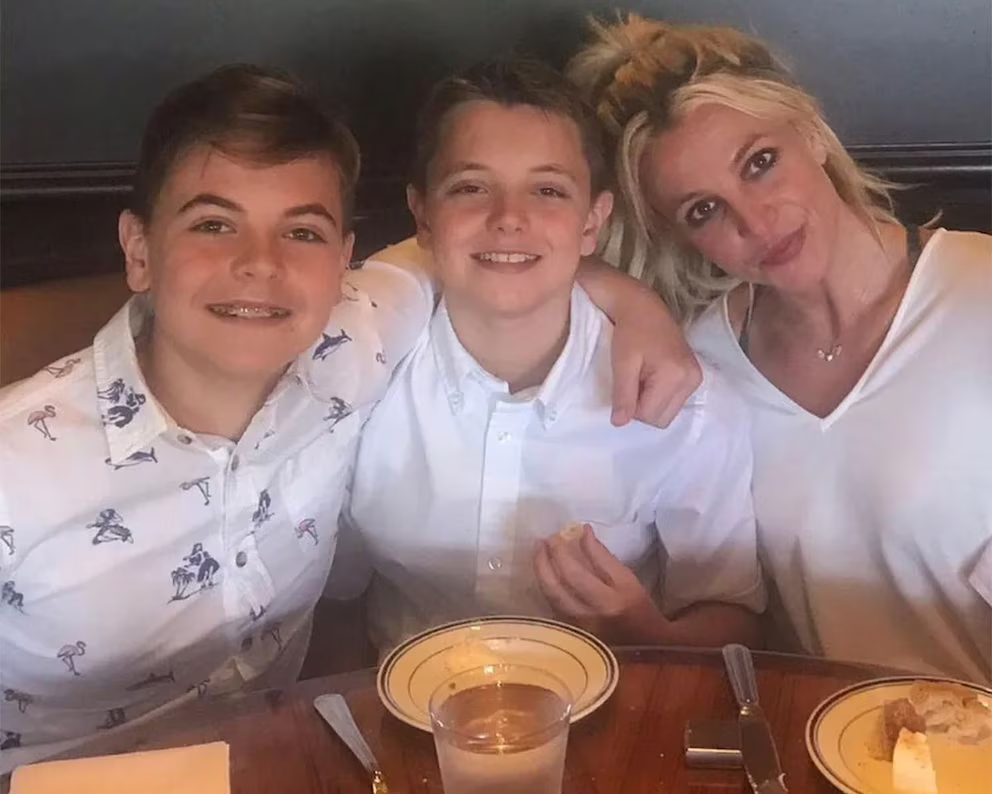
Jayden James challenges how popularity replaces verification online.
Los Angeles | July 2026
Britney Spears’ youngest son, Jayden James Federline, has publicly rejected the viral conspiracy theory claiming that his mother died or was replaced by a clone, questioning why millions of social-media users accept extraordinary allegations without searching for evidence.
The 19-year-old addressed the rumor during a livestream after encountering a TikTok video that had accumulated approximately 1.2 million likes. Its caption questioned whether Britney Spears was still alive, reviving one of the most persistent and unusual narratives surrounding the American pop star.
Jayden responded with disbelief and reminded viewers that Spears continues to publish material through her social-media profile. His message was direct: people claiming that she has disappeared can see her current activity for themselves.
Beyond defending his mother, Jayden used the episode to criticize the way information circulates online. He observed that users often treat a large number of likes as proof of credibility, accepting a claim because it appears popular rather than investigating whether it is accurate.
He argued that much of the content distributed through social platforms is exaggerated or false and that creators understand how easily audiences can be influenced. A provocative theory can attract attention, reactions and advertising revenue even when it contains no verifiable evidence.
The clone narrative has circulated around Spears for years. Its supporters attempt to explain perceived changes in her appearance, behavior or social-media content by suggesting that the internationally recognized singer was secretly replaced.
No credible evidence supports that allegation. The theory belongs to a wider category of celebrity replacement conspiracies that interpret ordinary changes caused by ageing, styling, editing, health, personal circumstances or camera technology as evidence of an organized deception.

The claims intensified after public figures discussed them through podcasts and social media. In 2024, American television personality Kristin Cavallari said she believed both Spears and rapper Kanye West had been replaced by clones, amplifying an idea that had previously circulated mainly within online conspiracy communities.
Repetition gave the rumor visibility but not factual legitimacy. Each new video, reaction or celebrity comment allowed the theory to reach audiences unfamiliar with its origins, creating the impression that widespread discussion represented supporting evidence.
Jayden’s intervention exposes one of the central weaknesses of contemporary digital culture: engagement indicators can be confused with verification. A video with millions of views may be accurate, misleading, satirical or entirely fabricated. The number beside it reveals how widely it travelled, not whether its central claim is true.
Social-media algorithms frequently prioritize content that produces strong emotional reactions. Surprise, fear and curiosity encourage users to pause, comment and share, while cautious explanations often attract less immediate attention.
Celebrity conspiracy theories are particularly effective within this environment because audiences already possess emotional relationships with famous figures. Fans may believe they understand a public personality through music, interviews and online posts, even though they see only selected fragments of that person’s life.
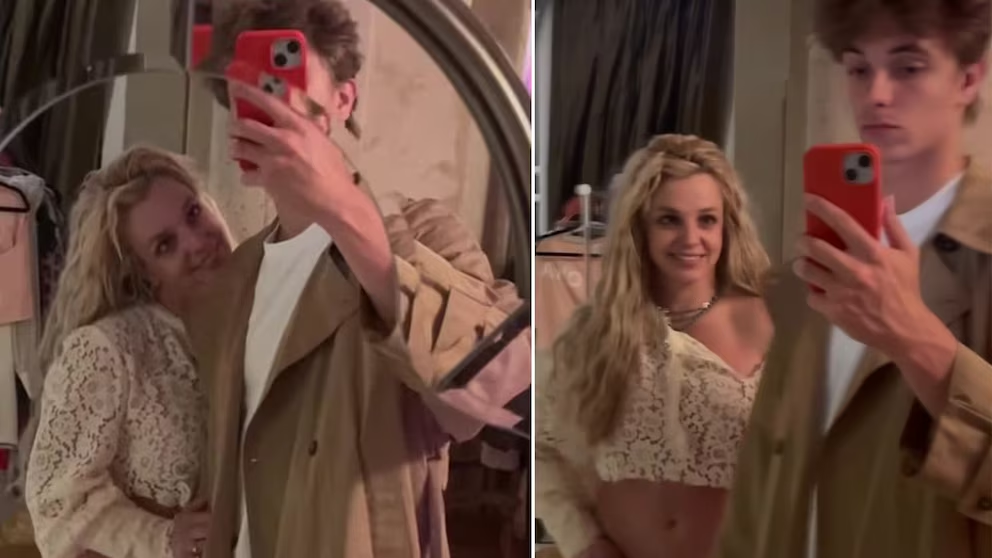
When a celebrity behaves differently from what followers expect, some users search for dramatic explanations instead of accepting that human beings change, experience private difficulties or communicate inconsistently.
Spears has faced exceptional public scrutiny since becoming famous as a teenager. Her career, relationships, motherhood and legal conservatorship were examined for decades by entertainment media and global audiences.
The termination of her conservatorship in 2021 increased attention on how she presented herself online. Videos of the singer dancing or speaking directly to followers have repeatedly generated speculation, with individual clips removed from their broader personal context.
Concern about a public figure’s welfare can be legitimate, but concern becomes harmful when it is transformed into unsupported claims presented as fact. Suggesting that someone has died, been cloned or been secretly replaced can dehumanize the person supposedly being defended.
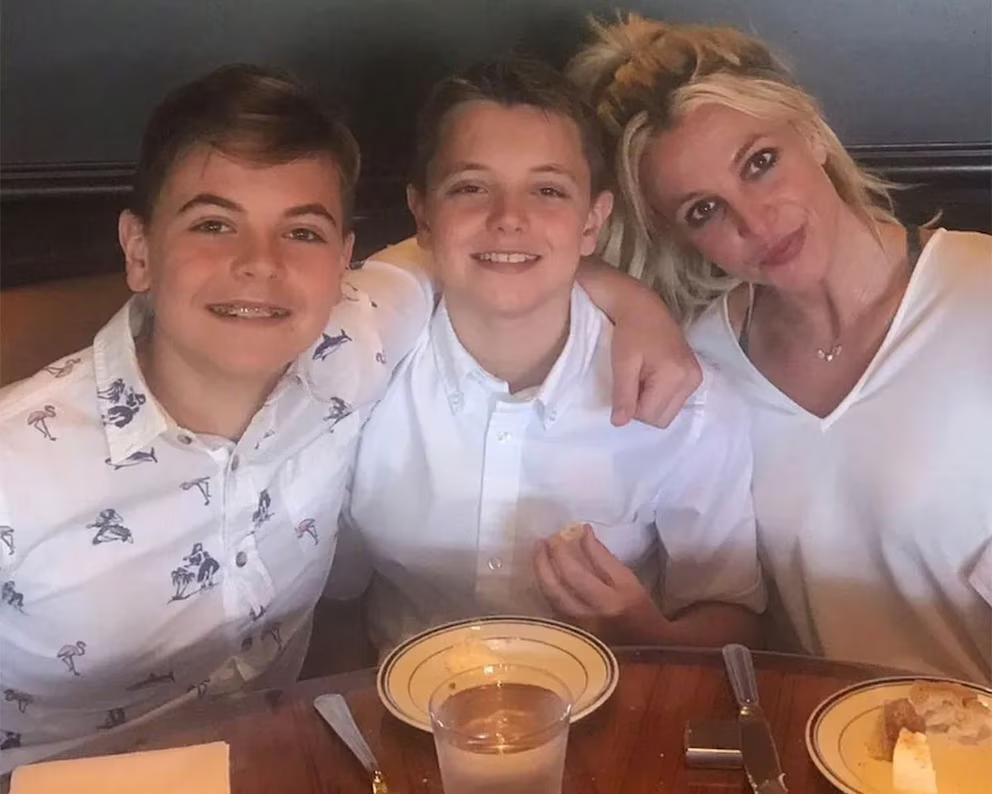
Such narratives also affect relatives. Jayden and his older brother, Sean Preston, have spent much of their lives connected to one of the world’s most recognizable entertainers while attempting to preserve their own privacy.
Jayden rarely speaks publicly about his mother, which gave his comments unusual significance. Rather than entering a detailed debate with conspiracy theorists, he challenged the basic reasoning behind the claim and the willingness of audiences to believe it.
His response also illustrates a generational contradiction. Younger people are often considered highly skilled in digital environments because they grew up using social platforms, yet familiarity with technology does not automatically produce media literacy.
Recognizing how to navigate an application differs from understanding how algorithms prioritize content, how images can be manipulated or how creators benefit financially from attention.
Artificial intelligence is making that distinction increasingly important. Synthetic images, cloned voices and altered videos can now be produced with little technical experience, making false celebrity content more convincing and easier to distribute.
The technological possibility of digitally imitating a person does not validate claims that the individual has been physically replaced. It instead increases the responsibility of users to examine origins, context and independent evidence before sharing sensational material.
A practical verification process begins by identifying the source, determining whether reputable organizations have confirmed the claim and examining whether the content provides evidence beyond visual comparisons or anonymous testimony.
Users should also consider whether the creator is attempting to inform an audience or simply maximize engagement. Captions framed as dramatic questions can imply extraordinary conclusions without accepting responsibility for making a direct factual assertion.
Jayden’s comments ultimately extend beyond one rumor about his mother. They describe a digital system in which visibility can manufacture credibility and emotional certainty can replace investigation.
Britney Spears has spent much of her life being interpreted by people who do not know her personally. Her son’s message asks audiences to apply a simpler standard: popularity is not proof, speculation is not evidence and a human life cannot be reduced to a viral theory.
Phoenix24 | Truth requires evidence, not millions of reactions. La verdad exige evidencia, no millones de reacciones.