

 Phoenix 24
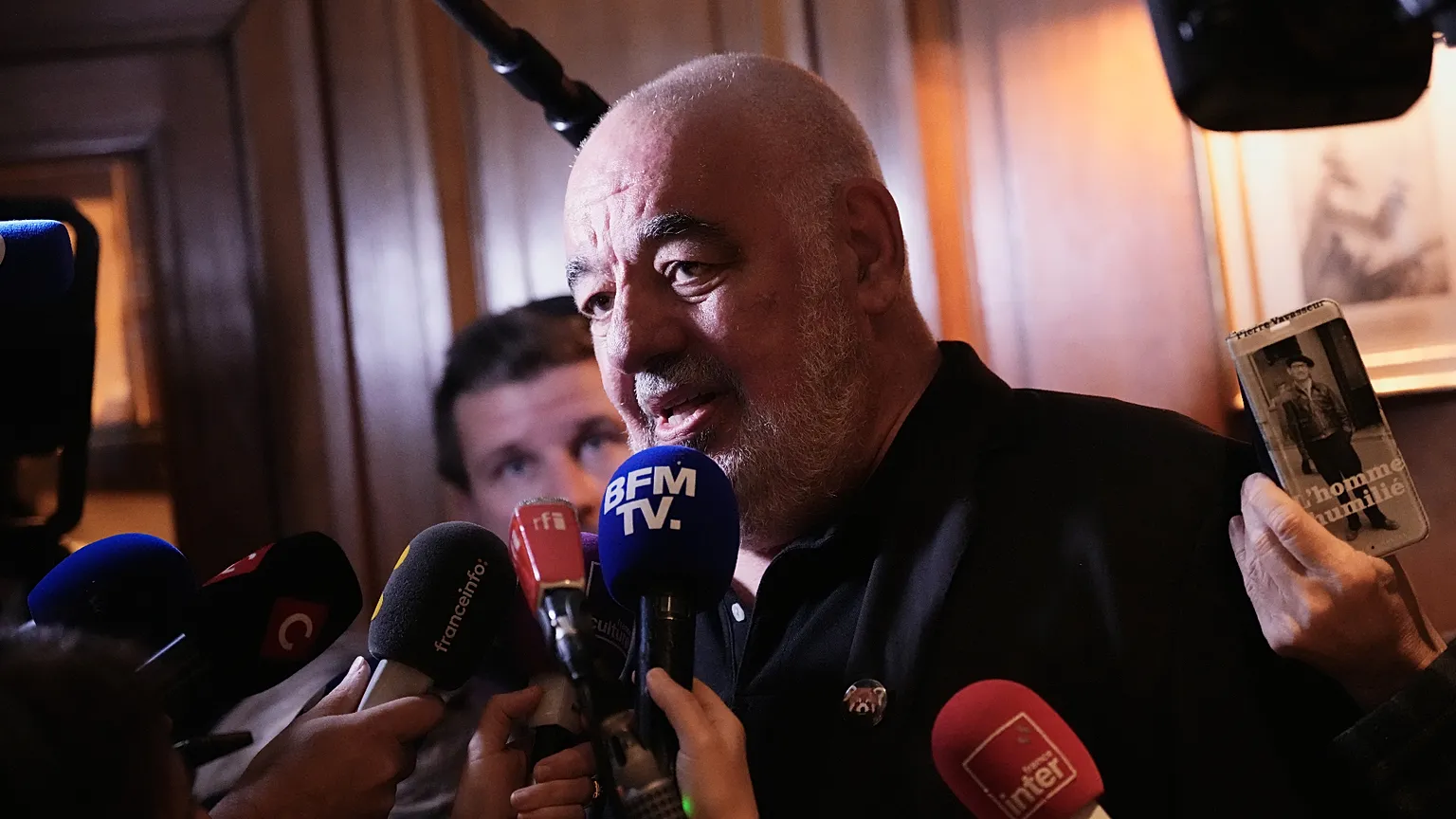
A hidden ChatGPT sentence in an award-winning novel reignites the debate over authorship, transparency and the future of literature.
PARIS, FRANCE — November 4, 2026. French novelist Philippe Jaenada, winner of the prestigious 2026 Prix Goncourt, has acknowledged using artificial intelligence while writing his award-winning novel, L’Inconnue du quai de Javel. Speaking to France Inter on Wednesday, the 62-year-old author explained that he consulted AI tools on three occasions, including an experiment in which he deliberately concealed a ChatGPT-generated sentence within the manuscript. His remarks have renewed debate over the relationship between human creativity and automated writing, raising questions about literary originality, intellectual responsibility and the place of artificial intelligence in contemporary culture.
Jaenada received France’s leading literary distinction on November 3 for his investigation into the unsolved 1949 murder of Louise Cansot, a young woman whose death became the subject of his latest work. Published by Flammarion, the novel combines historical investigation, archival research and the author’s characteristic narrative humor. The book continues an established approach to literary nonfiction that examines forgotten criminal cases through documentary evidence and personal interpretation, following earlier publications including Sulak, La Petite Femelle and La Serpe.
The writer’s explanation of his technological experiment was unusually direct. He told France Inter that one sentence generated by ChatGPT had been inserted into his manuscript as a playful challenge to readers. Rather than identifying the passage publicly, he disclosed its location privately to the nine Goncourt jurors and joked that he would recognize the source if the information subsequently became public. The experiment introduces an intriguing question about literary perception: whether readers can reliably distinguish a sentence produced by artificial intelligence from one written by an experienced novelist.
His other interactions with AI involved a combination of technical research and deliberate criticism of the technology’s limitations. Jaenada described receiving absurd responses to a factual question and incorporating that experience into his writing. According to reporting by 20 Minutes, the novel includes a discussion involving ChatGPT and Claude about the drying times of hair and cobblestones, with the author commenting on their responses. Another interaction proved useful during his investigation, illustrating why he considers these systems potentially valuable research assistants despite their inaccuracies.
An important distinction has emerged from subsequent reporting: Jaenada’s use of AI was not entirely undisclosed before his radio interview. The published novel already discusses his interactions with the technology on pages 237–240, and he addressed the subject in an October interview with 20 Minutes. The controversy therefore concerns the significance of his creative choices rather than the discovery of a previously concealed AI-assisted manuscript. Available reporting does not establish that the novel was substantially generated by artificial intelligence or that the author surrendered control over its narrative.
The timing nevertheless makes the discussion particularly sensitive. The 2026 French literary awards season has been affected by allegations involving Canadian-Haitian novelist Thélyson Orélien and his book C’était ça ou mourir. The work was removed from the Goncourt shortlist amid suspicions concerning AI-generated writing and allegations of plagiarism. Montreal publisher Éditions du Boréal subsequently ended its collaboration with Orélien and announced that the novel would not be reprinted. These developments have intensified scrutiny of how literary institutions evaluate originality, disclosure and professional responsibility.
However, the two cases should not be treated as equivalent. Jaenada has publicly described limited AI-assisted research and a deliberate literary experiment, while the allegations surrounding Orélien concern disputed questions about the origins and originality of published material. The distinction matters because using a digital tool to investigate a factual question differs from presenting substantial externally generated content as independently authored work. Assessing literary integrity requires examining the extent of technological involvement, the transparency of its use and the responsibility assumed by the author.
Jaenada has argued that writers should acknowledge artificial intelligence rather than pretend it does not exist. His position emphasizes learning to control these systems without allowing them to replace individual creativity. The novelist’s approach reflects a broader challenge confronting publishing houses, universities and cultural institutions: developing standards that distinguish legitimate technological assistance from practices that may compromise authorship or originality. Such standards are particularly important as increasingly capable language models blur traditional boundaries between research support, editing and text generation.
The debate also concerns the characteristics that make literature meaningful to readers. Language models can reproduce recognizable narrative structures and stylistic patterns, but literary expression involves more than generating grammatically convincing sentences. Personal experience, historical interpretation, emotional judgment and the deliberate selection of details contribute to the identity of an author’s work. At the same time, technological assistance has long formed part of literary production through dictionaries, archives, search engines and editing software. The challenge is establishing where AI fits within that evolving relationship.
For publishers and literary prize organizers, consistency and transparency are becoming increasingly important. A prohibition on all AI-assisted activity could prove difficult to define or enforce, while unrestricted use without disclosure could undermine confidence in authorship. Proportionate policies might distinguish research assistance, linguistic revision and substantial automated composition, provided their application remains clear and legally defensible. The Jaenada controversy demonstrates why those distinctions deserve consideration before disputes arise rather than being developed exclusively in response to individual authors.
Ultimately, the Goncourt winner’s experiment illustrates a transformation already taking place in literary culture. The central question is no longer simply whether writers use artificial intelligence, but how they use it, what they disclose and whether their creative decisions remain their own. Jaenada’s novel offers a particularly revealing case because its author incorporates the technology into the narrative while openly questioning its reliability. As AI becomes increasingly accessible, the future credibility of literary creation may depend less on excluding every digital tool than on preserving transparency, originality and meaningful human authorship.
Phoenix24: Beyond the words, the human essence of creativity. / Más allá de las palabras, la esencia humana de la creatividad.