

 Phoenix 24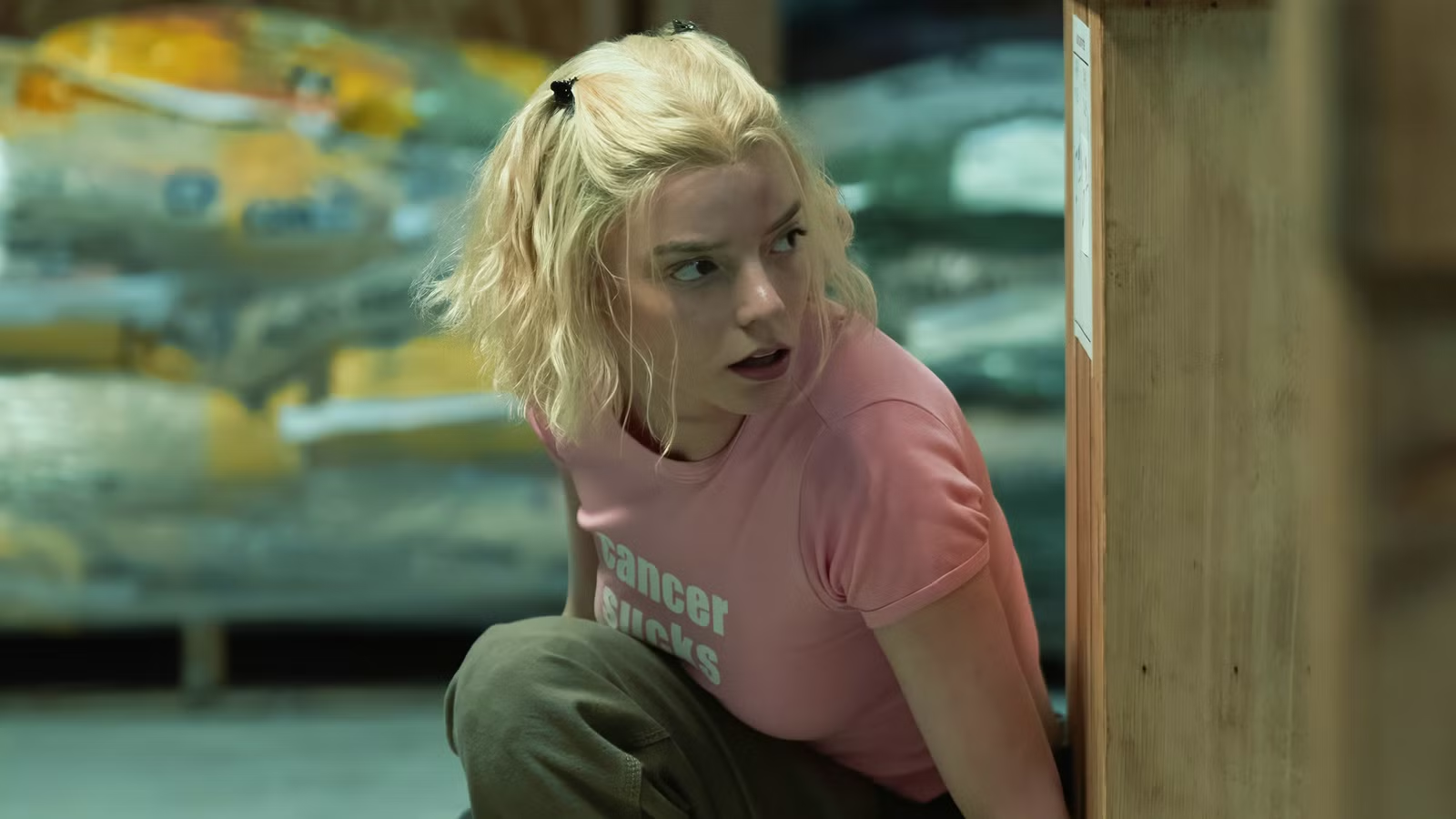
Crime, family and reinvention collide beneath the California sun.
Los Angeles | July 2026
Anya Taylor-Joy returns to hostile desert terrain in Lucky, a seven-episode crime thriller that places her between organized crime, federal investigators and the consequences of a life built on deception. Infobae reported that the actress portrays Luciana “Lucky” Armstrong, a skilled con artist forced to flee after awakening in a hotel room and realizing that someone close to her has betrayed her. Ten million dollars have disappeared, and both the FBI and a ruthless criminal organization believe she knows where the money is.
The setting immediately connects the production with other physically demanding chapters in Taylor-Joy’s career. She previously fought for survival across an unforgiving wasteland in Furiosa and is also linked to the desert world of the next Dune film. Lucky uses that familiar visual environment differently, transforming the heat and isolation of California into an external expression of a protagonist who no longer knows whom she can trust.

Taylor-Joy’s character is not introduced as an innocent person accidentally drawn into danger. Lucky was raised to manipulate, steal and survive through carefully constructed lies. Her widowed father taught her the mechanics of criminal life, but he is now imprisoned and can offer little more than advice through telephone conversations as his daughter attempts to escape the world he created for her.
The series begins at a decisive point in Lucky’s life. She possesses the intelligence and instincts required to continue operating as a criminal, yet she increasingly questions whether survival must always mean repeating the behavior inherited from her family. Her flight therefore becomes more than an attempt to avoid capture; it is a struggle over whether identity can be rebuilt when nearly every useful skill is connected to the past she wants to abandon.
That internal conflict is expressed through sustained physical action. Lucky must escape from the locked trunk of a vehicle, fight armed pursuers, steal cars and improvise under extreme pressure while moving through isolated terrain. Her smaller physical presence becomes part of the dramatic tension because opponents repeatedly underestimate her ability to resist, adapt and cause serious disruption.
The production does not present action as an element separated from character development. Taylor-Joy has emphasized that the violence and movement needed to emerge from emotional circumstances rather than functioning only as visual entertainment. Each confrontation reflects fear, betrayal, family history or the protagonist’s determination to control a life that other people have repeatedly attempted to define.
Lucky also marks a significant professional expansion for Taylor-Joy, who serves as an executive producer in addition to leading the cast. Reese Witherspoon’s Hello Sunshine approached her with Marissa Stapley’s novel and invited her to consider both responsibilities. The actress became involved after connecting with the central character and believing she could contribute to the series beyond her performance in front of the camera.
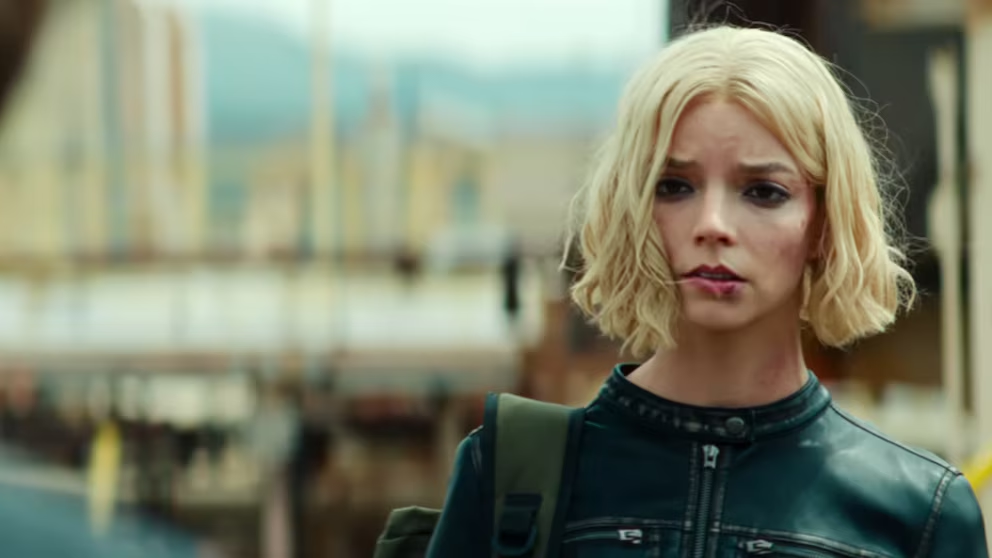
Her participation extended into creative areas such as casting, visual identity and music. The soundtrack emphasizes female voices and includes work associated with Fiona Apple, Sleater-Kinney and Siouxsie Sioux. That musical framework supports a story dominated by women navigating power, violence, loyalty and the possibility of changing the roles imposed on them.
Annette Bening enters this world as Priscilla Matheson, a dangerous organized-crime figure capable of ordering violence while facing threats from forces within her own environment. The character is caught between protecting her son and confronting a brutal former lover who remains connected to the criminal structure surrounding her. Her position combines authority and vulnerability, complicating the traditional image of a one-dimensional crime boss.
Bening described the role as psychologically compelling because Priscilla has experienced abuse while also becoming an abuser. That contradiction places her in thematic proximity to Lucky, whose harmful behavior also emerged from a family system that normalized crime. Both women must operate inside structures created by others, but each makes different decisions about whether to preserve or challenge those structures.
Timothy Olyphant portrays Lucky’s father, while Drew Starkey and Aunjanue Ellis-Taylor form part of the wider network of personal and institutional pressure surrounding the protagonist. The cast allows the story to move between criminal pursuit, federal investigation and damaged family relationships without losing its central focus. The thriller’s external chase is continually reinforced by questions about inheritance, emotional dependence and personal responsibility.
Jonathan Tropper created the adaptation and developed it with writer and producer Cassie Pappas. Although Lucky uses the mechanics of a crime story, its foundation is a family drama examining the influence of childhood and whether adults can escape the identities assigned to them. The danger becomes especially intense because Lucky’s search for self-definition could lead not only to rejection or failure, but to imprisonment or death.
The protagonist’s abilities offer protection while simultaneously linking her to the life she wants to leave. She can exploit social expectations, invent convincing stories and recognize opportunities that others overlook. Those talents help her survive, yet every successful deception risks reinforcing the belief that she can never become anything other than the criminal her father trained her to be.
This contradiction gives the title a deliberate tension. Lucky may appear fortunate because she repeatedly escapes situations that should destroy her, but survival obtained through manipulation carries its own cost. The series asks whether luck is simply another name for preparation, instinct and the refusal to surrender, or whether constant escape can become a prison of its own.
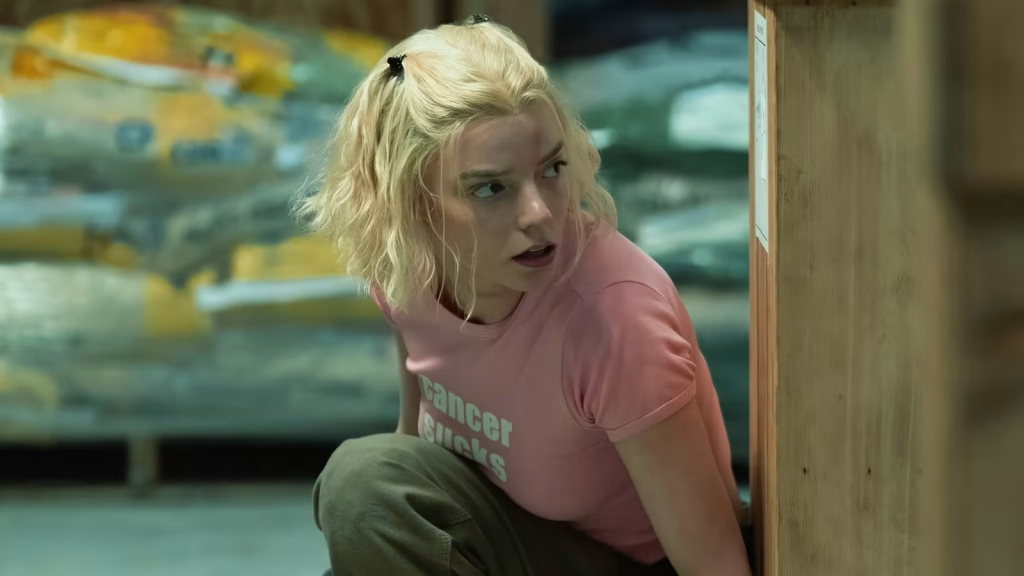
Taylor-Joy’s return to television also invites comparison with The Queen’s Gambit, the limited series that expanded her international profile. The characters occupy very different worlds, but both are exceptionally capable women shaped by unstable childhoods and forced to determine whether extraordinary talent will liberate or consume them. Lucky replaces chessboards and controlled interiors with highways, hotel rooms, criminal networks and the exposed emptiness of the desert.
The result is a story in which physical survival and emotional reinvention become inseparable. Lucky is not merely running from agents, mobsters or a missing fortune. She is trying to create enough distance from her origins to decide whether the future must continue obeying the rules of her past.
Phoenix24 | Survival begins where inherited identities end. La supervivencia comienza donde terminan las identidades heredadas.