

 Phoenix 24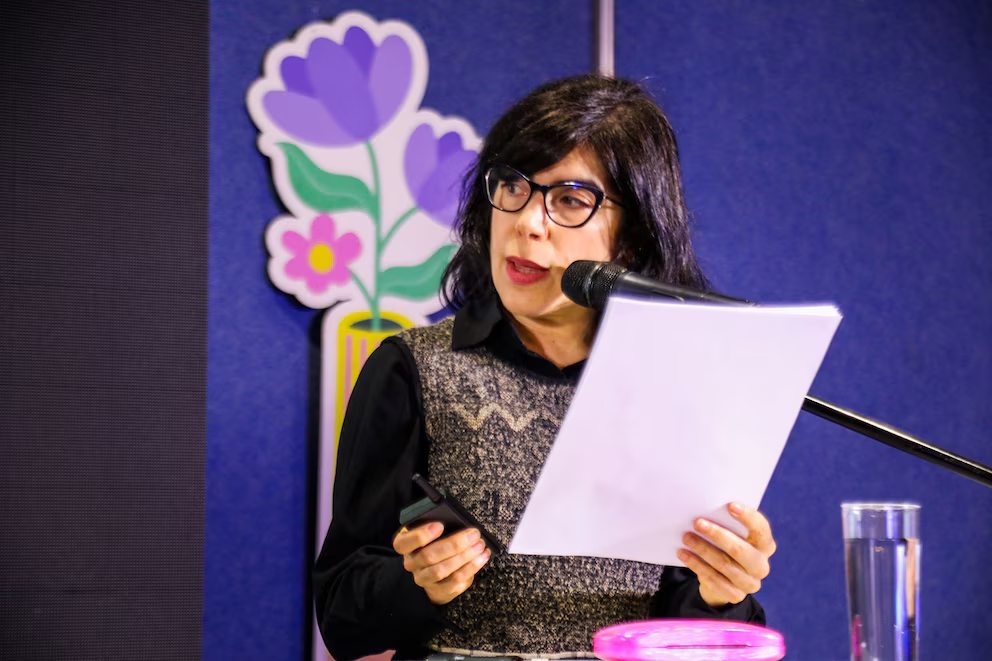
Books become resistance against fear, violence and conformity.
Buenos Aires | July 2026
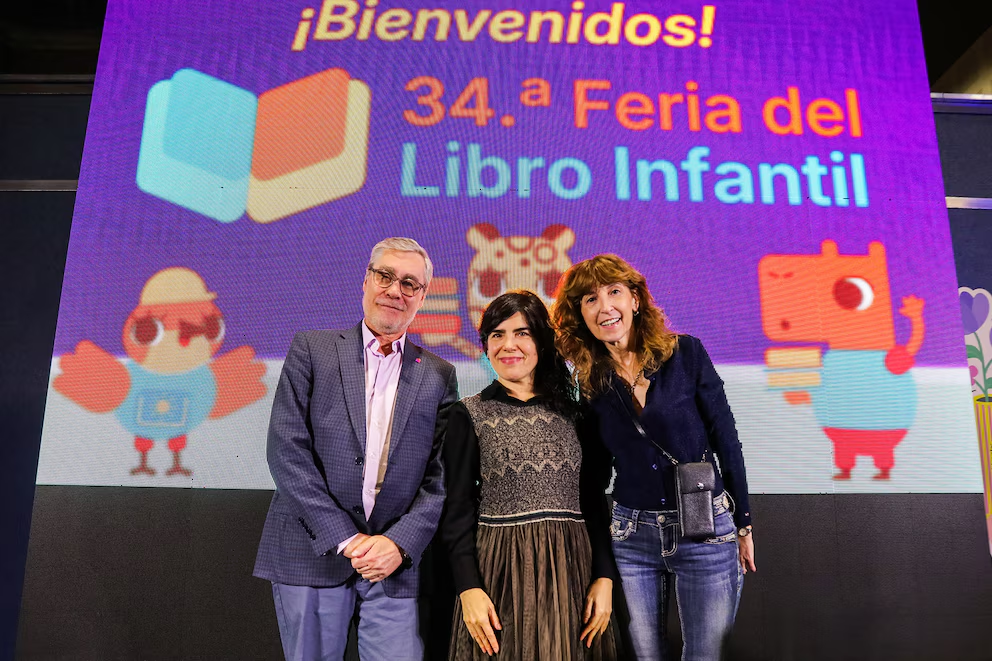
Argentine writer and illustrator Isol opened the 34th Buenos Aires Children’s Book Fair with a wide-ranging address centered on imagination, childhood creativity, public education and literature’s ability to preserve human sensitivity in an increasingly commercialized and technologically mediated world.
The award-winning author delivered the inaugural speech at the Buenos Aires Convention Center, where the fair will remain open with free admission until August 2. Rather than limiting her remarks to books or publishing, Isol presented reading and artistic creation as essential instruments for understanding reality, confronting violence and protecting the intellectual freedom of children.
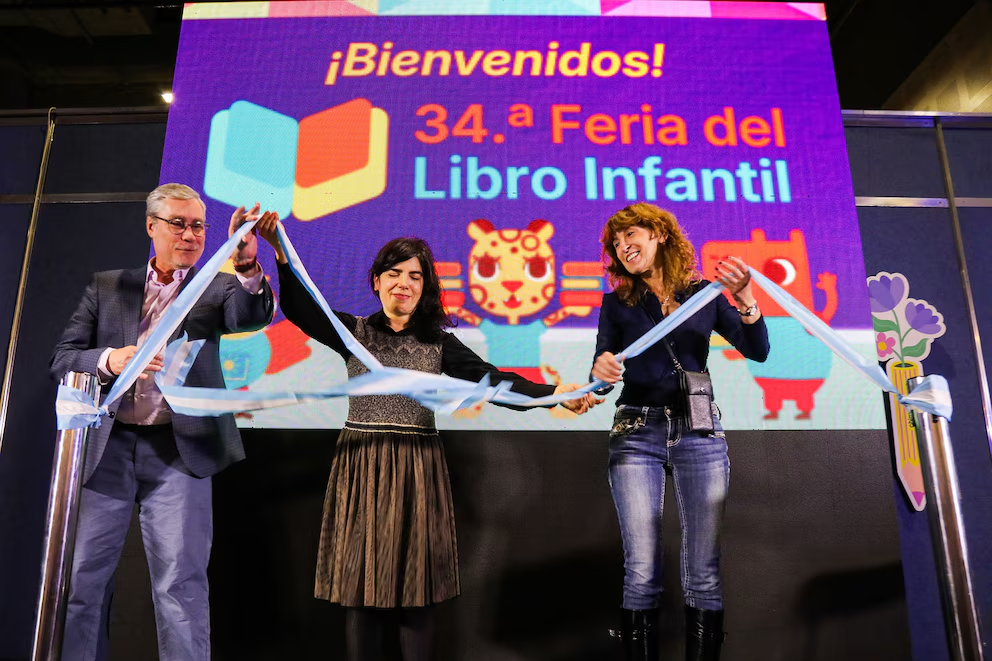
Her central argument began with humanity’s capacity to imagine something before it exists. Families imagine children before they are born, societies envision new forms of organization and artists create worlds that allow people to examine desires, fears and contradictions from unfamiliar perspectives.
For Isol, imagination is not an ornamental ability reserved for professional creators. It is a fundamental human power that shapes decisions, relationships, institutions and collective futures. The same symbolic intelligence that allows societies to care, educate and build can also be used to dominate, wage war and destroy.
Stories therefore become spaces where those competing possibilities can be examined. Literature allows readers to encounter characters who may act generously or cruelly, confront uncertainty and recognize parts of themselves in lives radically different from their own.
Isol emphasized that children naturally understand creation as play. A pencil, a piece of paper, sand, water or an improvised musical instrument can become sufficient material for inventing an entire world. The challenge is preserving that confidence as children grow older and become increasingly exposed to judgment.
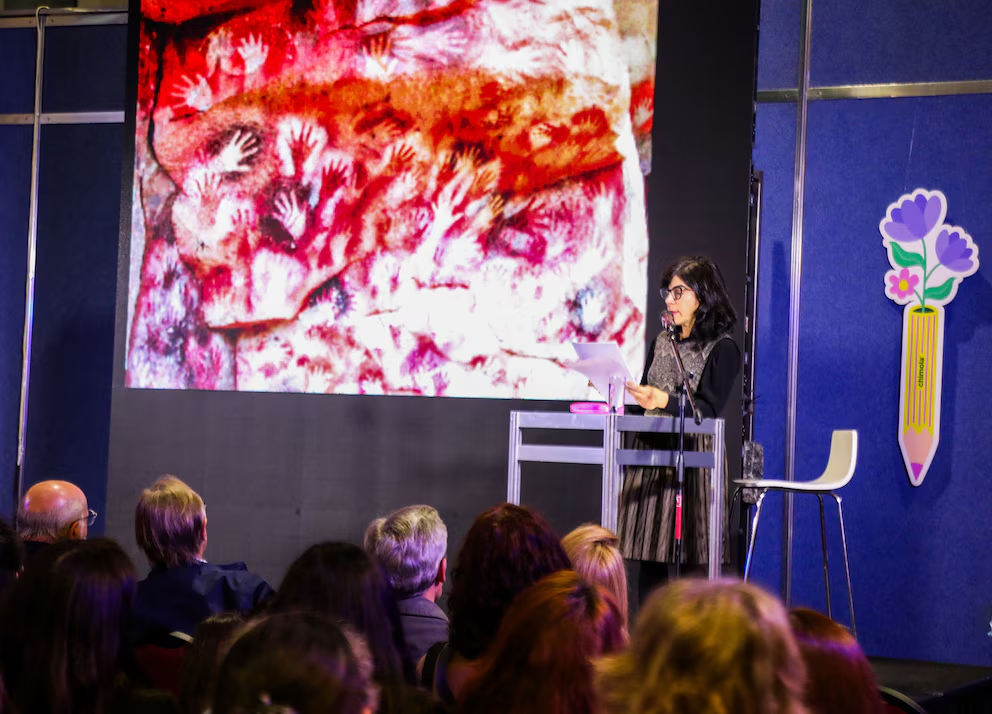
She recalled the observation that young children readily describe themselves as artists, poets, actors or writers, while adolescents often become reluctant to make the same declarations. Social scrutiny gradually becomes an internal voice that tells them they are not talented, attractive or intelligent enough to create.
Schools, families and cultural institutions can either reinforce that inhibition or build environments where experimentation remains possible. Isol described artistic risk, uncertainty and play as powerful tools precisely because they allow children to explore without already knowing the correct answer.
Her own development as an illustrator and storyteller was shaped by public-school teachers, circulating classroom libraries, secondhand books and educators who treated children as intelligent readers rather than offering them simplified or condescending material.
She remembered teachers who combined reading, projected drawings and music inside the classroom. Those experiences allowed her to understand that images could tell stories, that music could inspire visual interpretation and that literature could move freely across different artistic languages.
Books by Jules Verne, Louisa May Alcott, Ray Bradbury and other authors entered her childhood through family libraries, relatives, periods of illness at home and fortunate encounters with adults who placed demanding texts within her reach.
She also highlighted the lasting influence of Argentine creators and publishers who trusted children with sophisticated humor, strong visual identities and narratives that did not underestimate their emotional or intellectual capacities.
From those memories, Isol constructed a broader defense of Argentina’s cultural ecosystem. She connected the country’s artistic, scientific and technological achievements with its historic commitment to public education, libraries, teachers and institutions that allow people from different backgrounds to meet and develop knowledge collectively.
Education, in her view, is not merely an individual investment designed to improve earning potential. It produces doctors, researchers, educators and creators whose work strengthens society as a whole.
The speech also questioned the pressure to measure every activity by its capacity to generate money, scale or public visibility. Children increasingly encounter digital models suggesting that happiness depends on wealth, fame and constant recognition.
Isol argued that this logic impoverishes human experience by dismissing forms of value that cannot be easily monetized: shared reading, community solidarity, environmental wellbeing, tenderness, teaching and the gradual construction of knowledge.
A free book fair, she suggested, interrupts the automated recommendations governing digital consumption. Visitors can walk through stands, speak with booksellers and encounter stories they did not know they were seeking.
That unexpected encounter represents one of literature’s greatest strengths. A book may enter a classroom, library or home and create a lasting connection between an adult and a child whose value cannot be calculated financially.
Isol also defended tenderness as an active form of intelligence rather than a sign of weakness. Caring for children requires openness, attention and the willingness to recognize their vulnerability without attempting to dominate them.
Her address moved from cultural policy to global violence, arguing that children must be valued regardless of nationality, ethnicity or the political conflicts surrounding them. She referred to wars and humanitarian crises affecting families in several regions and called for an end to the normalization of civilian suffering.
Literature, she maintained, can prevent human beings from becoming abstractions. Stories give victims names, relationships and specific lives, making it more difficult to justify systems that divide people between those considered worthy of protection and those treated as expendable.
The author also raised concerns about artificial intelligence replacing human expression. She did not reject technology as a technical instrument, but warned that surrendering creative activity to automated systems could weaken the very capacities that reading and art are meant to develop.
Human expression carries personal intuition, memory and perspective. When people stop exercising those abilities, efficiency may increase, but something essential could be lost: the possibility of discovering and communicating an individual voice.
Isol concluded by defending access to literature as a public responsibility. She criticized the weakening of national reading policies and warned that literacy cannot be reduced to decoding words or improving standardized indicators.
Learning to read is only part of becoming a reader. The deeper process involves interpretation, imagination, emotional connection and the ability to construct meaning through contact with diverse works.
Her inaugural address ultimately presented the Children’s Book Fair as more than a commercial exhibition. It is a meeting point for authors, illustrators, educators, librarians, families and children who continue to believe that stories can expand what society considers possible.
For Isol, Argentina’s creative strength emerges from a powerful combination: the capacity to imagine beyond existing limits and the determination to pursue collective goals.
Phoenix24 | Culture that awakens imagination. Cultura que despierta la imaginación.