

 Phoenix 24
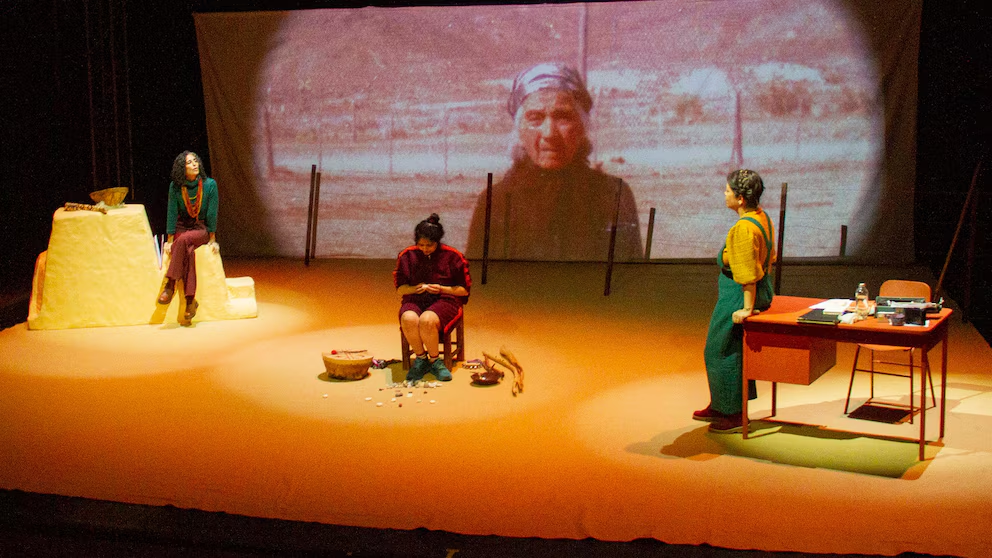
Memory begins where the archive resists.
Buenos Aires, April 2026
El Alambrado recovers a crime from 1932 not merely to reconstruct a forgotten act of violence, but to reopen an identity that had been pushed into silence across generations. The work begins with the judicial reconstruction of the murder of Tomás Marilef, a Mapuche settler, and transforms that archival wound into a living inquiry carried forward by three of his great granddaughters. What emerges is not a conventional historical exercise. It is a stage work in which documents, poetry, and indigenous musical memory become instruments for undoing the long afterlife of dispossession.
That shift matters because historical crimes rarely remain confined to the date of their commission. Some acts continue to govern the future through omission, through what families stop naming, through the identities that become difficult to inhabit openly, and through the bureaucratic coldness with which violence is absorbed into official record. El Alambrado appears to understand that silence is not emptiness. It is structure. The past survives not only in what is remembered, but in what has been made hard to say.
The figure of Tomás Marilef gives the work its historical gravity, but the emotional center lies elsewhere. It lies in the movement of descent, in the fact that his great granddaughters are not only narrating an old crime but encountering themselves through it. That is a more demanding gesture than remembrance alone. It means that ancestry is not approached as heritage in the decorative sense, but as unfinished terrain, as something fractured that must be crossed carefully if it is to become legible again in the present.
This is where the Mapuche dimension becomes decisive. The work is not simply reviving an isolated family tragedy. It is also speaking to a broader history in which indigenous life was not only dispossessed materially, but narratively. State archives may preserve the event, but they rarely preserve the worldview that violence attempted to erase. A theatrical language that brings together poem, document, and music can therefore do something the legal file cannot. It can return density to lives that official history flattened into case material.
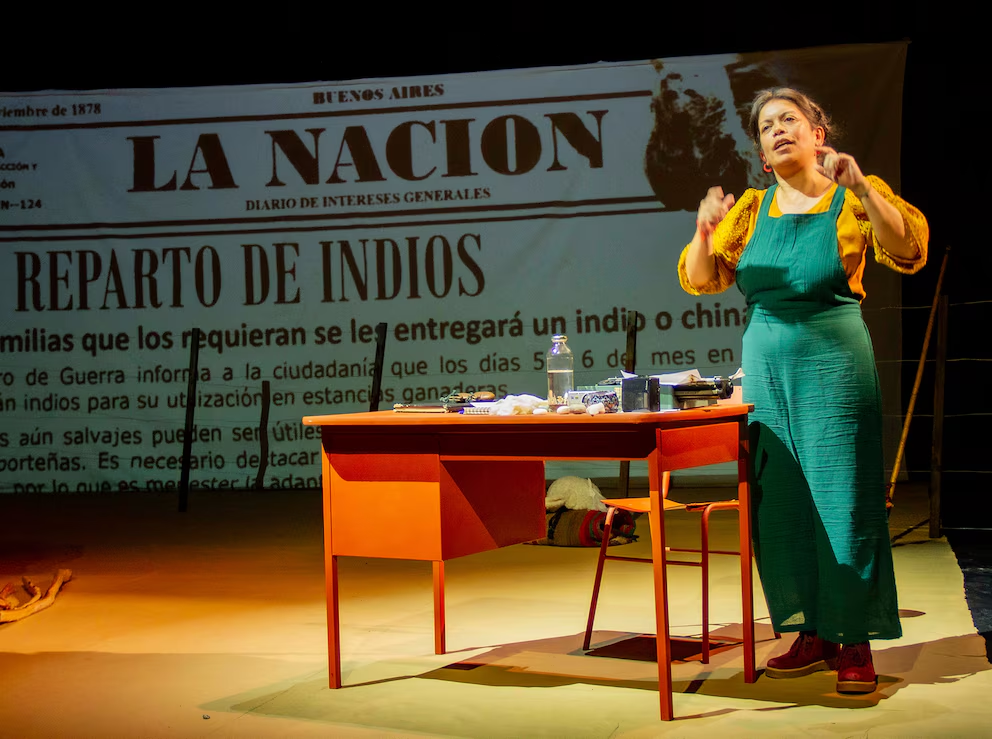
There is also something important in the form itself. A project like this could easily have become forensic in a narrow sense, trapped inside the prestige of documentation. Instead, El Alambrado seems to insist that truth is not exhausted by evidence. Memory requires texture. It requires tone, rhythm, atmosphere, and a sensitivity to the ways historical pain is carried not only in testimony but in gesture, sound, and inherited absence. That choice gives the work a different ambition. It is not trying only to prove. It is trying to restore.
In cultural terms, that restoration matters beyond the stage. Latin American memory work has often been organized around dictatorship, disappearance, and twentieth century state terror, and rightly so. But there are older violences that remain less integrated into the mainstream moral vocabulary of public culture, especially when they concern indigenous dispossession and the long management of racial silence. By returning to a 1932 Mapuche murder, El Alambrado expands the chronology of what memory politics must include. It reminds the public that national silence did not begin with the modern state. It has deeper roots.
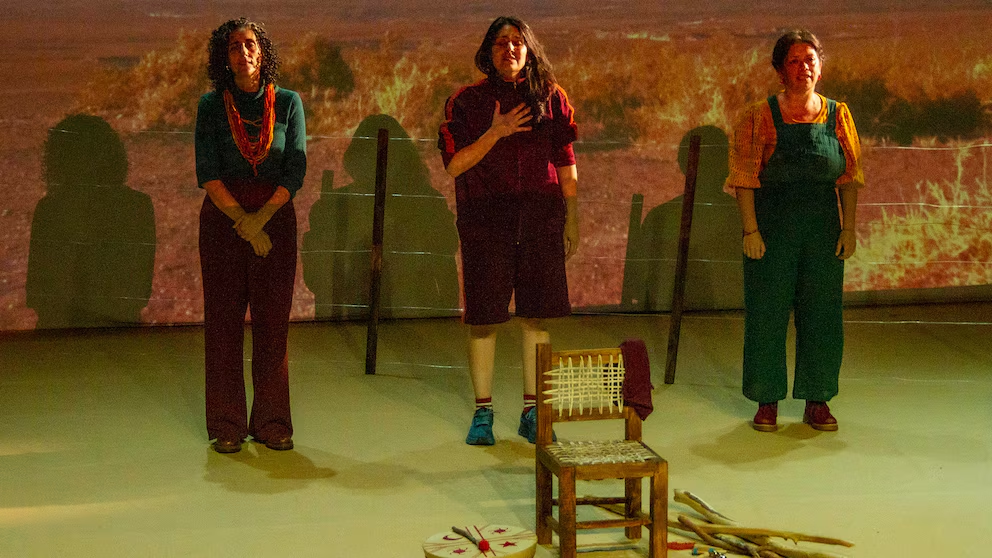
The involvement of descendants deepens that force. When the family line itself becomes the medium of inquiry, the work resists the distance that often protects audiences from the discomfort of history. These are not neutral interpreters approaching a remote archive. They are women entering a wound that helped shape the conditions of their own identity. That movement changes the ethical register of the piece. It asks not only what happened, but what a family must recover in order to speak after generations of obscured belonging.
What makes the project especially resonant is that it does not appear to chase closure in any simplistic sense. Crimes of this kind do not resolve because they are named belatedly. The dead are not returned by testimony, and erased identities do not reassemble without contradiction. Yet the act of naming still alters something. It interrupts inherited silence and forces public culture to admit that the archive contains more than facts. It contains lives waiting to be heard differently.
In that sense, El Alambrado belongs to a growing body of cultural work that understands memory not as repetition, but as reentry. To remember is not merely to look back. It is to cross again into a contested historical space and ask what parts of the self were left there. The work’s real power seems to lie precisely in that crossing. It turns an old crime into a contemporary struggle over voice, ancestry, and the right to exist in history without being reduced by it.
Más allá de la noticia, el patrón. / Beyond the news, the pattern.