

 Phoenix 24
Fuel policy is now freight policy.
Mexico City, April 2026
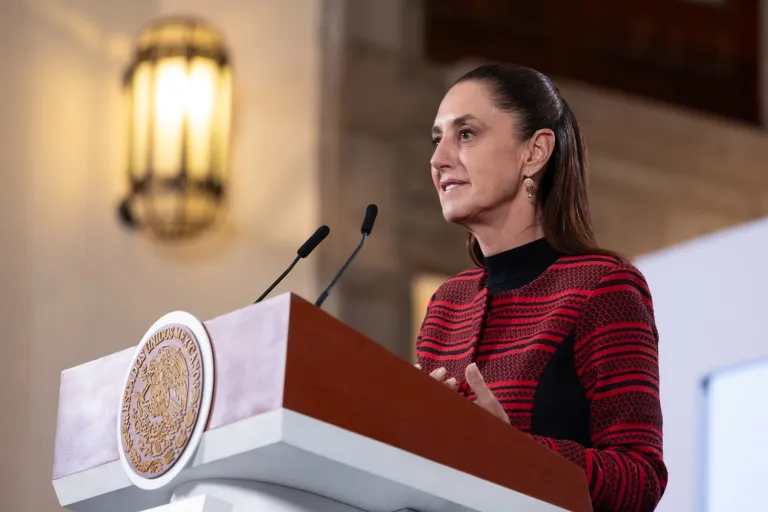
Mexico is moving toward a second agreement to regulate diesel prices, as President Claudia Sheinbaum tries to prevent higher global energy costs from spilling directly into domestic inflation. The logic is straightforward but politically sensitive. Diesel is not just another fuel in the Mexican economy. It is the operating base of cargo transport, distribution networks, agricultural logistics, and much of the cost structure that eventually reaches food prices and consumer goods.
That is why this new push matters more than a narrow energy adjustment. A rise in diesel does not remain at the pump. It moves quickly into freight, supply chains, and the price of essentials, making it one of the most politically consequential fuels in periods of external volatility. Sheinbaum’s government appears to understand that if diesel drifts too high, the inflation problem stops being abstract and becomes visible in transport costs, supermarket pressure, and broader public frustration.
The proposed second agreement also reveals the limits of Mexico’s current stabilization model. The government has already relied on voluntary arrangements with fuel retailers and fiscal support mechanisms to keep prices from rising too sharply. But diesel has remained harder to contain than regular gasoline, partly because of its central role in commercial transport and partly because international oil pressures have intensified under the current Middle East crisis. What is emerging now is a more direct acknowledgment that diesel requires its own political treatment.
That treatment is not only economic. It is also strategic. Mexico imports a significant share of the fuels it consumes, which means domestic price stability remains vulnerable to shocks generated far beyond its borders. Even when crude prices benefit public finances in one direction, refined product costs can still squeeze consumers and transport operators in another. This creates a delicate balance for the state. It wants to avoid a visible fuel shock without expanding subsidy pressure so far that fiscal discipline weakens or policy credibility begins to fray.
For Sheinbaum, the diesel issue touches one of the most sensitive zones of governance: the link between macroeconomic management and everyday legitimacy. A government may defend broader growth plans, industrial modernization, and fiscal prudence, but a sustained increase in diesel quickly undermines that narrative because it filters through trucking, food distribution, and the cost of living. In countries where logistics shape inflation so heavily, fuel policy becomes a form of social containment as much as economic management.
There is also a revealing asymmetry in the current strategy. Regular gasoline is politically visible and symbolically powerful, but diesel is structurally more important in many sectors of the real economy. It affects transport operators, agricultural producers, and freight companies whose cost pressures can spread across the system faster than many consumers initially realize. By pushing for a second agreement focused on diesel, the government is effectively recognizing that inflation control in Mexico depends not only on headline fuels for private motorists, but on the deeper mechanics of circulation.
The voluntary nature of these arrangements matters as well. It suggests that the government still prefers negotiated discipline with retailers over a more rigid interventionist framework. That may be practical in the short term, especially if producers and distributors also want to avoid a politically explosive fuel spiral. But it leaves open a harder question. How sustainable is a price containment model that depends on cooperation while global oil conditions remain unstable. The answer will depend not only on state pressure, but on how long private actors are willing to absorb narrower margins for the sake of broader stability.
What emerges from this episode is a clearer picture of Mexico’s current economic posture. The government is trying to manage inflation not through one grand solution, but through targeted pressure points where energy, transport, and public sentiment converge. Diesel is one of those pressure points. A second agreement would not eliminate Mexico’s vulnerability to global energy turbulence, but it could slow the transmission of that turbulence into domestic political cost. In that sense, the negotiation is not merely about fuel. It is about buying time against a wider inflationary chain reaction.
Phoenix24: claridad en la zona gris. / Phoenix24: clarity in the grey zone.