

 Phoenix 24
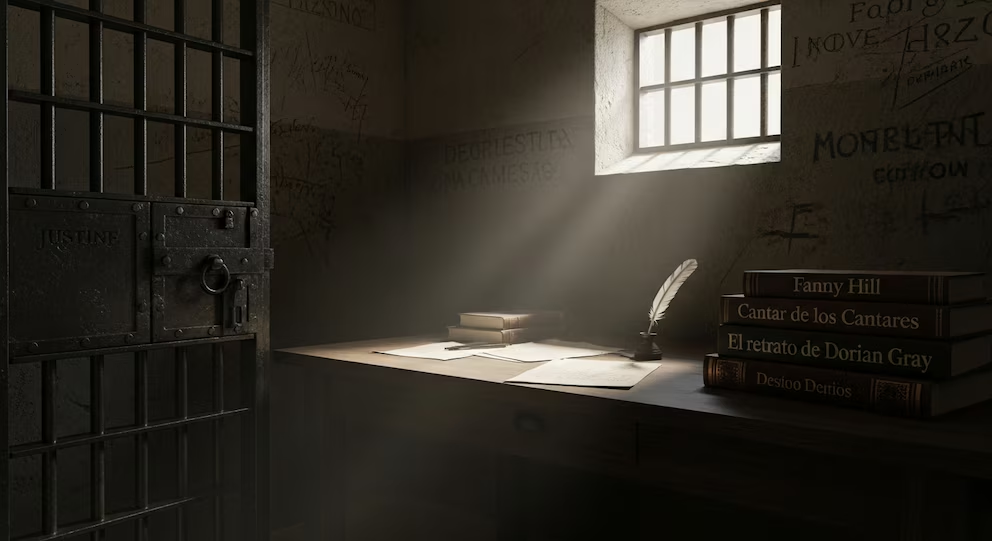
Desire becomes dangerous when authority feels exposed.
Geneva, February 2026.
The history of censorship is often told as a parade of bans, but the more revealing pattern is logistical. Power rarely argues with love on literary grounds; it prosecutes love as a governance problem, a disruption to obedience, a threat to public order, a breach of moral jurisdiction. Across centuries and legal systems, the charge keeps changing while the impulse stays intact: if a text teaches readers to imagine intimacy outside sanctioned boundaries, the author becomes a test case. What looks like a dispute about “obscenity” is usually a dispute about who controls the vocabulary of the body.
In early modern Europe, the fault line was not erotic detail alone, but access. Fray Luis de León was imprisoned after translating and interpreting the Song of Songs in the vernacular, an act treated as suspicious in a post-Trent climate where interpretation was meant to remain fenced within approved authority. The issue was not only that the biblical text contains sensual language; it was that he insisted the poem’s beauty points to meaning, rather than needing to be erased by intermediaries. When religious institutions criminalize a translation, the message is structural: even sanctioned love becomes subversive if it can be read without a gatekeeper. The prison cell, in that logic, is not punishment alone; it is a warning label.
By the time Donatien Alphonse François de Sade was arrested in 1801, the state had learned a different lesson: trials can amplify what repression wants to erase. His novels Justine and Juliette were treated as a philosophical attack disguised as sex, because they invert the moral promise that virtue is rewarded and vice punished. That inversion is what authorities fear most, not the explicitness. The administrative detention model, holding him without a public courtroom spectacle, reveals an anxiety about contagion: ideas spread faster when they are debated in the open. Desire here becomes political because it refuses to behave like a moral lesson.
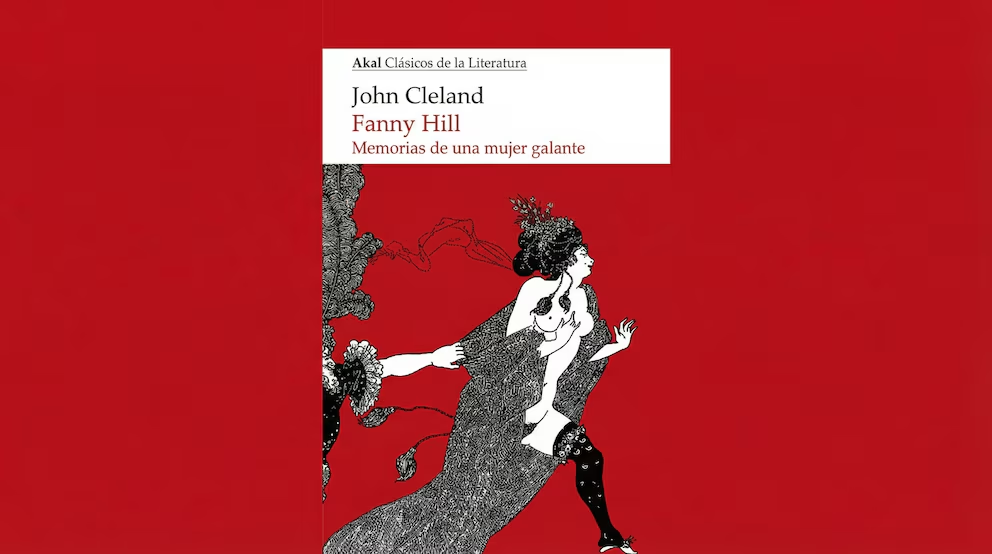
In eighteenth-century Britain, John Cleland wrote Fanny Hill in debtors’ prison, only to be arrested after publication for corrupting the king’s subjects. The irony is instructive: the book’s style leans on euphemism rather than anatomical bluntness, yet authorities still moved against it because the narrative normalizes pleasure and depicts sexual life as a social reality rather than a shameful exception. What threatens censorship regimes is not only explicit language; it is narrative confidence. A story that refuses to punish desire is read as a rival moral system.
The Victorian era sharpened the tendency to treat art as confession and style as evidence. Oscar Wilde was prosecuted for “gross indecency,” and The Picture of Dorian Gray was used in court to imply deviant character, as though aesthetic suggestion could be converted into legal proof. That conversion is a recurring tactic: the state reframes metaphor as admission, then claims it is prosecuting behavior rather than expression. Wilde’s imprisonment demonstrates how quickly a celebrated cultural figure can be reclassified as a public danger once sexuality becomes the hinge. In such trials, the book is not merely read; it is weaponized.
Modern censorship often shifts from theology and honor to “public morality,” a phrase elastic enough to fit any administration. Ahmed Naji was sentenced to prison after an excerpt of his novel Using Life was published in a literary magazine and a complainant claimed physical distress from reading it. The mechanism is revealing: the state does not need to prove direct harm, only that a reader felt offended, destabilized, or morally threatened. PEN International has repeatedly argued that this logic, criminalizing artistic language under morality codes, turns courts into cultural editors. Once that boundary collapses, any society can produce prisoners of literature with bureaucratic ease.
The most contemporary example in this set shows how censorship merges with metrics. The author known as Tianyiwas sentenced to a decade-plus prison term for her danmei novel Gongzhan (Occupy), with reporting indicating that sales volume was treated as an aggravating factor. The state’s message is chillingly modern: the problem is not only what is written, but how widely it circulates. In that frame, popularity becomes evidence, distribution becomes intent, and the market becomes the courtroom’s accelerant. UNESCO has long emphasized cultural rights as part of human development, yet digital-era enforcement often treats mass readership as a reason to punish harder.
Taken together, these cases show a stable power reflex across radically different regimes. First, authorities define love that escapes approved norms as a public order issue, not a private matter. Then they select a legal wrapper, heresy, obscenity, indecency, public morality, or distribution thresholds, to make the punishment look procedural rather than ideological. Finally, they try to isolate the author to discourage imitation, yet the suppression frequently enlarges the book’s symbolic weight. The prison system can confine bodies, but it struggles to contain narratives once they become shorthand for control itself.
The deeper pattern is that desire terrifies institutions because it competes with loyalty. When a text teaches readers to imagine pleasure, identity, or intimacy without permission, it weakens the monopoly of the official story. That is why love and censorship keep meeting in courtrooms, and why the definition of “obscene” keeps moving while the instinct to control remains. If there is a lesson that survives every era, it is this: repression does not eliminate the narrative; it often upgrades it into a legend, and legends travel.
La narrativa también es poder. / Narrative is power too.