

 Phoenix 24
Energy strategy is no longer about supply, but about architecture.
Baku, January 2026.
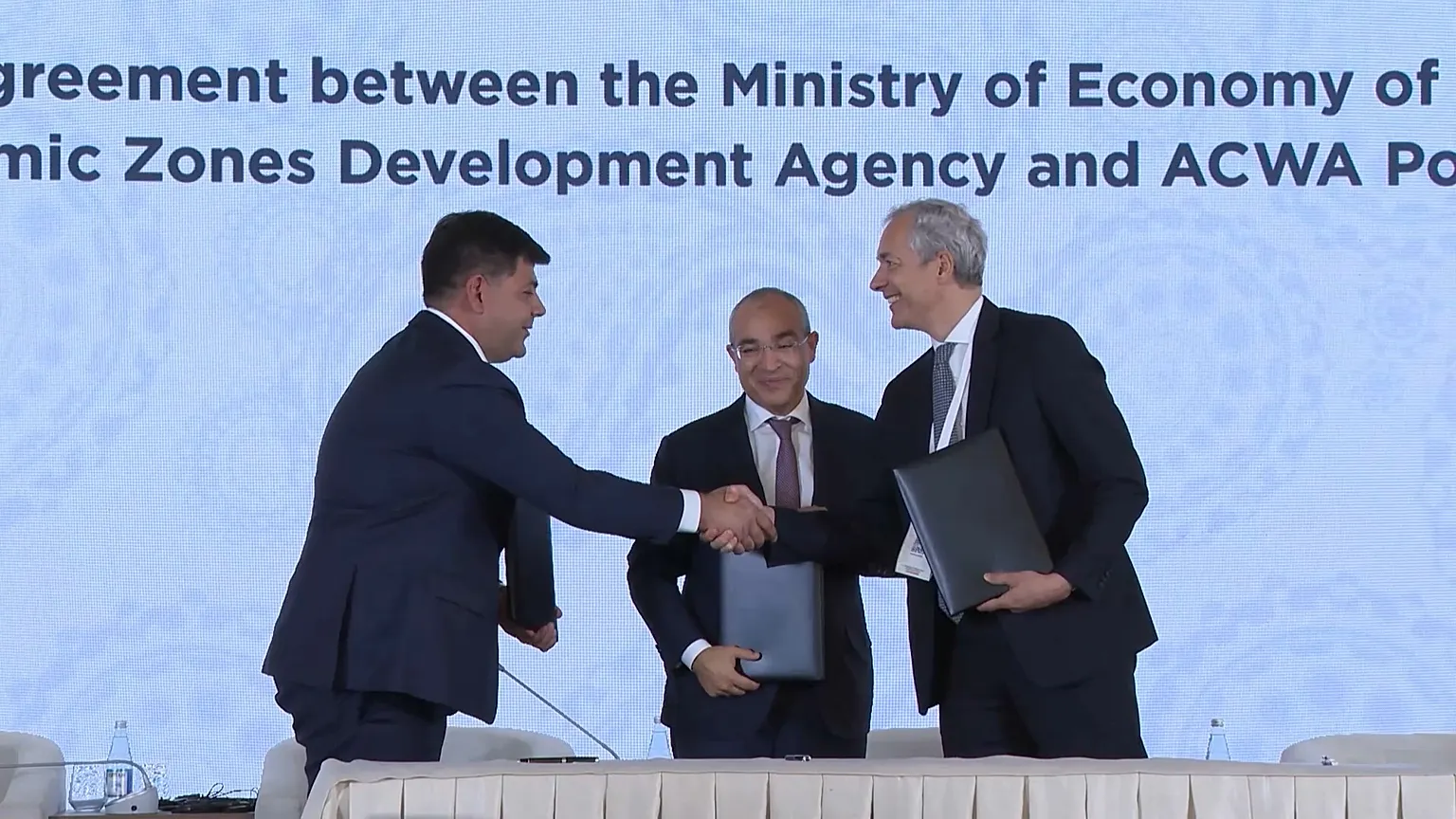
Azerbaijan’s announcement at the Davos forum that it is opening new channels for public-private partnerships marks more than a technical adjustment to its economic model. It signals a deliberate effort to reposition the state as a strategic architect of energy, infrastructure and capital flows at a moment when global markets are fragmenting and trust in purely liberalized systems is eroding. What is presented as an investment framework is, in practice, a recalibration of sovereignty in an era defined by geopolitical stress and energy insecurity.
The Azerbaijani government framed the initiative as a mechanism to attract foreign capital, accelerate infrastructure development and modernize key sectors linked to energy, logistics and digital services. Yet the timing and structure of the proposal reveal a deeper logic. With Europe recalibrating its energy dependencies, Asia consolidating long-term supply chains and global investors demanding stability over ideology, Azerbaijan is positioning itself as a controlled gateway rather than an open frontier. Public-private partnerships allow the state to share risk without relinquishing strategic oversight.
This approach reflects a broader pattern observable across energy-producing and transit states. According to the International Monetary Fund, governments are increasingly using hybrid investment models to balance fiscal constraints with the need for large-scale infrastructure spending. Azerbaijan’s case is distinctive because of its geography and its accumulated experience as both producer and corridor. The country sits at the intersection of European demand, Central Asian supply and Middle Eastern volatility, making governance choices inseparable from geopolitical calculations.
European institutions have quietly encouraged such models as they seek reliable partners capable of delivering infrastructure under political stress. The European Investment Bank has noted that public-private structures can provide continuity in projects vulnerable to market shocks, particularly in energy transmission and cross-border connectivity. For Azerbaijan, this aligns with its ambition to be seen not merely as a supplier of hydrocarbons, but as a stable systems manager in an unstable regional environment.
From a strategic perspective, the move also mitigates exposure to sudden capital withdrawals. Private investment alone tends to retreat in periods of heightened geopolitical risk. By embedding state participation, Azerbaijan reduces volatility and signals long-term commitment. This is consistent with assessments by the Organisation for Economic Co-operation and Development, which emphasize that credible state involvement can anchor investor confidence when markets are fragmented by sanctions, conflict or regulatory divergence.
The initiative carries implications beyond energy. Public-private mechanisms extend to transport corridors, digital infrastructure and industrial modernization. In each case, the state retains agenda-setting power while leveraging private efficiency. This hybridization mirrors trends in Asia, where governments increasingly blur the boundary between public authority and market execution. The Asian Development Bank has highlighted such models as central to infrastructure resilience in regions exposed to geopolitical disruption.
Critically, Azerbaijan’s proposal avoids ideological framing. There is no overt rejection of market principles, nor an embrace of statist rhetoric. Instead, the language emphasizes pragmatism, predictability and partnership. This rhetorical restraint is itself strategic. In an environment where economic models are often read as political signals, Azerbaijan presents continuity rather than rupture, adaptation rather than confrontation.
For global investors, the message is calibrated. Participation is welcome, but within a framework that recognizes state priorities. For regional actors, particularly in Europe, the signal is reassurance. Energy relationships will be governed by contracts embedded in state capacity, not by short-term market sentiment. This matters as European policymakers continue to reassess supply security in light of prolonged conflict on the continent’s eastern flank.
There are, however, constraints. Public-private partnerships demand institutional discipline. Transparency, legal predictability and dispute resolution mechanisms become critical when public authority and private capital intersect. International experience shows that poorly designed frameworks can concentrate risk rather than distribute it. Azerbaijan’s credibility will depend on whether governance mechanisms match the ambition articulated in Davos.
The broader pattern is clear. Energy is no longer treated as a commodity governed solely by price signals. It is increasingly managed as infrastructure embedded in political systems. Azerbaijan’s move reflects this shift. By formalizing cooperation between the state and private capital, it is aligning itself with a global trend toward managed markets under strategic oversight.
In this sense, the announcement is less about attracting investment than about redefining power. Control over infrastructure, financing structures and long-term planning becomes a form of influence that extends beyond borders. Azerbaijan is not merely responding to global uncertainty; it is attempting to convert uncertainty into leverage.
What emerges is a model that neither replicates Western liberalization nor adopts centralized command economics. It occupies a middle ground shaped by geography, energy politics and institutional learning. Whether this model succeeds will depend on execution, but its intent is unmistakable. Azerbaijan is positioning itself not as a passive node in global energy markets, but as an active designer of the rules under which those markets operate.
Behind every data point, the intention. / Behind every data point, the intention.