

 Phoenix 24
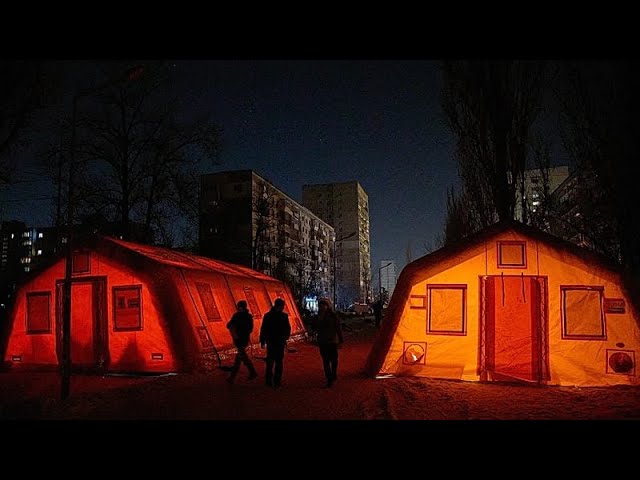
The course of war is also measured in megawatts.
Davos, January 2026.
As the war in Ukraine continues to reshape global priorities, one of the country’s largest energy providers delivered a warning at the World Economic Forum that went beyond conventional geopolitical language. The message was direct: Ukraine’s survival depends not only on military aid or financial assistance, but on the stability and protection of its energy system as a core pillar of national resilience. The intervention underscored that after years of conflict, security can no longer be understood solely in military terms, but must include the infrastructure that keeps societies functioning.
The warning was grounded in a sober assessment of Ukraine’s energy sector, which has suffered repeated and systematic damage since the start of the invasion. Electricity grids, gas networks, and generation facilities have increasingly become strategic targets, transforming energy supply into a frontline issue. According to the company’s leadership, without a comprehensive energy stabilization strategy that combines investment, technical cooperation, and long term supply arrangements, Ukraine’s economic recovery risks stalling before it can take hold.
Energy, in this context, was framed not as an auxiliary concern but as a structural condition of state viability. Reliable power underpins hospitals, communications, transportation, industry, and public administration. Recurrent disruptions weaken not only economic output but social cohesion and confidence in institutions. The message from Davos was clear: prolonged instability in energy provision translates directly into systemic vulnerability that adversaries can exploit.

The appeal resonated with a broader global debate about critical infrastructure in times of conflict. Energy systems are no longer neutral utilities. They are strategic assets whose resilience determines a nation’s capacity to endure prolonged stress. International organizations focused on energy and climate have repeatedly warned that modern conflicts increasingly target infrastructure precisely because its failure produces cascading effects across society.
The timing of the warning was deliberate. Davos is traditionally a forum dominated by discussions of growth, innovation, and risk management. By placing energy security at the center of the conversation, Ukraine sought to recalibrate how global elites assess the war. The argument was not that energy competes with other priorities, but that it underpins them. Without stable power, digital systems fail, industrial output collapses, and even military logistics become fragile.
From Kyiv’s perspective, the call also reflects a strategic shift in how international support is framed. Assistance is no longer portrayed only as emergency relief, but as an investment in resilience that must begin during the conflict, not after it ends. Rebuilding and hardening energy infrastructure while the war continues is presented as a way to reduce long term vulnerability and accelerate eventual recovery.
The warning also highlighted the interdependence of energy systems beyond Ukraine’s borders. Regional grids, cross border supply routes, and shared markets mean that disruptions rarely remain confined to one country. In that sense, Ukraine’s energy security was presented as inseparable from broader European stability. Supporting it becomes not an act of charity, but a component of collective risk management.
Ultimately, the intervention in Davos reframed energy as a strategic language of survival. It argued that in modern warfare, the endurance of a state is measured not only by territorial control or battlefield outcomes, but by its ability to keep lights on, factories running, and societies functioning under sustained pressure. Whether this framing translates into concrete international commitments will shape not only Ukraine’s resilience, but how future conflicts are understood and managed.
Every silence speaks.