

 Phoenix 24
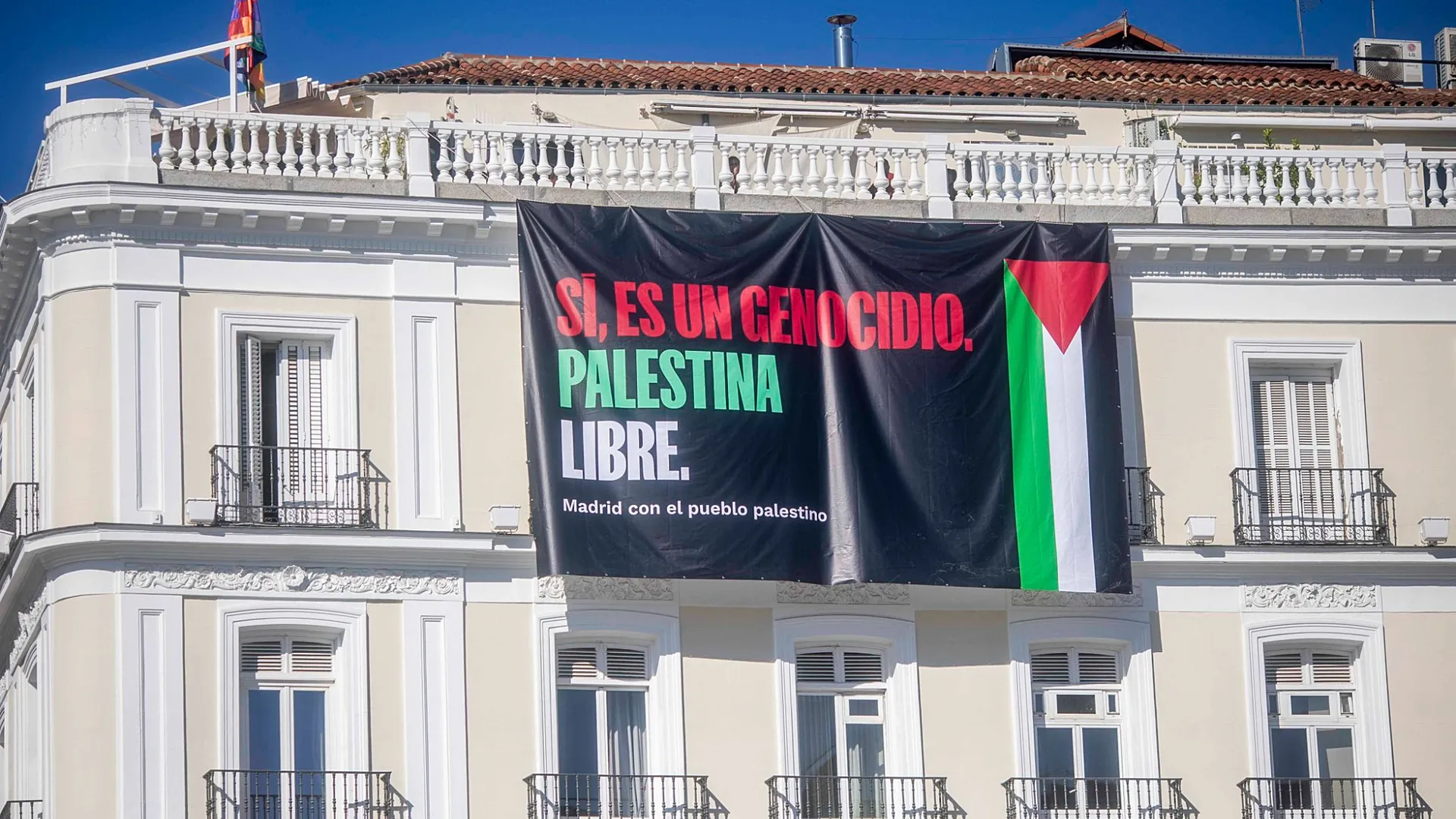
Let every name spoken break the silence that turns victims into numbers and tragedy into habit.
Madrid, September 2025. Puerta del Sol awoke to its usual rhythm of tourists, office workers, and commerce, but by late afternoon the square had been transformed: a microphone, an endless list, and a line of voices determined to rescue from oblivion thousands of Palestinian children killed in Gaza. The gathering, organized by a platform of cultural figures under the motto They Have a Name, brought together more than three hundred artists, including Pedro Almodóvar, who took part in a sustained reading meant to restore humanity to lives too often reduced to statistics. The proposal was simple yet forceful: read the names one by one, without speeches or chants, as a secular liturgy of remembrance and grief.
The choice of Puerta del Sol was deliberate. It is a site of symbols, the kilometer zero of Spanish roads, a meeting point for citizens and a historic stage for protests, making it the ideal space for an ethical appeal visible to all. The setting was austere, nearly stripped down, because the weight of the act was carried by the word itself. One name after another, one childhood after another, the reading traced the scale of a loss that, as organizers insisted, cannot remain trapped in the abstraction of reports and press releases. The instruction was to maintain sobriety: a measured pace, brief pauses for breath, and uninterrupted continuity into the night, as resistance against the fatigue of information that numbs consciences.
The presence of well-known figures served a clear purpose: to use the symbolic capital of art to amplify a message that might otherwise be drowned out by the noise of everyday headlines. Those who stepped up to the microphone did not deliver speeches or slogans; they read quietly, sometimes with a broken voice, other times with serene composure, acknowledging that the true protagonists were absent. Around them stood neighbors, activists, and passersby, some joining the line, others pausing to listen before moving on. There were handwritten placards, candles, and moments of silence when the roll included repeated surnames, marking entire families erased, and brief murmurs when a particularly heavy sequence ended.
The act had an unexpected pedagogical effect: hearing hundreds of names in succession compelled the audience to grasp the human dimension of what is often narrated as a remote geopolitical crisis. The reading built a bridge between distance and empathy, between statistics and memory. It was not about assigning legal blame or simplifying a decades-long conflict, but about asserting that childhood, anywhere, should be a non-negotiable red line. For that reason, organizers insisted on restraint: no loud slogans, no theatrics, no appropriation by partisan agendas.
Security presence was discreet and the atmosphere peaceful, precisely because the intent was visibility rather than confrontation. The city itself became the backdrop: façades, metro entrances, newsstands, and terraces turned into a corridor of listening. On social media, short videos and photographs circulated—veteran actors and young performers, musicians and poets lending their voices. The repetitive, sober aesthetic underscored the idea that the spotlight did not belong to the readers but to the absent children.
Madrid’s cultural community has a long tradition of intervening in public space when it perceives art as capable of asking questions politics avoids. Vigils and readings are part of a civic repertoire that aims to widen the boundaries of public discourse without collapsing into propaganda. The tension between commitment and instrumentalization was present, yet the form of the act carefully avoided extremes. The message was that memory cannot be privatized.
The gesture carried international resonance as well. Madrid is not an island; what happens in its central square dialogues with actions in other European and Latin American cities where artists and civic groups also choose words as their tool of protest. A reading sustained over hours constitutes a format that defies the impatience of the digital era, forcing prolonged attention. That deliberate slowing down strengthens the ethical question: what do we do with someone else’s pain when it becomes background noise, how do we prevent repetition from dulling its impact, and how can memory translate into actions that resist indifference?
Organizers highlighted three aims: to remember the victims, to support those working on the ground with civilians, and to demand that protecting children stop being a slogan and become a verifiable obligation. There were no maximalist manifestos, no extended petitions, only one clear thread: naming as the first act of symbolic reparation. The reading was not justice, nor diplomacy, but it dismantled the alibi of distance and comfort. It forced a city, accustomed to demonstrations, to turn its most central square into an open memorial.
As the night settled over the buildings and the clocks marked the return of the city’s normal rhythm, the microphone kept moving from hand to hand. Ordinary people joined the final segments, taking on the burden of speaking names they would never know in life. The act did not end with applause but with a long silence, a shared pause that returned each listener to their routines carrying the uncomfortable awareness of having heard something that cannot be unheard. That awareness, the organizers insist, is the true purpose: to ensure that the list, always incomplete, obliges us to reconsider the quality of our attention and the responsibility we bear in the face of suffering that happens far away yet speaks directly to us.
Behind every piece of data, there is an intention. Behind every silence, a structure.