

 Phoenix 24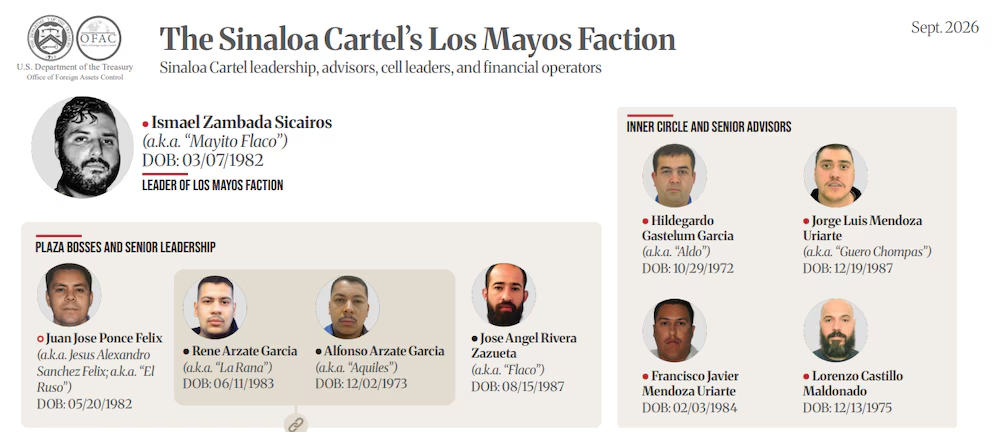
Washington is expanding financial pressure from cartel leaders to the businesses and facilitators surrounding them.
Washington
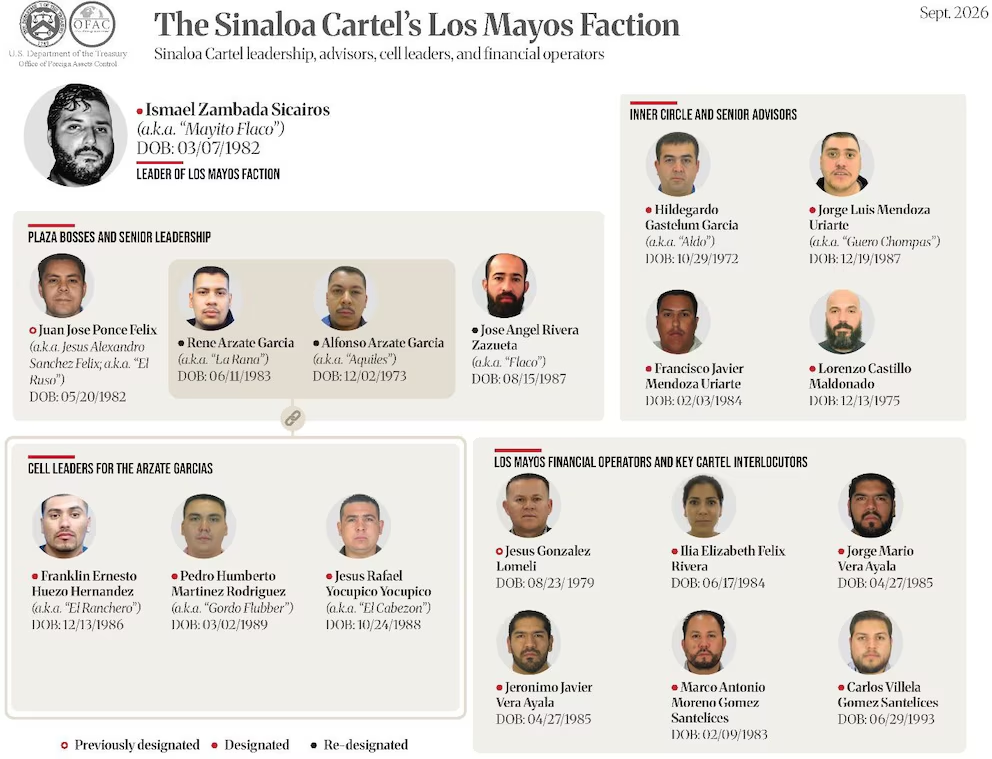
The United States has imposed sanctions on 21 individuals and 25 companies that the Treasury Department says are connected to the Sinaloa Cartel, expanding its strategy of targeting not only senior criminal figures but also the financial, commercial and political networks that allegedly support them.
Among those designated is Ismael Zambada Sicairos, known as “Mayito Flaco,” whom US authorities identify as a leader of the Los Mayos faction. Washington accuses him of overseeing drug trafficking, money laundering, extortion, kidnapping and other criminal operations. He has previously been indicted in the United States and remains a fugitive.
The sanctions also include Carlos Alberto Torres Torres, former husband of Baja California Governor Marina del Pilar Ávila. US authorities allege that he received bribes and helped provide protection to criminal networks connected to Los Mayos. Those accusations form the basis of the sanctions and should be distinguished from a criminal conviction.
Other individuals named by Washington include former public officials, businesspeople and alleged facilitators accused of helping cartel operations move money, protect trafficking routes or conceal illicit proceeds. Several companies were also designated because the Treasury Department says they form part of commercial structures used to support or disguise criminal activity.
The measures are administered through the US sanctions system. Assets belonging to designated individuals or entities that fall under US jurisdiction can be blocked, while American citizens and companies are generally prohibited from conducting transactions with them. The practical impact can extend much further because international banks and multinational businesses often avoid sanctioned actors in order to reduce legal and compliance risk.
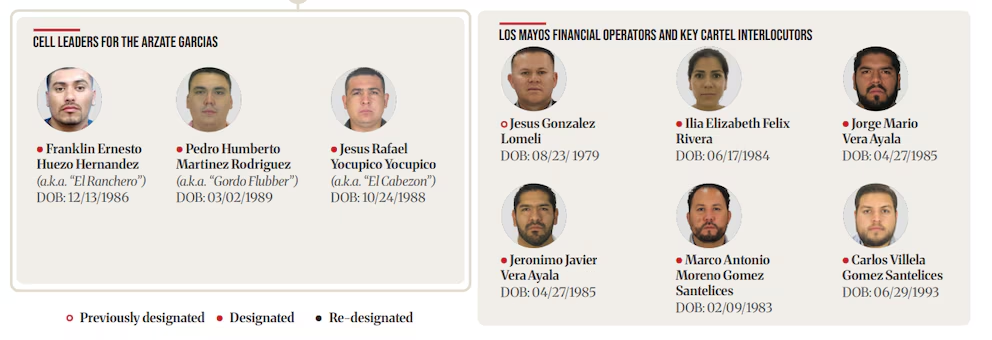
The latest action illustrates how US counternarcotics policy is increasingly focused on the infrastructure surrounding organized crime. Rather than concentrating exclusively on arrests or extraditions, Washington is targeting companies, financial intermediaries, public officials and family or business networks that it alleges make large scale trafficking possible.
The designations also carry political sensitivity in Mexico because they involve people with connections to public institutions and prominent political figures. Sanctions, however, are an administrative measure and do not by themselves establish criminal guilt in a court of law.
For the Sinaloa Cartel, the pressure is increasingly financial as well as operational. For Mexico and the United States, the broader test is whether dismantling the economic networks around organized crime can weaken structures that have repeatedly survived the capture or removal of individual leaders.
The visible and the hidden, in context.