

 Phoenix 24
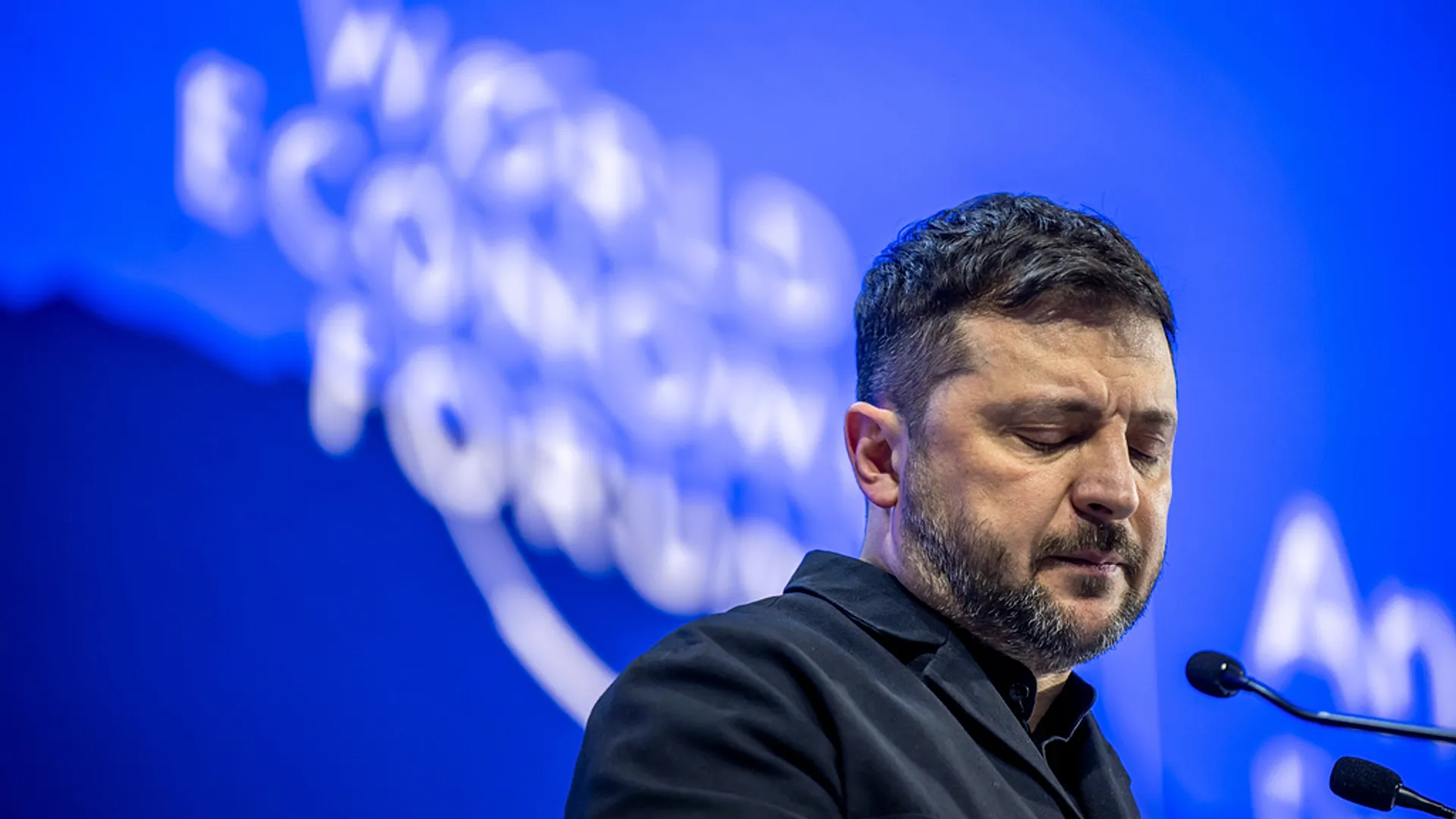
War is revealing political limits that can no longer be concealed.
Davos, January 2026.
Volodymyr Zelensky’s intervention at the World Economic Forum was neither a tactical provocation nor a speech calibrated for short term headlines. It was a strategic warning addressed to the core of European power, delivered from the impatience of a country at war that senses exhaustion, ambiguity, and a dangerous normalization of conflict. When Zelensky stated that Europe “seems lost,” he was not describing a military defeat but a deeper political disorientation that threatens to reshape the continent’s security balance.
Zelensky’s message rested on an uncomfortable assessment. After years of financial assistance, sanctions, and military aid, Europe’s response shows signs of strategic fatigue. The issue is no longer the scale of support alone, but the absence of a shared narrative capable of translating solidarity with Ukraine into a coherent European security project. Speaking in Davos, before an audience accustomed to discussing systemic risk, Zelensky reminded leaders that war is neither an abstraction nor a theoretical scenario. It is an ongoing process that erodes credibility and deterrence with every passing delay.
At the core of his critique lies a central paradox. Europe defines itself as a global normative actor, a defender of international law and sovereign integrity, yet hesitates when those principles demand decisions that carry domestic political costs. Zelensky emphasized that slow or ambiguous decisions do not affect Ukraine alone. They send mixed signals to other actors observing the conflict as a test of resolve. In that sense, the war ceases to be regional and becomes a measure of European leadership itself.
The Davos setting amplified the message. While political and economic elites debated growth, artificial intelligence, and energy transition, Zelensky introduced an inconvenient variable: hard security. He reminded the forum that no economic model is sustainable if the strategic environment deteriorates. His remarks disrupted the usual logic of Davos, where conflicts are often framed as external risks, and placed war at the center of Europe’s future trajectory.
Beyond rhetoric, the substance of the reproach is structural. Ukraine perceives Europe as acting more like a collection of national calculations than a unified strategic bloc. Debates over frozen Russian assets, the pace of military assistance, and coordination in defense production reveal internal frictions that slow collective action. For Kyiv, each delay translates into battlefield vulnerability, but also into a weakening of Europe’s deterrent message.
Zelensky also hinted at a subtle shift in the transatlantic dynamic. Without directly confronting the United States, he stressed that Europe cannot continue to rely on external impulses to define its security posture. Strategic autonomy, frequently invoked in European discourse, is tested precisely in moments like the war in Ukraine. His remarks suggest that this autonomy remains more aspirational than operational.
The implications extend beyond the immediate crisis. In an international system shaped by block competition, perceptions of indecision carry cumulative consequences. Other state and non state actors observe how Europe manages this war to assess its capacity to respond to future challenges. Zelensky’s critique introduces reputational pressure that could accelerate internal debates, or deepen divisions if it fails to produce clear consensus.
The speech also serves a domestic function. It reinforces a narrative of urgency and resistance within Ukraine, projecting leadership that refuses inertia or the normalization of prolonged war. In this sense, Davos was not only a message to Europe, but also to Ukrainian society, signaling that its leadership continues to demand coherence from its partners.
The underlying question raised in Davos is uncomfortable but unavoidable. Can Europe sustain its claim as a central actor in the international order if it cannot articulate a consistent strategic response to a war on its own doorstep. Zelensky has placed this question at the center of the debate, forcing European leaders to decide whether caution will continue to dictate the pace, or whether Ukraine will become the inflection point that reshapes European security policy.
Ultimately, the sharpness of the message is not intended to fracture alliances, but to redefine them. Ukraine does not challenge European solidarity in principle, but its translation into structural decisions. The response to this call will determine whether Davos 2026 is remembered as another rhetorical episode or as the moment Europe began to seriously reassess its role in a harsher and less forgiving international environment.
Every silence speaks.