

 Phoenix 24

Finance is becoming a training ground.
San Francisco, March 2026
Elon Musk’s decision to push xAI deeper into financial intelligence by recruiting bankers, traders, credit specialists, and other market professionals to help train Grok signals more than a niche product expansion. It reveals a broader ambition: to move generative AI beyond general conversation and into one of the most demanding cognitive environments in the global economy. Finance is not merely another vertical market. It is a high-stakes ecosystem built on modeling, uncertainty, structured products, risk judgment, and asymmetrical information. Any AI system that can operate credibly in that terrain gains access to one of the most lucrative and strategically influential layers of enterprise technology.
That is why the hiring pattern matters. xAI is not just recruiting engineers or abstract machine-learning talent. It is reportedly seeking people with direct exposure to leveraged loans, distressed investing, mortgage-backed securities, collateralized loan obligations, and other complex credit instruments. That choice says a great deal about what Grok is being prepared for. The goal is not simply to make the system sound more fluent when discussing markets. The aim is to expose it to the reasoning habits, structuring logic, and analytical frameworks of professionals who work inside the financial system’s more technical corners.
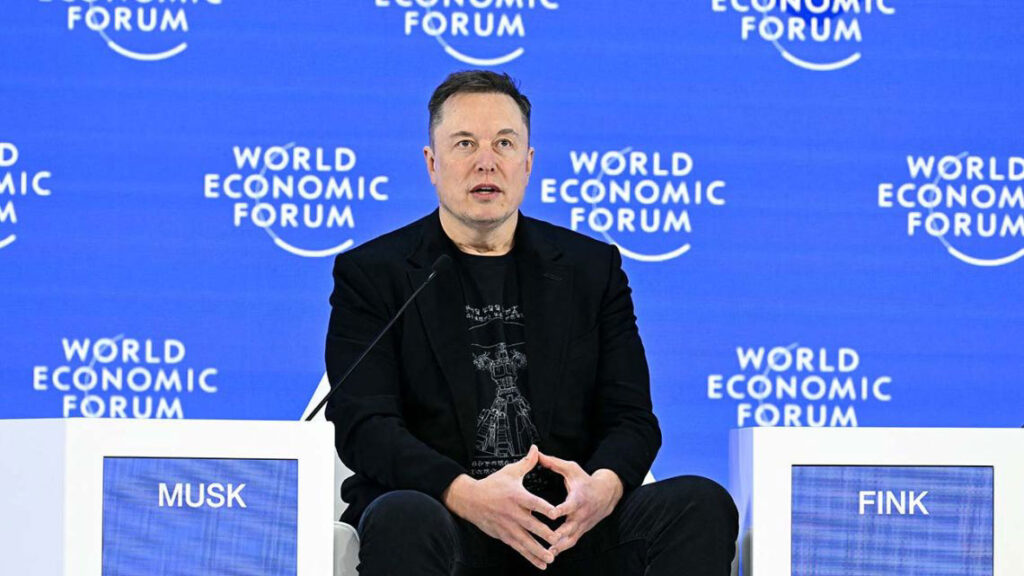
This is a significant shift in how AI training is being imagined. Large language models were first popularized through broad internet-scale text and generalized conversational performance. But high-value professional use cases increasingly demand something different. They require domain-shaped cognition, not just statistical fluency. In finance, that means understanding scenario structure, debt mechanics, credit deterioration, pricing asymmetry, and the layered logic behind transactions that cannot be reduced to simple public summaries. Bringing in human experts from Wall Street and adjacent credit markets suggests xAI understands that enterprise-grade intelligence cannot be built only from raw scale. It must also be trained through elite interpretive labor.
There is also a competitive story underneath the move. Musk is trying to position Grok inside a race where the most valuable AI systems may be those that become indispensable to specialized professional workflows. Consumer attention still matters, but the deeper margins often sit in finance, law, defense, health, and enterprise operations. By targeting finance, xAI is entering a domain where incumbents are cautious, data is sensitive, and credibility is hard to earn. Success there would help transform Grok from a politically noisy chatbot into a tool with institutional relevance. That would mark a very different phase in xAI’s evolution.

The financial sector is especially attractive because it rewards systems that compress information faster than humans while preserving analytical discipline. Bankers, portfolio managers, traders, and credit analysts do not simply need answers. They need systems that can reason through structures, identify fragility, compare scenarios, and handle ambiguity without collapsing into generic language. If xAI can build Grok into a system that speaks the language of complex finance with enough rigor to be useful, it opens the door to much more than retail investing chatter. It opens the possibility of enterprise integrations, research support, transaction analysis, and internal advisory functions that sit closer to capital allocation itself.
Still, the move carries obvious risks. Finance is a domain where fluent error can be more dangerous than visible ignorance. A chatbot that sounds persuasive while misunderstanding covenants, structured-credit exposure, or distressed-debt dynamics can create false confidence in precisely the environments where precision matters most. That is why the human expertise being recruited is so revealing. xAI appears to recognize that financial AI cannot rely on surface-level summaries or scraped market commentary alone. It needs to absorb the judgment patterns of practitioners who understand how deals are built, how risk is priced, and how failure actually emerges in real-world markets.
There is also a symbolic layer to this development. Musk has long tried to position his companies as challengers to institutional complacency, whether in automotive manufacturing, aerospace, social media, or AI. By pulling expertise from Wall Street into Grok’s training orbit, xAI is effectively attempting to extract the reasoning capital of the financial elite and repackage it into machine form. That is not just a hiring strategy. It is an effort to convert professional scarcity into scalable software capability. If successful, the implications could extend well beyond finance, because it would reinforce a larger pattern in AI development: the industrial capture of expert cognition.
The deeper pattern is hard to miss. The future of AI may not be decided solely by which model is funniest, fastest, or most viral. It may be decided by which systems can be trusted inside the opaque, technical, revenue-heavy domains where institutions actually make consequential decisions. Finance is one of those proving grounds. It combines pressure, abstraction, money, and complexity in a way that forces AI developers to confront the limits of generic intelligence. Musk’s move suggests he wants Grok to compete there, not only in public discourse but in the operational back rooms where expertise becomes power.
In that sense, xAI’s recruitment drive is about more than teaching a chatbot to speak like a banker. It is about trying to turn Grok into a machine that can reason through one of capitalism’s most intricate languages. Whether that effort succeeds remains uncertain. But the strategic intention is already clear. xAI does not just want Grok to be visible. It wants Grok to be useful where usefulness is hardest to fake. In the current AI race, that may prove far more valuable than spectacle.
Truth is structure, not noise. / La verdad es estructura, no ruido.