

 Phoenix 24
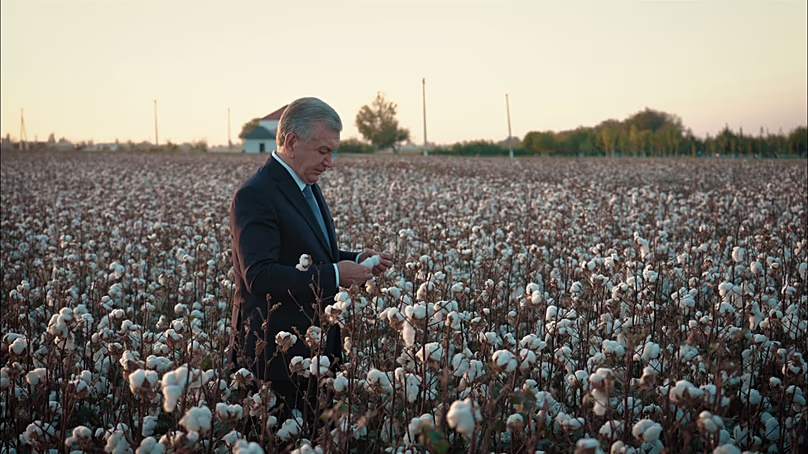
Agricultural success brings new economic and environmental challenges.
TASHKENT
Uzbekistan has reported its largest cotton harvest since independence in 1991, surpassing five million tonnes of raw cotton in 2026 as President Shavkat Mirziyoyev sets more ambitious productivity targets for 2027. The results highlight the country’s agricultural transformation, while raising questions about water sustainability, farmers’ rights and the economic benefits of increasing production.
According to government figures, the harvest exceeded the approximately four million tonnes collected in 2025 and surpassed the original target of 4.5 million tonnes. Average yields reached roughly 5.6 tonnes per hectare, supported by improved cotton varieties, revised cultivation methods and extensive mechanization.
More than 3,000 harvesting machines reportedly collected around 85% of the crop within 30 to 35 days. Officials say mechanization covered the entire harvest in Jizzakh and Syrdarya, illustrating a substantial departure from the labor-intensive production practices that historically characterized Uzbekistan’s cotton industry.
The government now aims to increase average yields to between 6.5 and seven tonnes per hectare in 2027. Its strategy includes agricultural drones, artificial intelligence, improved irrigation and more productive seed varieties. These measures represent planned technological improvements rather than independently demonstrated future productivity gains.
The economic implications extend beyond farming. Uzbekistan is expanding domestic textile manufacturing to capture more value from cotton through yarn, fabrics and finished garments. According to the World Bank, the country has possessed sufficient capacity to process its raw cotton production into yarn since 2023, while textile employment increased from approximately 188,000 workers in 2018 to 600,000 in 2024.
Yet higher production does not automatically guarantee greater prosperity for farmers. The government anticipates combined net profits of 13 trillion to 14 trillion soums from the 2026 harvest, but these remain projections rather than confirmed financial results.
Labor protections also require continued scrutiny. The International Labour Organization concluded in 2022 that systemic forced and child labor had been eliminated during the 2021 cotton harvest. Nevertheless, a February 2026 report highlighted by the Cotton Campaign documented continuing risks associated with government production quotas, restrictions on farmers’ autonomy and coercive practices.
Water scarcity presents another structural challenge. Agriculture accounts for approximately 90% of Uzbekistan’s water consumption, according to the World Bank. Government officials estimate that drip irrigation could reduce water requirements substantially, but sustained improvements will depend on infrastructure investment, water management and measurable resource efficiency.
The record harvest therefore represents more than a production milestone. It illustrates an agricultural economy seeking to combine technological modernization, domestic industrial development and greater international competitiveness while confronting persistent environmental and social constraints.
For Uzbekistan, the decisive measure of progress will not be the volume of cotton harvested alone, but whether rising productivity generates sustainable incomes, protects agricultural workers and reduces pressure on increasingly scarce natural resources.
Beyond the Numbers, the Consequences.