

 Phoenix 24

Not every breakthrough survives the market.
Seoul, March 2026. Samsung’s decision to discontinue the Galaxy Z TriFold barely months after its commercial debut says less about the death of foldables than about the brutal economics of experimental hardware. The device was officially introduced in early December 2025 as the company’s first triple folding smartphone, with sales beginning in Korea days later and later reaching the United States at a starting price positioned firmly in the ultra premium segment. By mid March, the product’s market presence had already begun to contract, reinforcing the impression that its commercial cycle would be far shorter than that of a conventional flagship.
That sequence matters not simply because the product vanished quickly, but because the TriFold was presented as a technological statement piece. Samsung framed it as proof of what mobile innovation could still look like at the far edge of design, emphasizing the three panel format, the camera system, the large battery, and the engineering feat of compressing such an ambitious structure into a consumer device. This was not launched as a discreet niche experiment. It was sold as evidence that Samsung could still define the frontier of premium mobile hardware before rivals fully captured that symbolic terrain. In that sense, the TriFold was never just a phone. It was a strategic message.

Its rapid withdrawal therefore reveals a harder truth about the foldable market in 2026. Technical possibility does not guarantee commercial durability. The TriFold appears to have functioned more as a demonstration of capability than as the foundation of a scalable product family. That distinction is decisive. A company can prove that something can be built, marketed, and admired, yet still discover that admiration does not automatically convert into sustained demand. If that is what happened here, then the device’s short lifespan is less an embarrassment than a controlled retreat from a concept that impressed the industry without fully persuading the market.
Price is central to that story. In the United States, the device entered the market at nearly three thousand dollars, which meant it was never competing with mainstream smartphones in any serious sense. It was competing in the theater of ultra premium experimentation, where consumers are asked to pay not only for utility, but for novelty, engineering ambition, and the prestige of owning something visibly rare. That can work when a product introduces a behavior that users quickly adopt as meaningful. It becomes far harder when the device still feels more like a showcase than a necessity. A triple foldable may offer expanded screen space and undeniable visual impact, but the market still asks a simpler question: does it meaningfully replace a premium phone, a tablet, or an already more mature foldable.
There is also a deeper industry pattern beneath this episode. Smartphone innovation now lives under harsher commercial scrutiny because consumers keep their devices longer, replacement cycles have stretched, and premium buyers have become more selective about what actually counts as meaningful innovation. Under those conditions, radical hardware concepts face a double burden. They must prove that they work, and they must prove that they matter. The TriFold seems to have answered the first challenge more convincingly than the second. Samsung showed that a triple folding device could be engineered and sold. What remains much less certain is whether enough users saw that format as the future rather than as a fascinating detour.
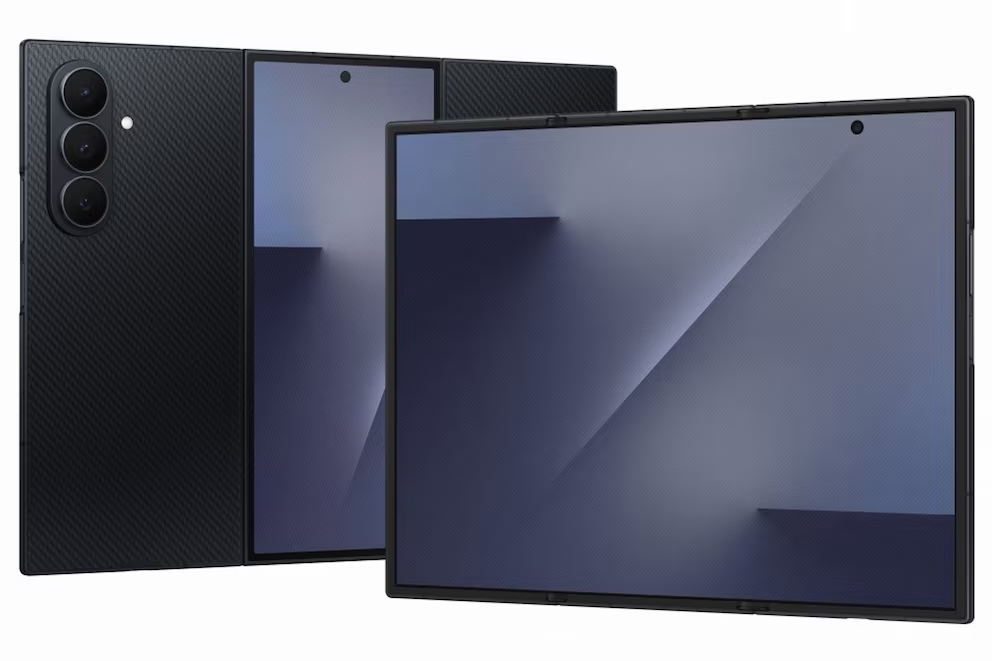
That distinction matters strategically because the foldable race has never been only about design. It is also about narrative control in a smartphone market that increasingly struggles to produce genuine surprise. Companies need flagship devices that do more than move units. They need them to project direction, ambition, and technological authority. The TriFold did that, at least briefly. It told investors, competitors, and consumers that Samsung could still occupy the outer edge of mobile imagination. But the speed of its apparent exit suggests that frontier signaling and sustainable product fit are no longer the same thing. A device can dominate headlines and still fail the quieter test of permanence.
The broader lesson is not that foldables are finished. Samsung remains deeply invested in folding formats, and the category itself is still alive. What this case suggests instead is that the market for extreme foldable experimentation is narrower than innovation rhetoric often assumes. The Galaxy Z TriFold may ultimately be remembered less as the beginning of a durable new chapter and more as a prestige prototype that briefly entered retail. That does not make it irrelevant. On the contrary, it may become more useful as a marker of where the premium device industry discovered its own commercial limits. In advanced consumer technology, failure rarely means the idea was impossible. More often, it means the market was unwilling to subsidize the spectacle for very long.
Facts that do not bend. / Facts that do not bend.