

 Phoenix 24
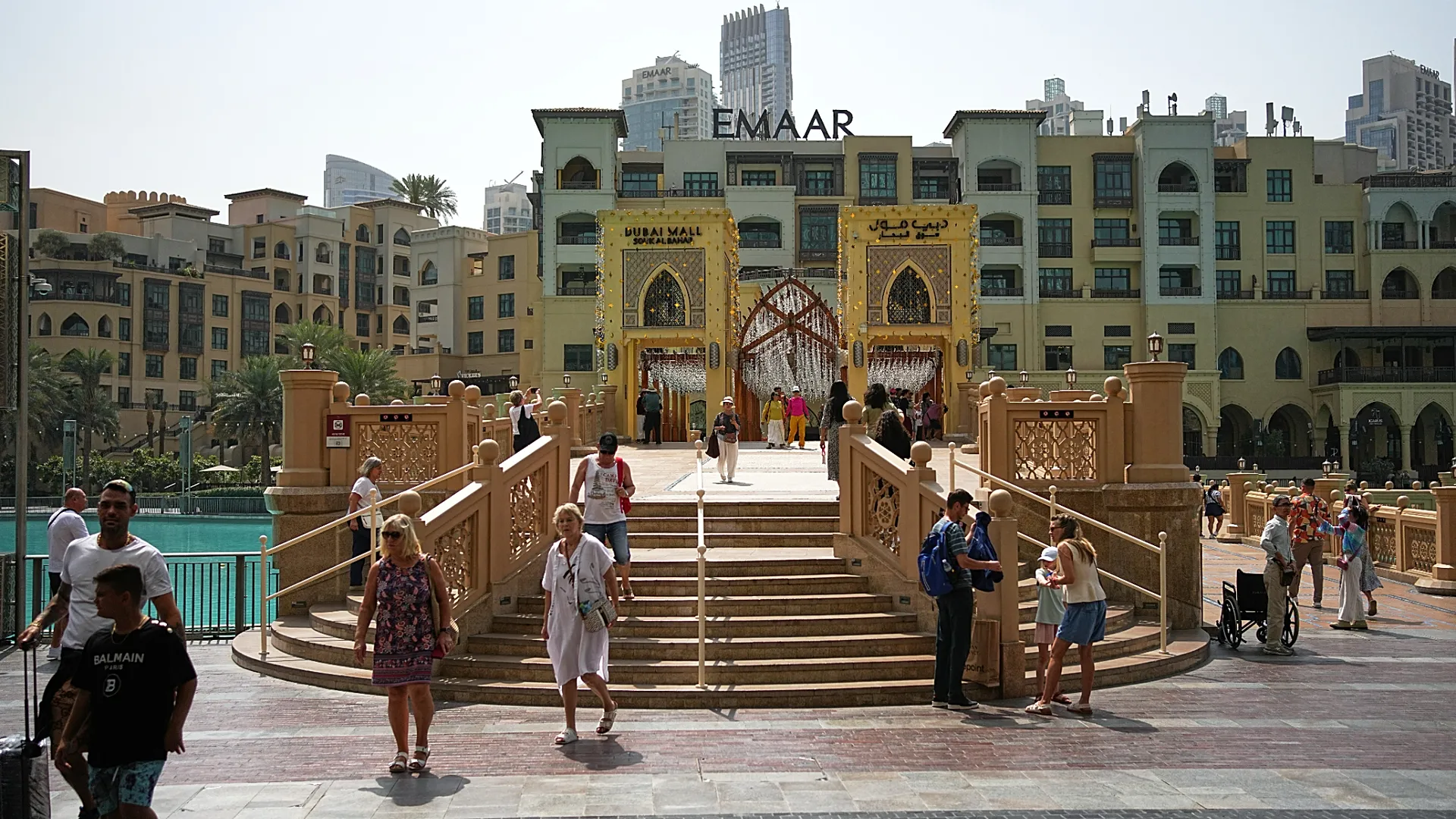
When airspace closes, confidence collapses first.
Dubai, March 2026
The new travel disruption linked to the war with Iran is no longer a temporary aviation inconvenience, but a systemic shock to tourism flows, airline economics, and regional investment narratives built over the last decade. Euronews reports that the conflict is putting roughly 40 billion euros in tourism revenue at risk, citing projections tied to a sharp downgrade in expected visitor arrivals across the Middle East in 2026. That figure matters because it captures more than lost vacations or delayed itineraries. It reflects the vulnerability of a growth model that depends on uninterrupted connectivity, perceived safety, and the ability of major hubs to function as reliable bridges between Europe, Asia, and Africa. Once those assumptions break, the damage spreads quickly from airports to hotels, events, retail, and investor confidence.
The immediate pressure point is aviation, because airspace disruption is the first mechanism through which war reaches civilian mobility. Recent reporting across international outlets has described widespread cancellations, restrictions at major Gulf hubs, and the rerouting of long-haul traffic through longer and more expensive corridors. The result is operational stress on airlines, stranded passengers, and a sudden repricing of routes that depend on Middle East transit infrastructure. In practice, this turns a regional conflict into a global travel problem, especially on Asia Europe connections where Gulf hubs play a central role in network efficiency. Even when flights resume partially, the system does not recover instantly because risk perception lingers longer than technical reopening.
What makes this episode structurally important is that the Middle East is not only a destination market, but a logistics architecture for global tourism. For years, states and carriers in the Gulf invested heavily in airports, hospitality, branding, stopover ecosystems, and premium long-haul services designed to capture transit demand and convert it into tourism spending. That strategy worked because it transformed geography into commercial advantage. War pressure now reverses the equation by turning geography into exposure. If travelers begin to view the region as a persistent risk zone, even temporarily, then the economic shock reaches beyond current cancellations and begins to affect future bookings, conference planning, airline scheduling, and the financial assumptions behind tourism expansion projects.
The 40 billion euro risk estimate also signals how quickly confidence metrics can deteriorate in the travel sector once conflict enters the perception cycle. Tourism demand is highly sensitive to uncertainty, and the industry suffers from a credibility asymmetry: years of brand building can be damaged in days, while recovery usually takes much longer and requires visible stability. This is why the current crisis is being monitored not only by airlines and tour operators, but also by governments and investors with exposure to hospitality, infrastructure, and consumer services. A decline in arrivals is not just a tourism statistic. It becomes a macroeconomic warning for economies where travel receipts support employment, foreign exchange, and broader diversification strategies.
There is also a second layer of stress that extends beyond canceled flights: fuel costs. As oil prices rise in parallel with disruption in the Gulf, airlines face a double burden of operational instability and higher input expenses. That combination compresses margins, complicates pricing decisions, and can accelerate fare increases on unaffected routes as carriers redistribute costs across their networks. In other words, even travelers with no intention of flying to the Middle East may still pay for the conflict through more expensive tickets and reduced route flexibility. This is how war in a strategic corridor reshapes civilian economics globally, not only through direct closures but through cost transmission across interconnected industries.
Europe has a particular stake in this pattern because its tourism, aviation, and business travel ecosystems are deeply linked to Middle East transit routes and demand flows. The conflict therefore affects more than outbound leisure travel. It can disrupt trade travel, conference traffic, long haul connectivity, and seasonal planning for companies that rely on stable route schedules. It also reinforces a broader lesson policymakers have struggled to operationalize since previous global disruptions: resilience in tourism is not only about promotion and destination appeal, but about geopolitical risk management, corridor redundancy, and crisis communication capacity. If the public sees confusion, mixed messaging, or prolonged disruption, demand falls faster and recovers slower.
What changes on the wider board is the perception of tourism itself. This crisis reminds markets and governments that tourism is not a soft sector insulated from hard power, but a strategic industry tied to airspace security, energy prices, insurance risk, and state credibility. Euronews presents the 40 billion euro threat as a headline number, but the deeper pattern is the collapse of confidence when mobility infrastructure becomes a battlefield variable. The conflict with Iran is not only disrupting routes. It is testing whether a region that built global influence through connectivity can preserve that advantage when war logic begins to dominate the map.
Phoenix24: journalism without borders. / Phoenix24: journalism without borders.