

 Phoenix 24
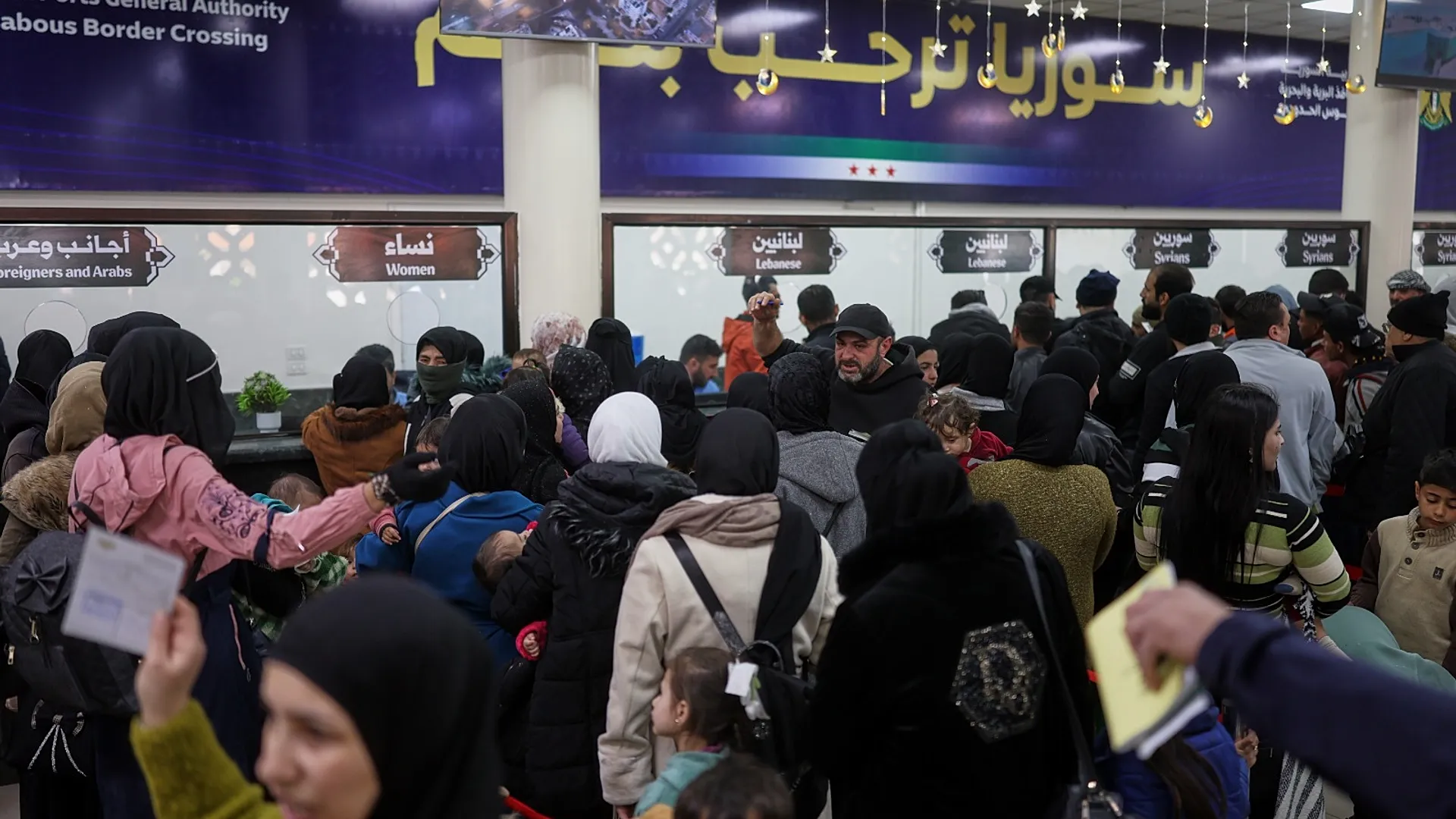
People are fleeing forward, not home.
Damascus, March 2026
The latest reports of thousands of Syrians moving toward Damascus as Israeli strikes intensify in Lebanon reveal a humanitarian pattern that is both familiar and structurally new. Familiar, because war in the Levant continues to push civilians across borders and through fragile corridors with little warning. New, because many of those now returning to Syria are not moving toward stability in any conventional sense, but toward the least dangerous option available at that moment. What appears on the surface as a return flow is, in practice, another displacement cycle driven by regional escalation rather than recovery. Recent reporting on the wider Lebanon crisis describes large scale movement, shelter saturation, and cross border pressure already affecting both Lebanese civilians and Syrians previously living in Lebanon.
This matters because the direction of movement can easily mislead political interpretation. When Syrians leave Lebanon for Syria, some actors may frame the shift as evidence of normalization or durable return dynamics. The current context suggests the opposite. The movement is being shaped by immediate survival calculations under bombardment, not by stable reintegration conditions, institutional guarantees, or restored livelihoods. In humanitarian terms, this is displacement by compression: people exit one danger zone and enter another space that may offer temporary shelter but limited long term security, services, or economic absorption capacity. The distinction is crucial, because policy responses built on the language of return can underestimate vulnerability and misread the drivers of movement.
The pressure on Lebanon’s shelter system reinforces the scale of the problem. Recent reporting indicates tens of thousands of displaced people have already moved into collective shelters, with many others sleeping in vehicles or on roadsides as attacks continue and evacuation orders expand. Once shelter capacity begins to strain, mobility patterns become less orderly and more coercive. Families move not because they have a safe destination, but because they have run out of tolerable options where they are. In that environment, border crossings into Syria become part of a humanitarian release valve, even when Syria itself remains economically fragile and uneven in basic service provision.
Damascus becomes symbolically central in this moment even when not every displaced person is settling there permanently. As the capital and administrative hub, it functions as a political reference point for return narratives, aid coordination signals, and state messaging about control and continuity. Yet symbolic centrality can mask local realities. A flow toward Damascus or its broader administrative orbit does not automatically imply sufficient housing, health care, schooling, or income opportunities for new arrivals. It can just as easily indicate where people believe paperwork, relatives, transit routes, or temporary accommodation are most accessible under emergency conditions. That gap between symbolic return and lived precarity is where humanitarian stress tends to deepen.
The wider regional escalation makes this displacement pattern more volatile than a typical refugee movement episode. The Lebanon front is no longer an isolated border tension but part of a broader conflict environment shaped by Israeli strikes, Hezbollah responses, and a regional security chain linked to Iran and multiple state actors. Reporting also points to Syria reinforcing parts of its border with Lebanon amid fears of spillover, which adds another layer of militarization to an already fragile civilian movement corridor. When borders become simultaneously humanitarian routes and security zones, civilians are forced to navigate shifting rules, checkpoints, and political suspicion while under time pressure.
There is also a psychological dimension that policy analysis often underweights. For many Syrians who once fled war and rebuilt fragile lives in Lebanon, being pushed back by a new regional escalation can produce a second displacement trauma with a different emotional profile. The question is no longer only where safety exists, but whether safety can exist long enough to rebuild anything at all. That erosion of temporal trust has consequences for education, employment decisions, health seeking behavior, and family cohesion. Humanitarian systems can count crossings and shelter occupancy, but they struggle to quantify the cumulative damage of repeated forced mobility on social resilience.
For European institutions and international agencies, the policy risk lies in reading these movements through a binary lens of either refugee burden in Lebanon or return progress in Syria. The present situation fits neither category cleanly. It is a hybrid displacement event produced by conflict spillover, shelter saturation, and the strategic expansion of war across multiple fronts. That means response frameworks must be adaptive rather than declarative, with support calibrated for both emergency protection and unstable onward movement. If governments rush to treat these flows as proof of durable repatriation, they may reduce protection at precisely the moment when civilian vulnerability is widening.
The structural pattern is now clear. Regional escalation is reactivating older displacement corridors, but under a new political and military geometry in which civilians move through spaces already overloaded by previous wars, sanctions, economic collapse, and institutional fragmentation. In that setting, Damascus is not simply a destination. It is a pressure node in a larger humanitarian system absorbing shocks generated elsewhere. The significance of this episode is therefore not only that thousands are fleeing toward Syria, but that the region is once again converting civilian movement into a measure of strategic failure. When people flee forward instead of home, the map is telling us that the war has expanded faster than the institutions meant to contain its human cost.
Lo visible y lo oculto, en contexto. / The visible and the hidden, in context.