

 Phoenix 24
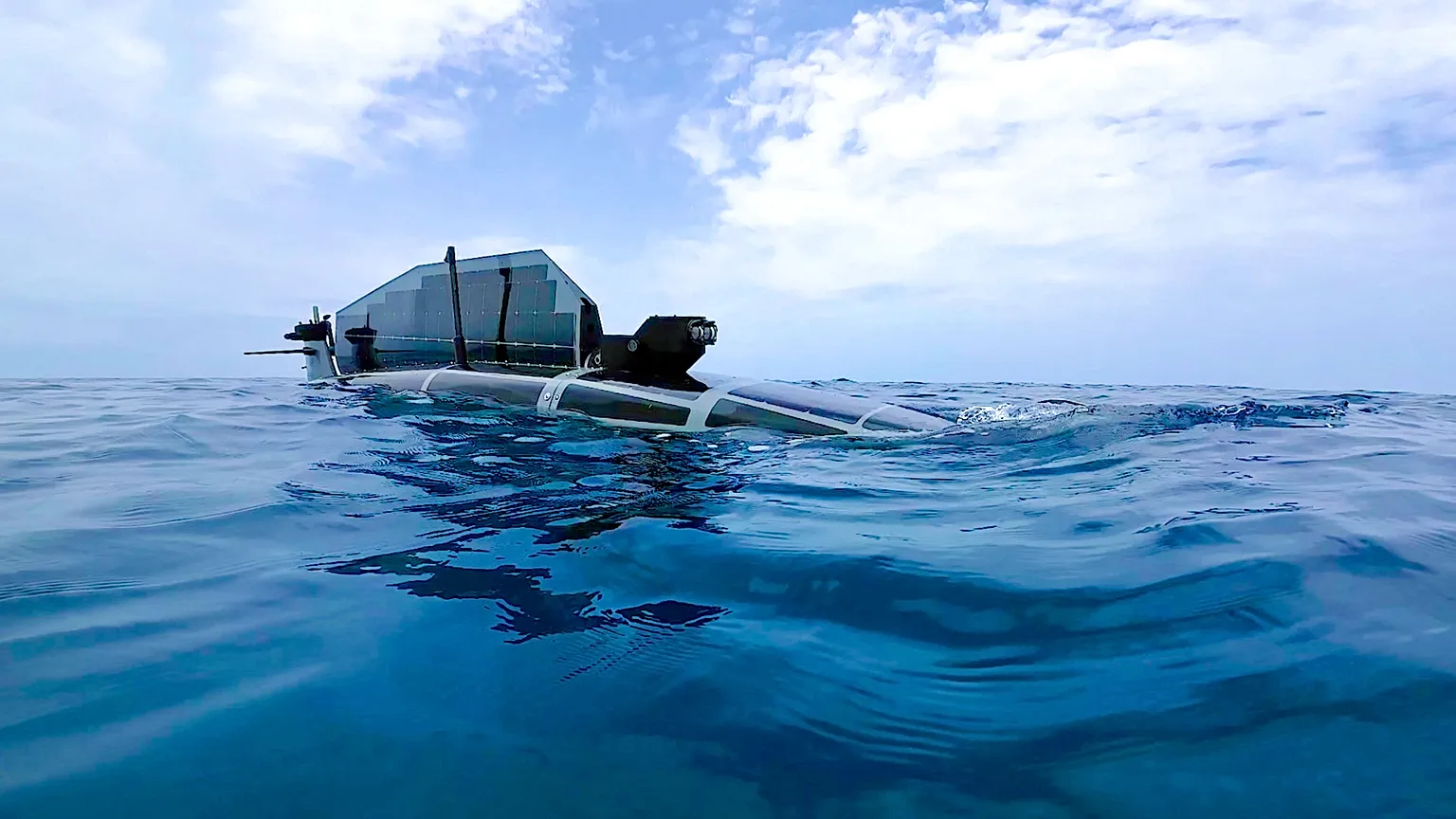
Seven technology companies join forces to strengthen Europe’s maritime security through artificial intelligence, autonomous vehicles and advanced surveillance systems.
PARIS, FRANCE — November 4, 2026. Spanish defense technology company Indra has announced a strategic alliance with six national partners to develop an integrated surveillance system designed to protect Europe’s critical underwater infrastructure. The agreement, signed Wednesday during the Euronaval defense exhibition in Paris, establishes the foundation for SIPRIS, an initiative combining artificial intelligence, autonomous marine vehicles, acoustic sensors and satellite communications. The project reflects growing European concerns about the vulnerability of submarine telecommunications cables, energy connections and other strategic assets essential to economic activity and national security.
The partnership brings together Indra, SAES, UTEK, Aragon Photonics, Iqua Robotics, FYLA and Sateliot, seven companies specializing in complementary technological capabilities. Their executives signed a memorandum of understanding outlining cooperation on the development of persistent underwater surveillance systems. Indra will coordinate the industrial consortium and integrate its technological components into a unified operational architecture. Although the agreement represents a significant step toward developing a Spanish-led solution, the system has not yet entered commercial service, and its performance will require technical demonstrations and operational validation.
Indra’s contribution will center on SEADEF, its family of naval mission systems, and IndraMind, an artificial intelligence platform designed to process and exploit complex information. The company will also provide unmanned aerial systems and communications management capabilities. Together, these technologies are intended to combine observations from different environments into a more comprehensive picture of maritime activity. The objective is to identify unusual movements, assess potential threats and support timely responses before disruptions affect essential infrastructure.
Each partner will contribute specialized technology to the proposed system. SAES will provide underwater acoustic sensors and sonar-processing capabilities, while UTEK will develop autonomous surface vehicles capable of extending surveillance coverage. Iqua Robotics will contribute unmanned underwater vehicles for inspecting infrastructure and detecting anomalies. Aragon Photonics will apply high-fidelity distributed acoustic sensing through fiber-optic cables, potentially identifying disturbances over considerable distances. FYLA will focus on underwater optical communications, and Sateliot will support connectivity through satellite-based information and communications services.
The technological architecture addresses a particularly difficult security challenge. Submarine cables and energy connections extend across vast underwater areas where continuous human monitoring is impractical and conventional surveillance systems face significant limitations. Combining autonomous vehicles with acoustic detection, fiber-optic sensing and satellite communications could improve situational awareness by linking information collected above and below the sea surface. However, detecting an unusual event does not automatically establish that sabotage has occurred. Effective protection requires reliable threat classification, independent verification and coordination with authorities responsible for maritime security.
Europe’s concern about underwater infrastructure has intensified following incidents involving telecommunications and electricity cables, particularly in the Baltic Sea. Some have raised suspicions of deliberate interference, although responsibility cannot be inferred without investigation. In January 2025, NATO launched Baltic Sentry to strengthen surveillance and deterrence through naval vessels, maritime patrol aircraft and unmanned systems. The initiative demonstrated that protecting underwater infrastructure had become a priority for collective security, extending beyond conventional naval operations into the protection of civilian economic networks.
The European Union has also expanded its response. In February 2026, the European Commission announced a €347 million package supporting submarine cable security, including measures intended to strengthen repair capacity and reduce vulnerabilities. The Commission estimates that submarine data cables carry approximately 99% of intercontinental internet traffic, illustrating their importance for financial services, digital communications and international commerce. Underwater electricity connections are similarly important for regional energy integration and offshore renewable generation. The SIPRIS initiative therefore enters a market increasingly influenced by public investment, security requirements and demand for technological resilience.
For Spain, the alliance also represents an opportunity to strengthen domestic technological capabilities in an industrial sector traditionally dominated by a limited number of international suppliers. Ana Belén Buendía, Indra’s naval business director, described underwater surveillance as an urgent requirement for European technological sovereignty. The project seeks to combine specialized capabilities developed by Spanish companies rather than depend entirely on externally supplied systems. Its modular design is intended to accommodate additional businesses, research institutions and technological innovations, potentially encouraging cooperation among established defense contractors, smaller companies and scientific organizations.
Nevertheless, industrial sovereignty requires more than assembling a consortium of technologically capable firms. The partners must demonstrate that their products operate reliably together, can process large volumes of information and remain resilient against cyberattacks or communications failures. Economic viability will also depend on procurement opportunities, maintenance costs, technical standards and potential integration with existing European maritime security systems. Indra has announced plans for joint demonstrations and validation activities, but the agreement does not establish that the consortium has secured a deployment contract or achieved operational readiness.
The initiative illustrates the growing convergence of artificial intelligence, robotics, telecommunications and defense engineering. Protecting underwater infrastructure increasingly requires systems capable of gathering information continuously, interpreting complex environmental signals and supporting coordinated decision-making. At the same time, surveillance technology must operate within appropriate legal and institutional frameworks, particularly where commercial infrastructure, national jurisdictions and international waters intersect. The challenge involves combining technological capabilities with clear responsibilities for identifying, reporting and responding to potentially hostile activities.
SIPRIS marks the beginning of an ambitious Spanish industrial collaboration rather than the completion of Europe’s underwater defense capabilities. Its eventual significance will depend on successful field testing, interoperability and the ability to translate technological development into reliable protection for critical infrastructure. As European governments seek greater resilience against physical disruption and strategic dependence, the initiative underscores a broader transformation in maritime security: the seabed has become an increasingly important domain where digital connectivity, energy systems and national security converge.
Phoenix24: Beyond the technology, the strategic importance of security. / Más allá de la tecnología, la importancia estratégica de la seguridad.